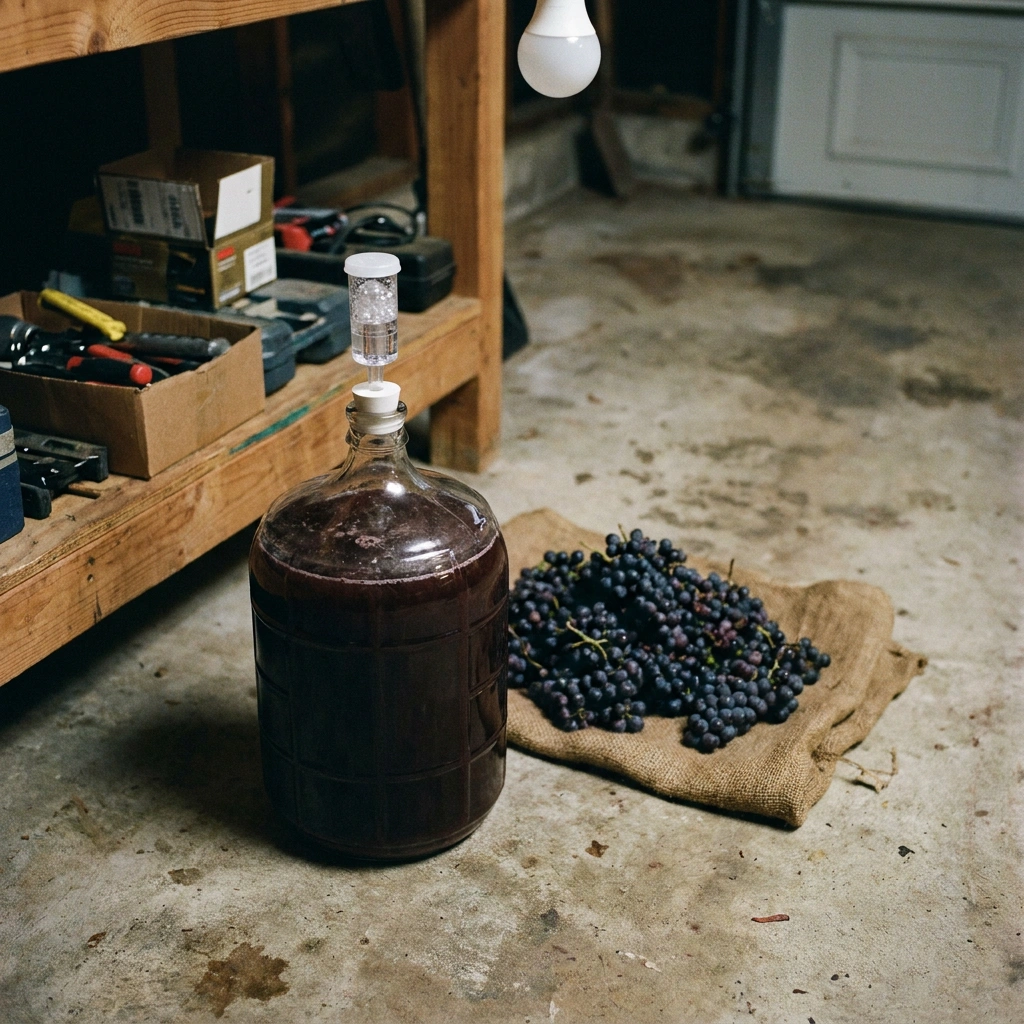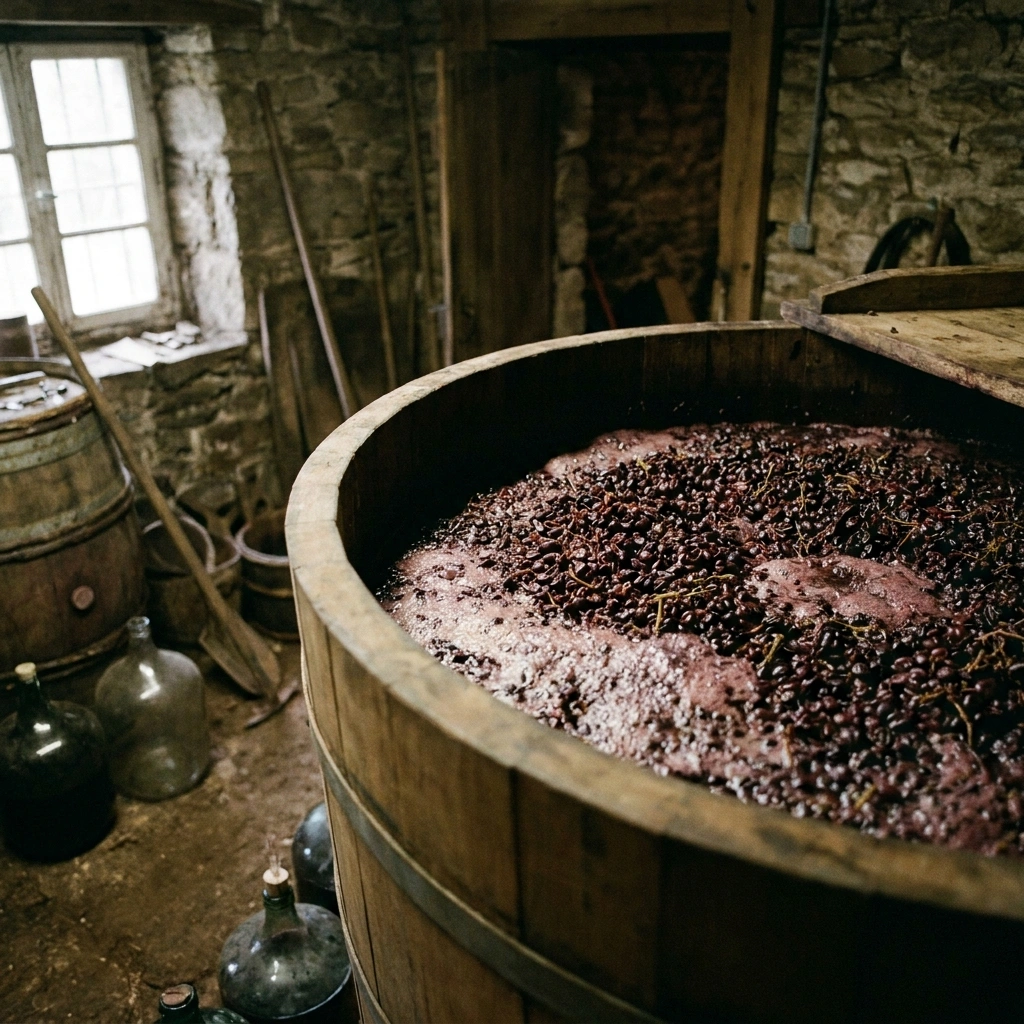
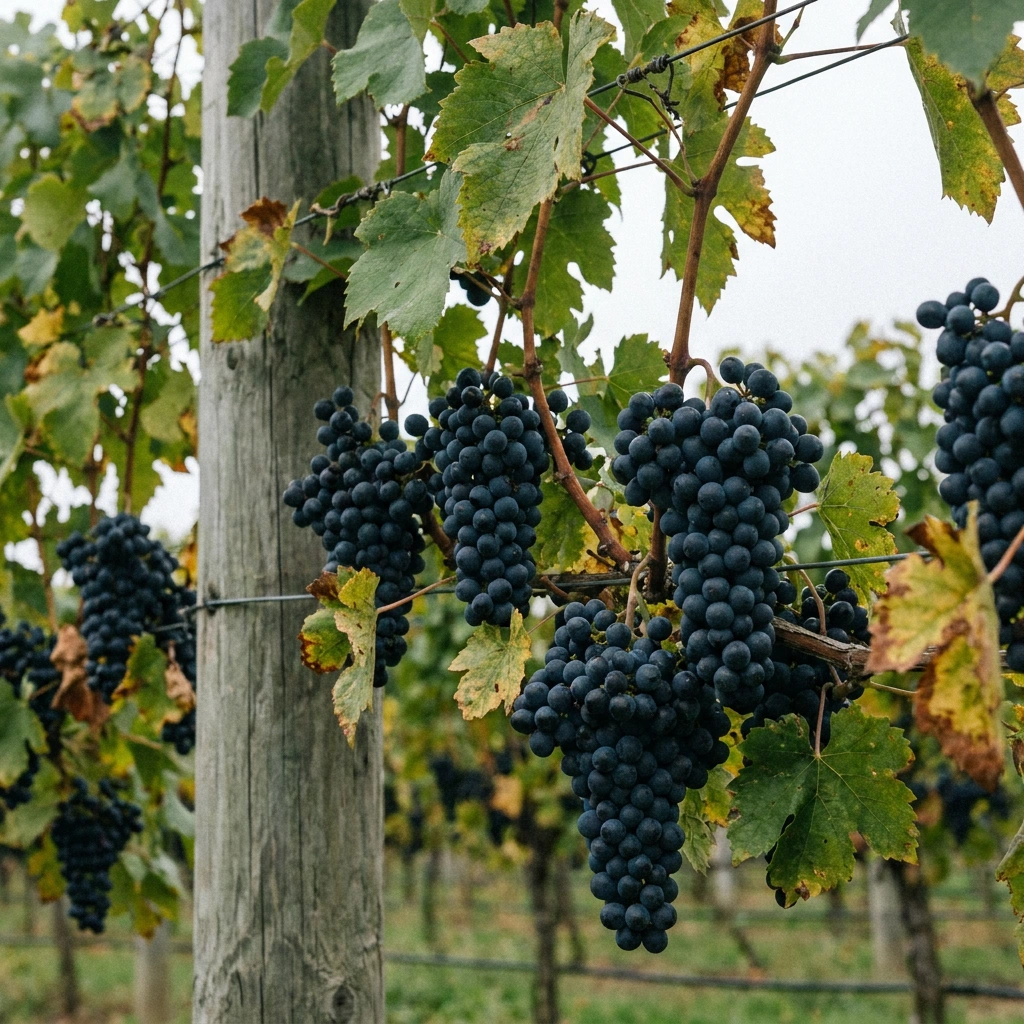
Baco Noir is one of the most cold-hardy red wine grapes you can grow in the northern United States and Canada. It survives winters down to about -20°F to -25°F (-29°C to -32°C) – that’s USDA Zone 4 territory – and it ripens reliably in short growing seasons. If you’re gardening in the upper Midwest, New England, or Ontario and you want a dark, full-flavored red from your own backyard vineyard, Baco Noir is absolutely worth considering.
What Is Baco Noir?
Baco Noir (also spelled Baco Noir, sometimes shortened to “Baco”) is a French-American hybrid red grape variety created in 1902 by French hybridizer François Baco. He crossed Folle Blanche, a traditional French white variety, with Vitis riparia, a wild grape species native to North America. The result was a vigorous, productive vine that kept much of the dark berry flavor of European wine grapes while inheriting the cold tolerance and disease resistance of its wild American parent.
It is registered internationally as Baco Noir 1 (Baco No. 1) and is sometimes listed in catalogs under that name. In France it was once widely planted before EU rules phased out many hybrids from AOC-designated areas; today Baco Noir is most at home in eastern Canada and the northeastern United States, where it’s one of the workhorses of the local wine industry. Cornell’s viticulture program and the Ontario Ministry of Agriculture have both published extension data on it, and it performs well anywhere from Zone 4 through Zone 6.
Hardiness and Where Baco Noir Grows Best
Baco Noir is reliably hardy to around -20°F (-29°C) with minimal protection, and some growers in Zone 4 report canes surviving brief dips toward -25°F (-32°C) on well-acclimated, fully dormant vines. That puts it solidly in the same hardiness class as Frontenac and ahead of most Vitis vinifera varieties like Cabernet or Merlot, which typically winter-kill at 0°F (-18°C).
It grows well across a wide range: the Niagara Peninsula in Ontario, Finger Lakes in New York, the Lake Champlain Valley of Vermont, and across Wisconsin and Minnesota. Anywhere with at least 150 frost-free days and moderately warm summers is workable. Baco Noir does not need extreme heat to ripen – in fact it can struggle with over-ripeness and excess sugar in very hot climates, where it tends to lose the fresh acidity that makes it distinctive. Zone 4-6 cool summers are actually an advantage.
Soil preference is fairly flexible. It tolerates heavier soils better than most vinifera, but like any grape it appreciates good drainage. If your site has standing water after heavy rain, that’s a bigger problem than a cold winter. Well-drained clay loam or sandy loam with a pH around 5.5-6.5 works well. Before planting, it’s worth reading up on how to prepare your soil and plant a grape vine to make sure you’re starting right.
Vigor, Ripening, and Canopy Management
This is the thing to know upfront: Baco Noir is vigorous. It will push long, thick canes and produce a heavy canopy if you let it. That vigor is both an asset (fast establishment, good cropping) and a challenge if you don’t manage it. A dense, shaded canopy leads to poor fruit quality, slow ripening, and disease problems.
Standard training systems for Baco Noir include high-wire cordon and Kniffin systems. Most experienced growers lean toward VSP (Vertical Shoot Positioning) on a 5-6 foot (1.5-1.8 m) trellis to keep shoots upright and expose fruit to airflow. Whatever system you use, the principle is the same: open up the canopy, thin suckers aggressively, and don’t let it get away from you by mid-July. A vine that’s shaded in August will give you underripe, muddy-flavored fruit.
Proper grape pruning is critical with Baco Noir. Because it’s so vigorous, many growers practice spur pruning or cane pruning with a conservative bud count – typically 30-50 buds per mature vine, adjusted based on the previous year’s cane size. If you left too many buds last winter, the vine will reward you with a jungle. Err on the side of cutting more.
Ripening happens mid-to-late season – typically late August through mid-September in Zone 5 conditions, sometimes running into early October in cooler years. Brix at harvest usually falls between 19-22°, which makes it suitable for dry red wine without chaptalization (adding sugar) in most years. Knowing when grapes are ready to harvest matters a lot with Baco Noir – the window between “almost ready” and “over-ripe” can be short, and acid drops fast once the sugars peak.
Disease Resistance
As a hybrid, Baco Noir has better disease resistance than European varieties, but it’s not fully immune. The main concerns in humid climates are:
- Downy mildew – moderate susceptibility; open canopy management and a standard copper-based spray program reduces pressure significantly.
- Powdery mildew – generally good resistance; rarely a major problem.
- Botrytis (gray mold) – the tight cluster structure of Baco Noir makes it somewhat susceptible if fruit stays wet. Good airflow through canopy management is the best defense.
- Black rot – moderate susceptibility; apply a protectant fungicide in spring during the pre-bloom window if black rot is common in your area.
Baco Noir generally holds up well through normal years. Wet, cool springs that drag on past bloom time are the hardest on it. Phylloxera pressure is low because of its V. riparia ancestry – another advantage in areas where grafted rootstock isn’t practical for backyard plantings.
Spacing and Planting
For home vineyards, we recommend spacing Baco Noir vines 6-8 feet (1.8-2.4 m) apart within rows, with rows 8-10 feet (2.4-3 m) apart. Tighter spacing increases competition and limits air circulation; too wide and you’re wasting land. Because of its vigor, err toward the wider end of that range rather than the tighter end. For a deeper look at layout options, see our guide to grape vine spacing.
Plant in spring after the last hard freeze, using bare-root vines from a reputable cold-climate nursery. A healthy bare-root Baco Noir vine typically establishes in the first season and starts modest production in year two or three. Full cropping – maybe 10-15 lbs (4.5-6.8 kg) per vine – usually arrives by year four or five.
If you’re starting a cold-climate vineyard and want to grow your own Baco Noir, bare-root cold-hardy grape vines are widely available online through specialist nurseries. You can also find them on Amazon – search for cold-hardy grape vines to compare current listings, though always double-check that the seller ships to your zone and knows how to handle dormant bare-root stock.
What Does Baco Noir Wine Taste Like?
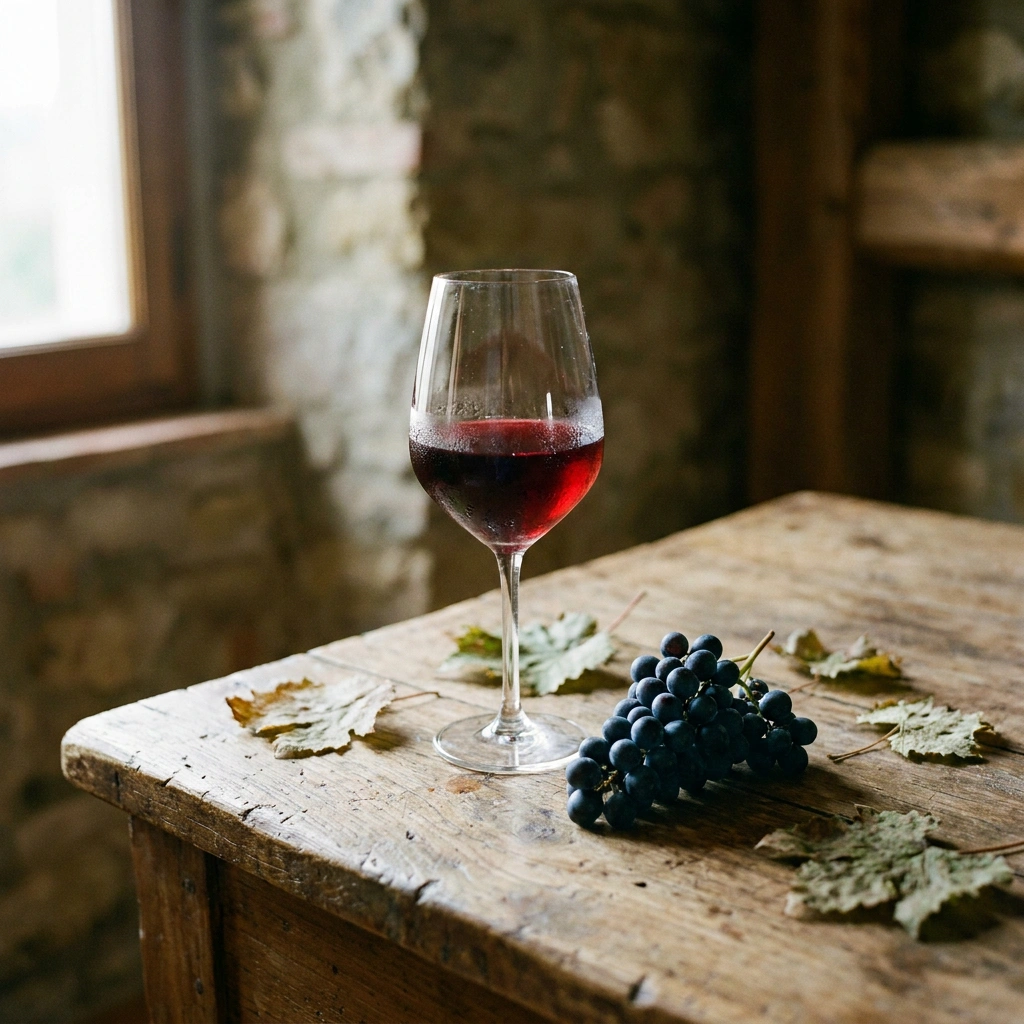
Baco Noir makes a dark, intensely colored red wine – inky purple-black, sometimes nearly opaque in the glass. The flavor profile is distinctive: you get dark fruits (blackberry, black cherry, plum) underlaid by earthy, smoky, sometimes leathery or tobacco-like notes that come from the V. riparia genetics. The acidity is high – noticeably more than most vinifera reds – which gives it good structure and aging potential, but can also make it feel sharp or thin if winemaking isn’t careful.
Tannins are relatively low compared to Cabernet Sauvignon or Frontenac, which makes Baco Noir approachable young. Some winemakers use oak aging to add complexity and soften the rough edges; others go stainless steel for a brighter, fruit-forward style. Both work.
If you’re new to making wine from your harvest, the wine making instructions guide here covers the basics from crush to bottle.
Baco Noir vs. Other Cold-Hardy Reds
If you’re deciding between cold-hardy red varieties for a backyard vineyard, here’s how Baco Noir stacks up against the two most popular University of Minnesota releases:
| Variety | Hardiness | Ripening | Flavor Profile | Best For |
|---|---|---|---|---|
| Baco Noir | Zone 4 (-20°F / -29°C) | Mid-late season | Dark, smoky, high acid, earthy | Experienced growers wanting a “serious” red; canopy management required |
| Marquette | Zone 4 (-30°F / -34°C) | Mid season | Cherry, pepper, moderate acid | Premium cold-climate red; easiest to work with stylistically |
| Frontenac | Zone 3 (-30 to -40°F / -34 to -40°C) | Mid season | Tart cherry, high acid; needs management | Extremely cold zones or blending into rosé |
Our take: Marquette is probably the easiest variety to make good wine from on the first try. Frontenac is the most bombproof for Zone 3-4 winters. Baco Noir sits between them – hardier and more vigorous than most vinifera, with a flavor profile that some growers find more complex and interesting than the Minnesota releases, but demanding more attentive canopy management to shine. It’s a good choice for Zone 5 growers who’ve already grown a simpler variety and want something with more character.
Frequently Asked Questions
How cold-hardy is Baco Noir?
Baco Noir is reliably hardy to about -20°F (-29°C), making it suitable for USDA Zones 4 through 6. Well-acclimated vines can survive brief dips toward -25°F (-32°C), though bud damage may occur at those extremes. It is significantly hardier than European vinifera varieties, which typically suffer serious damage at 0°F (-18°C).
What does Baco Noir wine taste like?
Baco Noir wine is dark, full-colored, and intensely flavored – think blackberry, black cherry, and plum with earthy, smoky, sometimes tobacco-like undertones. It has notably high acidity and relatively low tannins compared to European reds. The flavor can be rustic and complex when the vines are managed well and the wine is properly made.
Is Baco Noir easy to grow for beginners?
Baco Noir is not the easiest variety for a first-time grower because of its vigorous growth habit. It requires consistent canopy management and careful pruning to prevent overcrowding and disease. If you’re completely new to growing grapes, starting with a slightly more forgiving variety like Marquette or St. Croix might build your confidence first. That said, Baco Noir is still far easier to grow than most vinifera varieties in cold climates.
Where does Baco Noir come from?
Baco Noir was created in France in 1902 by hybridizer François Baco. He crossed the French variety Folle Blanche with Vitis riparia, a wild grape native to North America. Today it is grown mainly in eastern Canada (especially Ontario and Quebec), the northeastern United States, and some parts of Europe where hybrid varieties are permitted.
When does Baco Noir ripen?
Baco Noir is a mid-to-late-season variety. In Zone 5 conditions (like Wisconsin or upstate New York), it typically ripens from late August through mid-September. In cooler years or Zone 4 sites, harvest can extend into early October. Target a Brix of 19-22° and taste the fruit before relying on numbers alone.
🍇 Don’t plant the wrong grape
Vines take years to fruit. Get the free cheat-sheet of varieties that actually survive and ripen in your zone.
By subscribing you agree to our Privacy Policy.