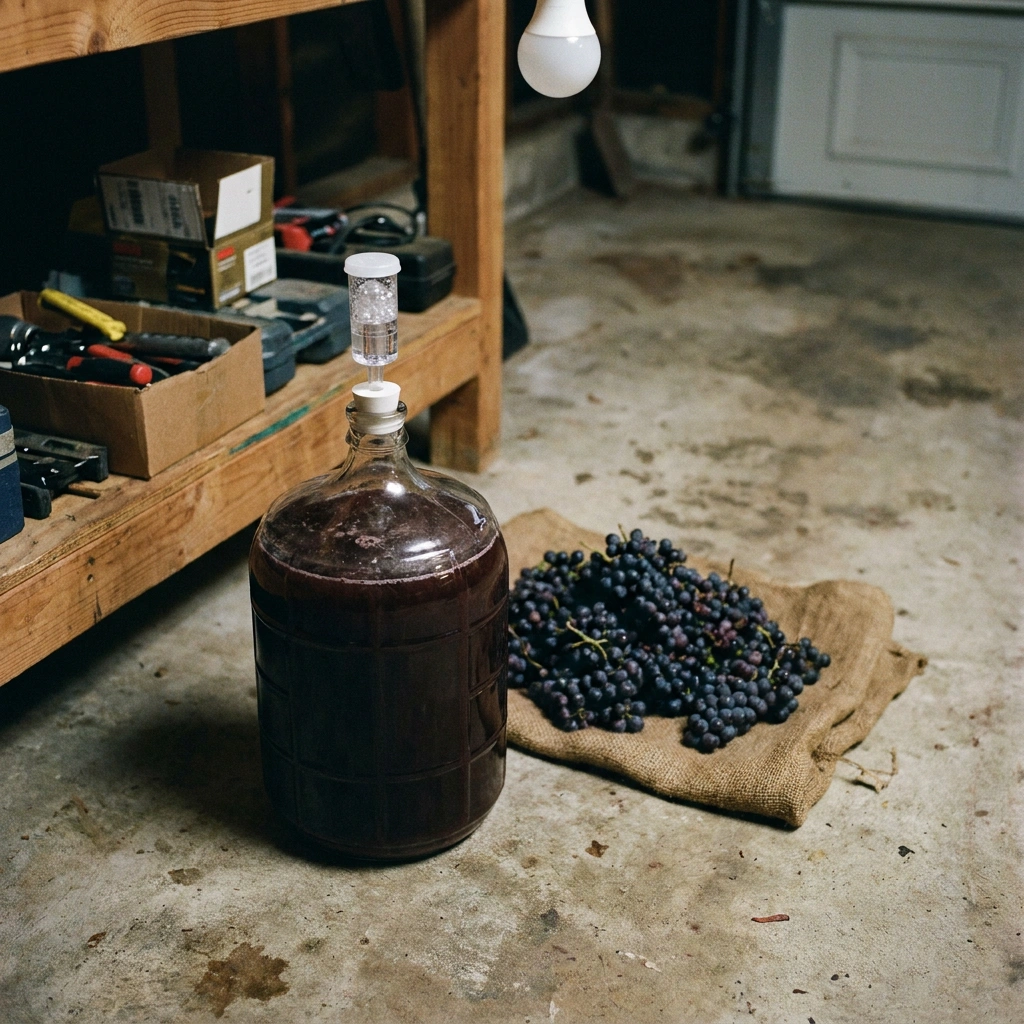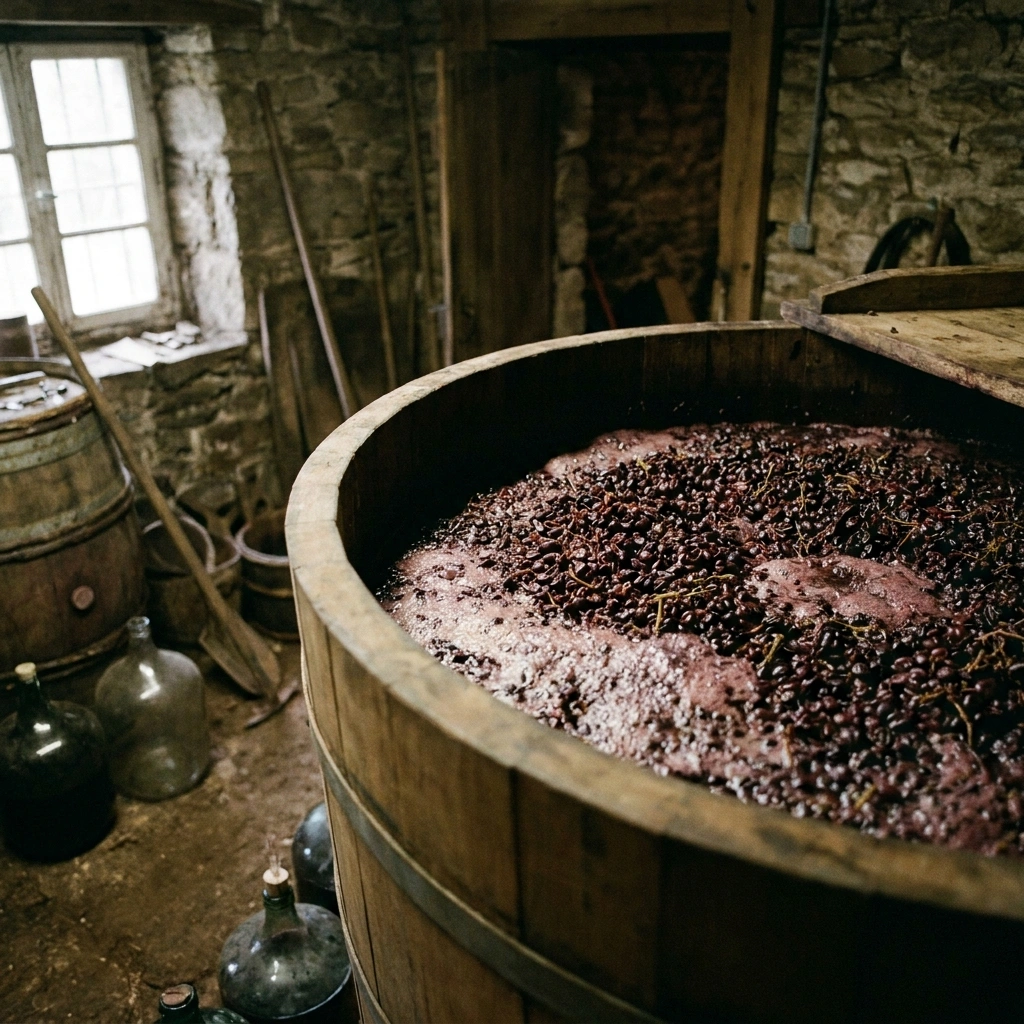
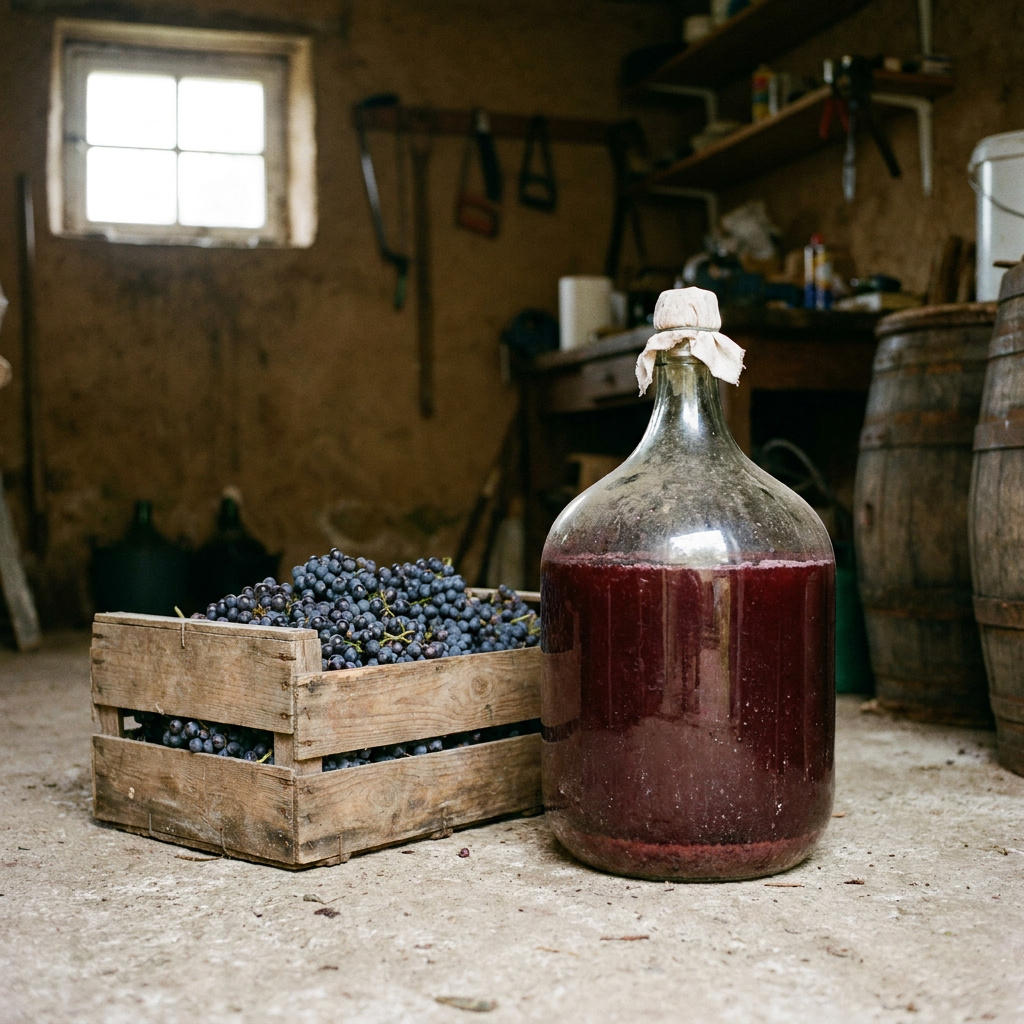
Short answer: plan on 2.5-3 lb (1.1-1.4 kg) of grapes per 750 ml bottle, or 16-20 lb (7-9 kg) per gallon of finished wine. For a 5-gallon home batch – about 25 bottles – you will need roughly 85-100 lb (38-45 kg) of fruit, which is what 8-12 mature backyard vines can produce in a good year. Those numbers hold for most varieties. Scroll down to see why the range is wide and how to estimate for your specific grapes.
| Batch size | Grapes needed (lb) | Grapes needed (kg) | Approx. bottles |
|---|---|---|---|
| 1 gallon | 16-20 lb | 7-9 kg | ~5 bottles |
| 3 gallons | 48-60 lb | 22-27 kg | ~15 bottles |
| 5 gallons | 85-100 lb | 38-45 kg | ~25 bottles |
| Per 750 ml bottle | 2.5-3 lb | 1.1-1.4 kg | 1 |
| Note: thick-skinned cold-hardy hybrids (Frontenac, Marquette) trend toward the upper end – budget 19-22 lb (8.5-10 kg) per gallon due to lower juice yield per pound. | |||
The math is simple once you understand two key numbers: juice yield and desired batch size. Here is how both work.
The Math: From Grapes to Gallons
A ton (2,000 lb / 907 kg) of fresh grapes typically yields around 150-165 gallons of finished wine – roughly 750-825 standard bottles. (You may see 160-180 gallons cited elsewhere; that figure usually refers to gross juice before fermentation and racking losses, not the finished wine in the bottle.) Scale that down and you get the per-bottle and per-gallon figures in the table above, though the exact number shifts based on grape size, ripeness, and how you extract the juice.
The key conversion to keep in mind: grapes are roughly 60-70% juice by weight. The rest is skins, seeds, and stems. So 100 lb (45 kg) of grapes gives you about 6-7 gallons of raw juice. After fermentation losses and sediment, you end up with roughly 5-6 gallons of wine – right in line with the 16-20 lb/gallon figure.
Worked Example: A 5-Gallon Backyard Batch
Say you want to make 5 gallons of Marquette red – about 25 bottles to share through winter. Here is how the numbers stack up:
- Target: 5 gallons finished wine
- Account for fermentation loss (~10%): you want 5.5 gallons going in
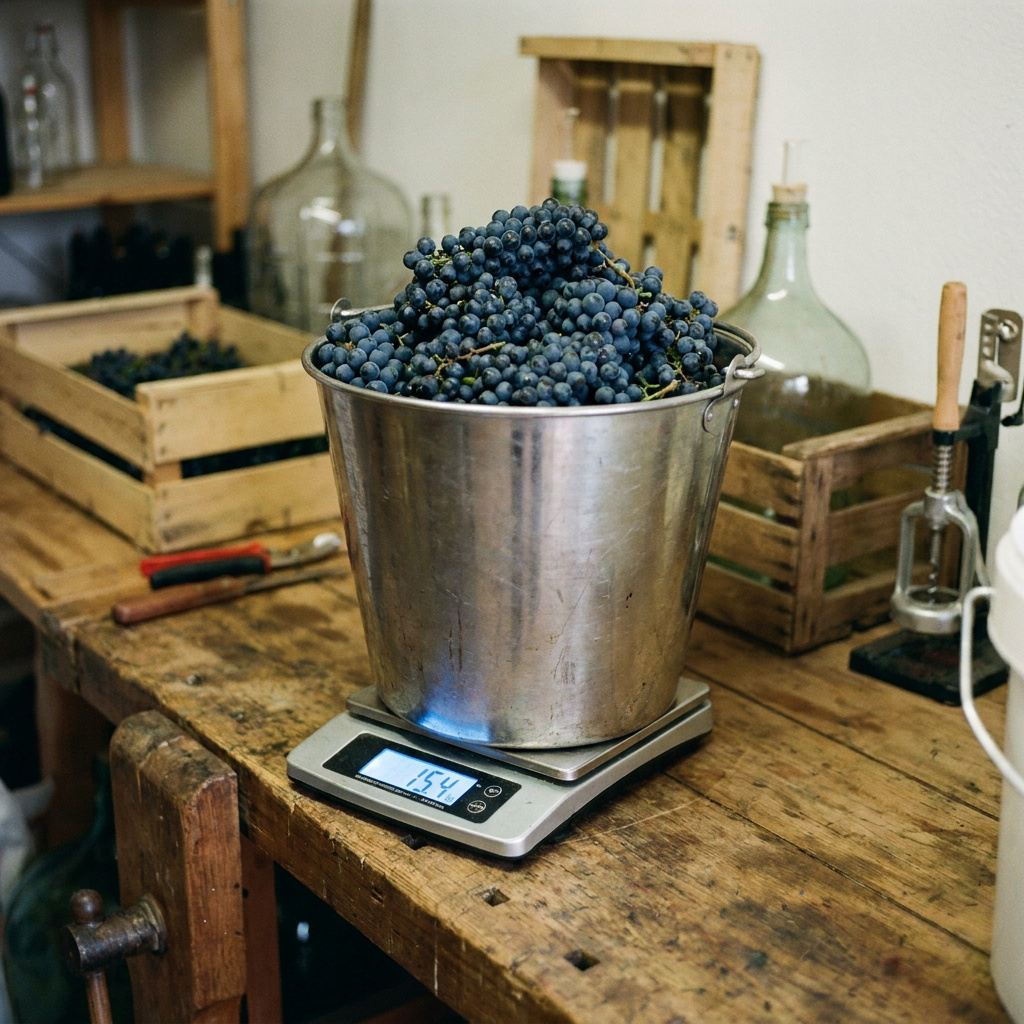
- At 60-65% juice yield: you need roughly 85-95 lb (38-43 kg) of whole clusters
- At 5-8 lb per vine at peak yield: that is 12-18 mature Marquette vines
- Realistically at backyard scale: harvest 100 lb (45 kg) to leave yourself a margin
New vines (years 1-2) produce almost nothing. A healthy mature vine in Zone 4-6 will give you 5-15 lb depending on variety and trellis system. Factor that into your vineyard plan before you commit to a batch size. Our Vineyard Planner tool can help you work backwards from a target bottle count. → Grape Vine Spacing Guide
What Changes the Numbers: Key Variables
Grape Variety and Berry Size
Cold-hardy hybrids like Marquette, Frontenac, La Crescent, and Petite Pearl tend to have thicker skins and smaller berries than classic Vinifera varieties. That means a higher skin-to-juice ratio – you often get less juice per pound than you would from, say, Cabernet Sauvignon. Research on thick-skinned hybrid varieties generally indicates free-run juice yields in the 55-65% range, compared with 65-70% for thin-skinned Vinifera – though exact figures vary by variety, ripeness, and pressing method.
In practice, this means if you are growing Frontenac or Marquette in Zone 3-5, budget closer to 19-22 lb (8.5-10 kg) per gallon rather than the 16-18 lb figure you might see in general winemaking guides written for California grapes.
Free-Run Juice vs. Pressed Juice
There are two phases of juice extraction:
- Free-run juice – flows out during crushing or early fermentation with minimal pressure. This is the highest quality, lightest, and most fruit-forward juice.
- Press juice – extracted by physically pressing the pomace (spent skins and seeds). It adds volume but also tannin, bitterness, and sometimes harsh flavors.
Home winemakers using a simple basket press typically get 60-65% yield total (free-run + pressed). Using a bladder press or a strong manual press can push that to 70-75%. The difference on a 100 lb batch is real: 60% yield gives you ~6 gallons; 70% gives you ~7 gallons. That is an extra 5 bottles from the same fruit.
If you want to make wine at home and are not sure what equipment you need to start, a basic starter kit covers the essentials – fermenter, airlock, hydrometer, and racking cane. → Browse home winemaking starter kits on Amazon (For small batches, a 6-gallon glass carboy plus a basic Italian basket press is plenty.)
Sugar Content and Brix at Harvest
Riper grapes with higher Brix (sugar) convert more sugar to alcohol during fermentation, but the grape weight itself does not change much. What changes is your alcohol level and residual sweetness – not the pounds-per-bottle ratio directly. That said, underripe or stressed grapes in a bad growing year may have higher water content, which can slightly reduce the effective juice yield per pound. Measuring Brix before harvest with a refractometer is the right way to time your pick. → How to Know When Grapes Are Ready to Harvest
Red vs. White Wine Process
For red wine, you ferment on the skins – meaning the whole crushed grape mash (must) sits and ferments together before pressing. This extracts more juice because the skins break down during fermentation. For white wine, you press first and ferment only the juice, which typically gives you a slightly lower yield since you miss the skin-fermentation extraction phase. The difference is usually 5-8% – not huge, but worth knowing if you are doing your math tight. See the basic winemaking instructions guide for the full process walkthrough.
Cold-Climate Note: What Zone 3-6 Growers Should Expect
Growing grapes in USDA Zones 3-6 means working with cold-hardy hybrids that have different characteristics than the California or European varieties most winemaking guides are written for. Here is what to expect from Marquette, Frontenac, and La Crescent:
- Smaller berry size – Cold-hardy varieties tend to have smaller, more tightly packed clusters. More skin, less juice per pound than Merlot or Chardonnay.
- Thicker skins – Great for cold hardiness, less great for juice extraction. Plan on 60-65% juice yield, not 70%.
- Variable harvest year to year – A late frost, hail, or drought year can cut yield by 30-50%. Build buffer into your grape-to-bottle plan.
- Vine age matters more – Cold-climate vines often take until year 3-4 to reach meaningful yield. In years 1-2, you might get 2-5 lb per vine. By year 5+, a healthy Marquette in a well-drained site might give you 10-15 lb.
For spacing and trellis systems that maximize yield in cold climates, see the grape vine spacing guide.
Frequently Asked Questions
How many pounds of grapes does it take to make a bottle of wine?
About 2.5-3 lb (1.1-1.4 kg) for a standard 750 ml bottle. For cold-hardy hybrid varieties like Marquette or Frontenac with thick skins, budget closer to 3-3.5 lb per bottle.
How many grapes per gallon of wine?
Plan on 16-20 lb (7-9 kg) of whole grapes per gallon of finished wine. Cold-hardy hybrid varieties with thick skins and lower juice yield sit at the higher end of that range – 19-22 lb per gallon is realistic for Frontenac or Marquette.
How many bottles does a 5-gallon batch make?
A 5-gallon batch yields approximately 25 standard 750 ml bottles. You will need 85-100 lb (38-45 kg) of grapes. At typical backyard vine yields of 5-10 lb per mature vine, that is 10-20 vines worth of harvest.
How many grapes are in a bottle of wine?
Roughly 600-800 individual grapes depending on berry size. Cold-hardy varieties with small berries (like Marquette) are on the higher end – you might be squeezing 750+ small grapes into a single bottle.
Does variety affect how many pounds I need?
Yes, significantly. Thick-skinned varieties give less juice per pound than thin-skinned ones. Hybrid cold-hardy varieties grown in Zones 3-6 (Marquette, Frontenac, La Crescent, Petite Pearl, Itasca) have lower juice yield than Vinifera varieties like Merlot or Chardonnay. Adjust your estimate upward by 10-20% if you are using cold-hardy hybrids.
How much wine does a mature grape vine produce?
A healthy mature vine (year 4+) in USDA Zones 4-6 typically produces 5-15 lb (2-7 kg) of fruit per year depending on variety, trellis system, and growing conditions. At 2.5-3 lb per bottle, one good vine gives you 2-5 bottles of wine. A small backyard planting of 10 vines could reasonably yield 20-50 bottles in a good year once established.
🍇 Don’t plant the wrong grape
Vines take years to fruit. Get the free cheat-sheet of varieties that actually survive and ripen in your zone.
By subscribing you agree to our Privacy Policy.