
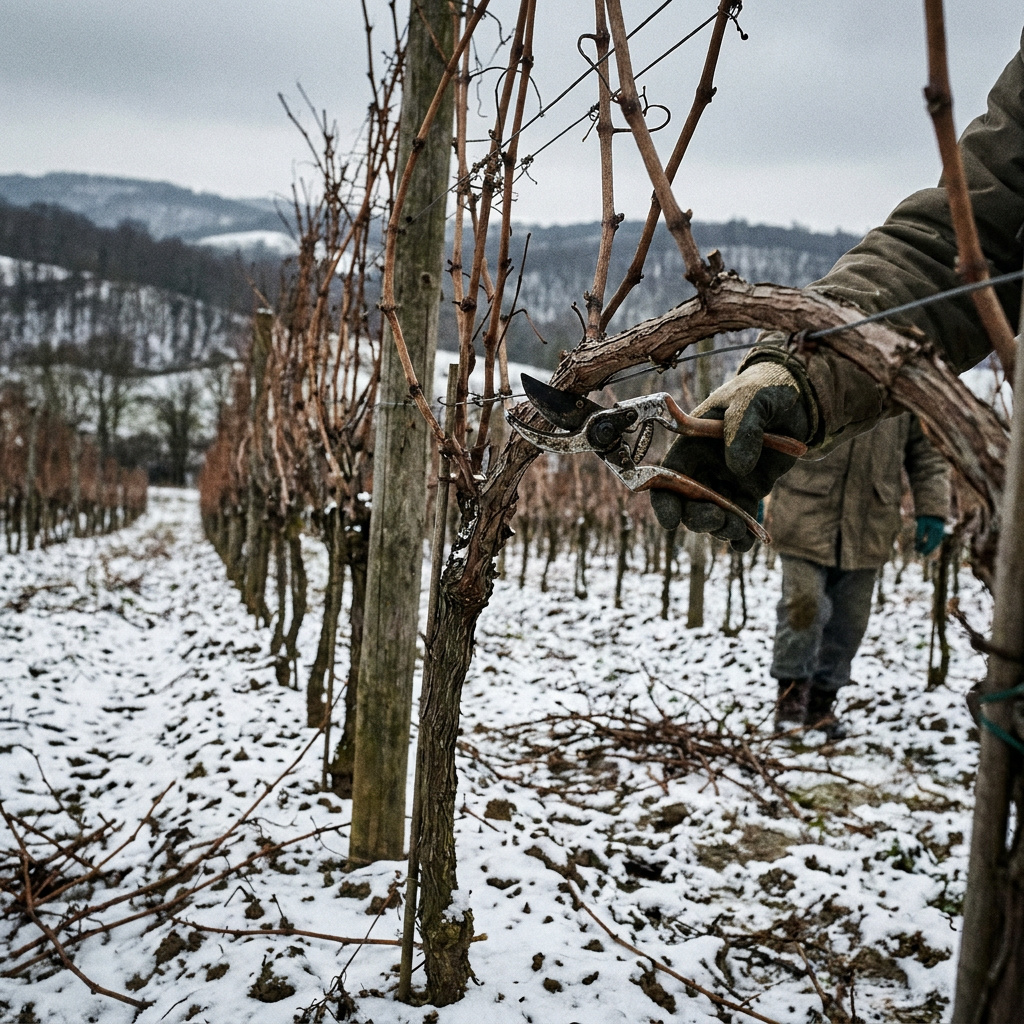
A vineyard runs on a yearly rhythm, and the jobs shift with your climate: a Zone 4 grower prunes in April and braces for September frost, while a Zone 8 grower prunes in February and picks in late summer. This tool builds a month-by-month calendar for your exact zone, vine type and trellis — when to prune, thin shoots, watch for frost, net against birds, harvest, and protect the vines for winter — with the reason behind each job so it actually sticks.
🍇 Vineyard Year & Pruning Calendar
Pick your zone, vine type and trellis, and get a month-by-month task list for your vineyard — when to prune, thin, watch for frost, net, harvest and protect for winter.
The vineyard year, stage by stage
Every task below is tied to a growth stage, and the calendar slots it into the right month for your zone:
- Dormant pruning (late winter): cut back ~80–90% of last year’s growth to your training system. In cold zones, prune late so you can remove winter-killed wood.
- Bud break (spring): the most frost-vulnerable moment — have protection ready.
- Shoot thinning (after bud break): thin to ~4–5 shoots per foot of cordon; remove doubles and suckers for airflow.
- Bloom (early summer): a critical disease and pollination window — keep the canopy open, don’t disturb during full flower.
- Fruit set to veraison: position shoots, pull leaves in the fruit zone, thin clusters for ripeness.
- Veraison (color change): net against birds, drop green clusters, start sampling sugar and acid.
- Harvest: pick on numbers and taste, not the date.
- Post-harvest & winterization: keep leaves working, then mulch, and in cold zones protect tender vines.
🍇 Our pick: dormant pruning is most of the year’s cutting, so a sharp pair of bypass pruning shears (and a small folding saw for old trunks) saves your hands and gives clean cuts that heal fast. Sharpen them before pruning season — ragged cuts invite disease.
Next steps
- How to prune grape vines (step by step)
- Grape trellis systems and training
- Brix to potential alcohol & harvest readiness
- Will my grapes ripen? (GDD calculator)
Frequently asked questions
When should I prune grape vines?
Prune during full dormancy in late winter or early spring, before bud break. In cold climates, wait until late in the dormant season (often March–April) so you can see which buds and canes survived the winter and cut out the dead wood. Pruning too early in a hard-winter area risks losing more wood to cold injury. A little sap “bleeding” from late cuts looks alarming but doesn’t hurt the vine.
How much should I prune off?
A lot — usually 80–90% of last year’s growth. Grapes fruit on shoots that grow from one-year-old wood, so each winter you cut back to a chosen number of buds (for many backyard vines, roughly 30–60 buds total, balanced to the vine’s size). Leaving too many buds gives a tangled, shaded, disease-prone canopy and small, slow-ripening fruit.
What is the most frost-sensitive time?
Bud break and the few weeks after. Once buds swell and green shoots emerge, a hard spring frost can kill them and your crop for the year. The calendar flags your bud-break window so you can have frost protection (covers, wind machines, overhead water, or simply a well-drained site) ready.
Do I need to bury or protect vines in winter?
Tender vinifera (like Cabernet or Chardonnay) grown in Zone 3–5 often needs winter protection — hilling soil over the graft union, or laying down multi-trunk “fan” vines and covering them. Cold-hardy hybrids (Marquette, Frontenac, La Crescent) usually survive to −30 °F or colder on their own roots and need no burial. The tool tailors the winter step to your vine type and zone.
When are grapes ready to harvest?
When sugar (Brix), acid and flavor line up for your wine or table use — not just by the calendar. The tool shows your typical harvest window, but always confirm with a taste and a refractometer reading. Our Brix calculator turns that reading into potential alcohol and a ripeness verdict.
