
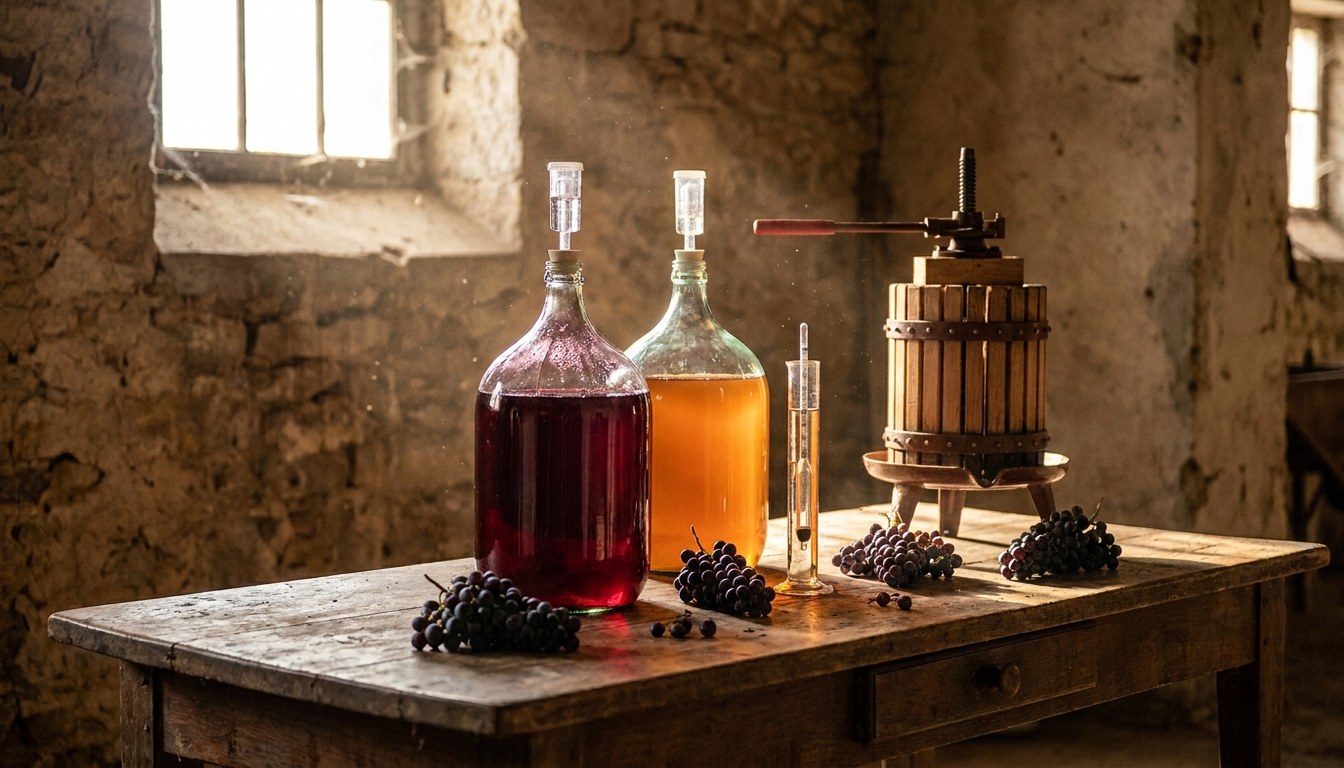
Pete’s recommended gear
Home winemaking equipment
What I’d actually buy to take a backyard grape harvest from crush to a corked bottle – testing tools, a press, fermenters, additives and bottling gear, grouped by the job each one does.
How this list works: these are the tools and supplies that match each step of making wine at home, chosen for the job they do. Links go to Amazon, where you can check the current price, availability and reviews. As an Amazon Associate I may earn a small commission if you buy, at no extra cost to you.
Growing the grapes is half the project – turning them into wine is the other half, and having the right gear on hand is what keeps that second half from turning into a ruined batch. Below is what I’d actually buy for a home crush, in the order you’ll use it: what to test with, what to crush and press in, what to ferment in, the additives that keep a must clean and stable, and what to bottle with once it’s ready. If you haven’t made a batch before, start with our step-by-step wine-making instructions – this page is the shopping list that goes with it. Check your sugar before you pick with the Brix to alcohol calculator, and if you’re still deciding when to harvest, see when the grapes are ready to harvest.
Testing & measuring

Brewer’s Elite Triple-Scale Hydrometer + Test Jar
What I use once fermentation is underway – one float in the jar gives specific gravity, Brix and potential alcohol at a glance, so I know when primary fermentation is actually done.
Check it on Amazon →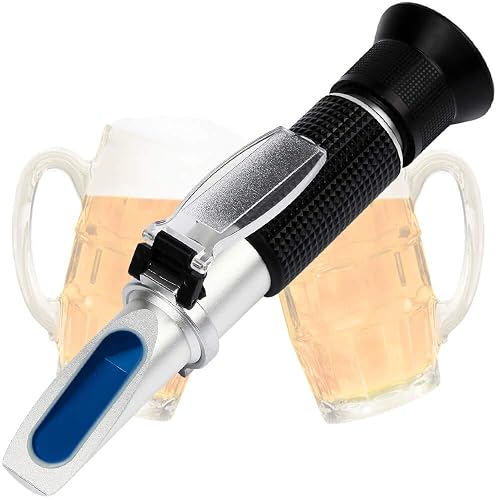
Anpro Brix Refractometer with ATC
My pick for checking sugar before the grapes ever reach the crusher – one drop on the prism and the ATC scale means a hot afternoon doesn’t throw the reading off. Pairs with our Brix to alcohol calculator.
Check it on Amazon →
Apera AI209 PH20 Waterproof pH Tester Kit
The tool that takes the guesswork out of must pH – a calibrated pocket meter reads a real number in seconds, where color strips only get you in the neighborhood.
Check it on Amazon →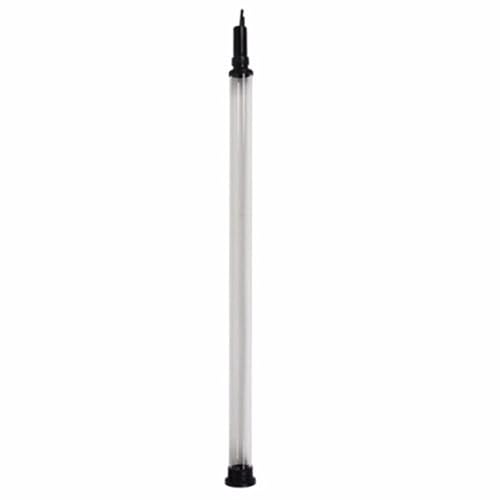
Craft A Brew Sampler Wine Thief
What I reach for to pull a taste or a gravity sample straight out of the carboy without stirring up the sediment sitting on the bottom.
Check it on Amazon →Crushing & pressing
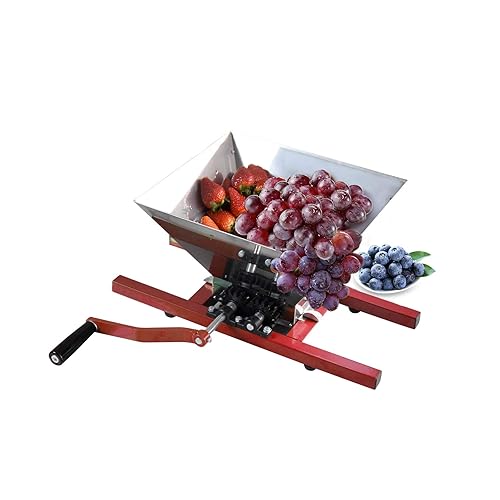
SQUEEZE master Grape Berry Wine Fruit Manual Crusher Grinder (7L)
My pick for a small home batch – feed the clusters through the rollers by hand and the juice starts running in minutes. See the note below on what this does and doesn’t do.
Check it on Amazon →
SQUEEZE master Solid Wood Basket Wine Press (1.6 Gal / 6L)
What I’d buy for pressing a small batch of must – the wooden blocks and pole handle get real yield out of the pomace without a mechanical press.
Check it on Amazon →Fermentation

1-Gallon Glass Jug with Airlock, Polyseal Cap and #6.5 Rubber Bung
My pick for a first, small test batch – the airlock and bung already fit the jug, so you can be fermenting the same day it arrives.
Check it on Amazon →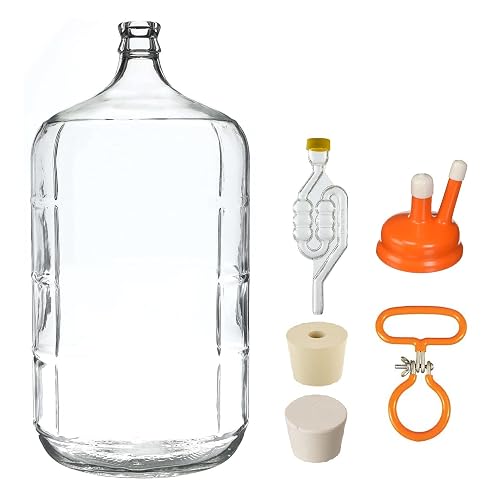
North Mountain Supply 6-Gallon Premium Italian Glass Carboy
What I’d step up to once a batch is worth committing a full six gallons to – proper Italian glass, with the stoppers and a 6-bubble airlock included.
Check it on Amazon →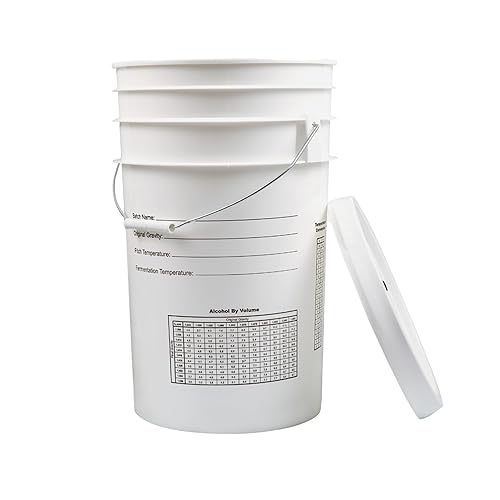
FastRack 6.5-Gallon Fermenting Bucket with Lid
The food-grade bucket I’d use for primary fermentation on a bigger batch – the wide mouth makes punching down the cap far easier than through a carboy neck.
Check it on Amazon →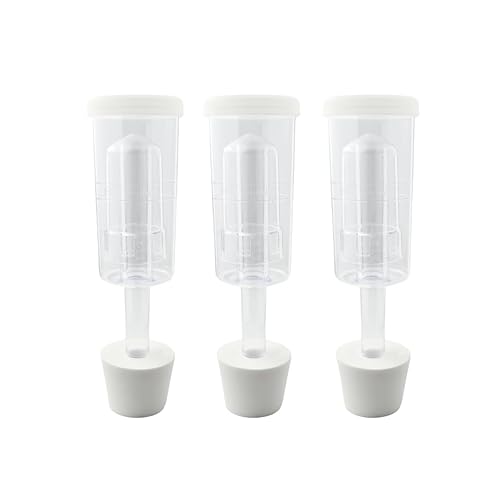
FastRack 3-Piece Airlock Set with Drilled Rubber Stopper
The small parts that keep oxygen out and let CO2 escape. I keep a spare set on hand – they’re cheap, and easy to misplace mid-ferment.
Check it on Amazon →
Fermtech Mini Auto-Siphon
What I reach for at racking time – it starts the siphon on its own, so you’re not sucking on a hose or splashing the wine and picking up oxygen.
Check it on Amazon →Additives & stabilizers

Tap Craft Potassium Metabisulfite Powder (4 oz)
My pick once you’re making more than a gallon at a time – dosing sulfite by weight is more precise than counting tablets.
Check it on Amazon →
LD Carlson Campden Tablets (Potassium Metabisulfite, 1 lb)
What I use for the easy, pre-measured version of the same sulfite dose – one crushed tablet per gallon the day before you pitch yeast knocks back wild yeast and bacteria.
Check it on Amazon →
Lalvin EC-1118 Wine Yeast (10-pack)
The yeast I’d reach for on a hardy-hybrid must – it ferments clean and handles a cold must, which suits Marquette and Frontenac about as well as any strain out there.
Check it on Amazon →Bottling

FastRack Green 750ml Wine Bottles, 12-Pack (Bordeaux, no corks)
My pick for bottling day – a case of proper 750ml wine bottles, ready to fill and cork once the wine has cleared.
Check it on Amazon →
FastRack #9 Straight Wine Corks (Bag of 100)
What I’d order alongside the bottles – a straight cork sized to fit a standard 750ml neck, enough for several batches.
Check it on Amazon →
FastRack Double Lever Corker (with 20 corks)
The tool that makes corking a whole batch bearable – a double-lever corker seats a cork in a couple of seconds instead of fighting it in by hand.
Check it on Amazon →Sanitation

Craft A Brew One Step No-Rinse Cleanser (8 oz)
What I clean gear with before sanitizing – an oxygen-based cleaner that lifts residue and needs no rinse. It is not a sanitizer, so follow it with a K-meta solution or Star San (sold by homebrew supply shops).
Check it on Amazon →🍇 Free Home Winemaking Cheat Sheet
The 8 steps, sulfite and sugar doses, and a bottling checklist on one printable page.
By subscribing you agree to our Privacy Policy.
