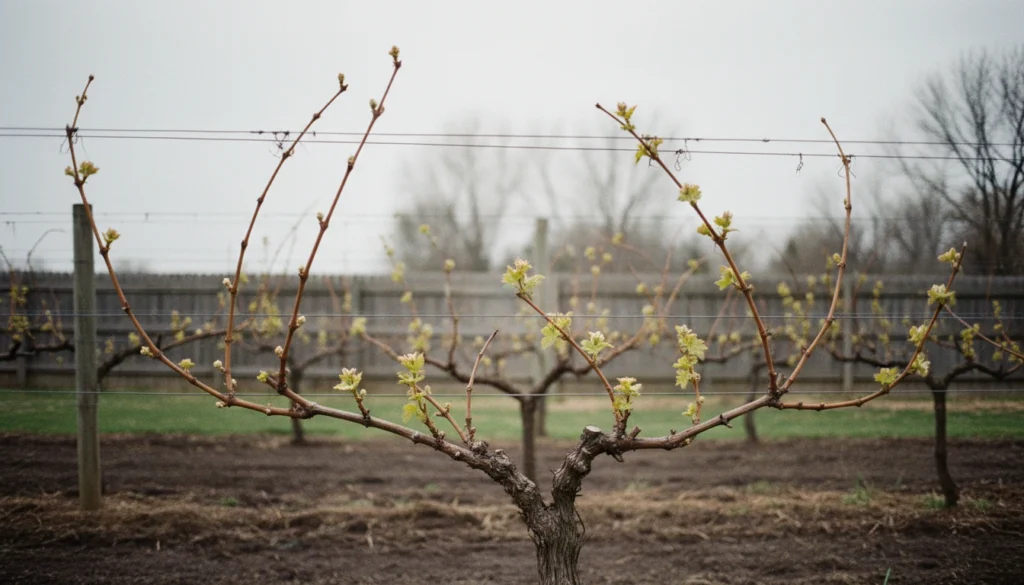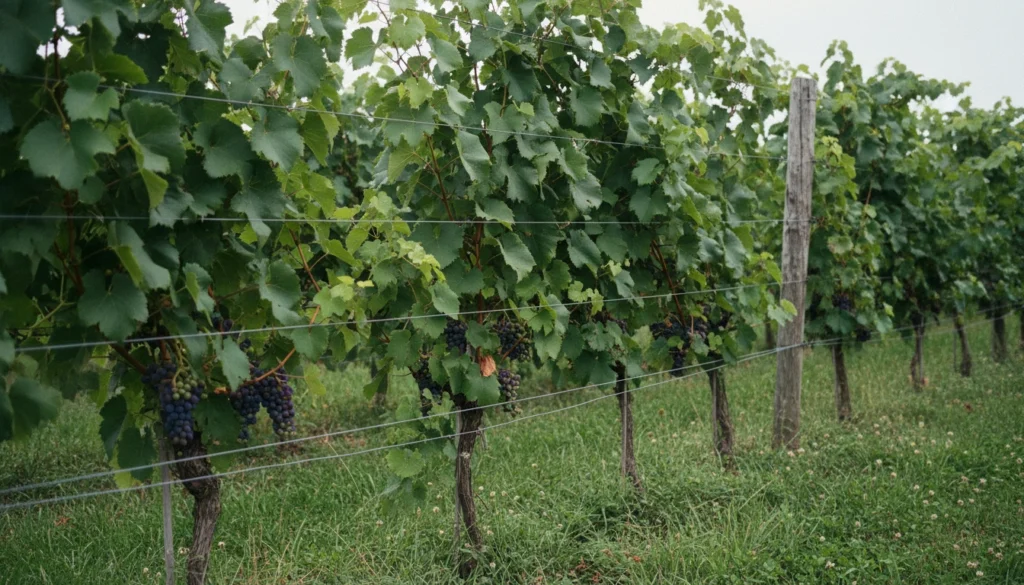
The fastest way to narrow down yellow grape leaves is to check two things: which leaves are affected (old growth near the shoot base, or new growth at the tip), and whether the yellowing is uniform or shows as yellow tissue between green veins. Old, uniformly pale leaves usually mean nitrogen. Interveinal yellowing on the newest leaves usually means iron, tied to high soil pH. Interveinal yellowing on the oldest leaves usually means magnesium; a bronzed, scorched margin on old leaves usually means potassium. Twisted, cupped, or strap-shaped leaves point away from nutrients entirely, toward herbicide drift. And if it’s September and yellowing is spreading evenly from the base upward, the vine may simply be shutting down for winter.
I get more questions about yellow leaves than almost anything else – a healthy grape leaf should be an even green from spring through late summer. Most causes aren’t emergencies, but herbicide drift is worth catching early. I’m a retired Zone 4 home grower, not a plant pathologist, so this leans on university extension research (Cornell, NC State, University of Minnesota) rather than guesswork.
Start Here: Where on the Vine, and What Pattern
Nutrients split into two groups, which explains almost every pattern below. Mobile nutrients (nitrogen, magnesium, potassium) get pulled from old leaves and relocated to new growth when supply is short, so deficiency shows on the oldest, lowest leaves first. Immobile nutrients (mainly iron) can’t be relocated once built into a leaf, so deficiency shows on the youngest leaves at the shoot tips first.
The second question – uniform versus interveinal – separates nitrogen from the rest. Nitrogen deficiency fades the whole leaf evenly; iron, magnesium, and potassium leave the veins green while tissue between them yellows or scorches, though the exact look differs by nutrient. “Old or new” plus “uniform or interveinal” rules out most of this list in under a minute.
Nitrogen: Uniform Pale Green on Old Leaves
Nitrogen is the most mobile nutrient a vine has. When it’s short, the vine strips it from oldest, basal leaves and ships it to the growing tip, producing a uniform, even light-green to pale-yellow color across the whole leaf – not a vein pattern. The NC State Winegrape Grower’s Guide describes this as a general whole-leaf paling rather than interveinal chlorosis, which is the key thing separating it from iron or magnesium deficiency.
It usually comes with short shoots and a weak-looking vine. Shoot length is a faster read than color alone: healthy, adequately-fed vines put on 3-5 ft (0.9-1.5 m) by mid-season. In home vineyards, true nitrogen deficiency is far less common than nitrogen excess, which brings its own problems – soft growth and, in cold climates, shoots that don’t harden off before frost. See fertilizing grape vines before adding any.
Iron Chlorosis: Interveinal Yellowing on New Growth
Iron is essentially immobile in the vine, so deficiency shows up first on the youngest leaves at the shoot tips – the opposite end of the vine from nitrogen. The pattern is distinctive: yellow tissue between the veins while the veins stay sharply green, sometimes fading to near-white in severe cases while the veins remain a visible green network.
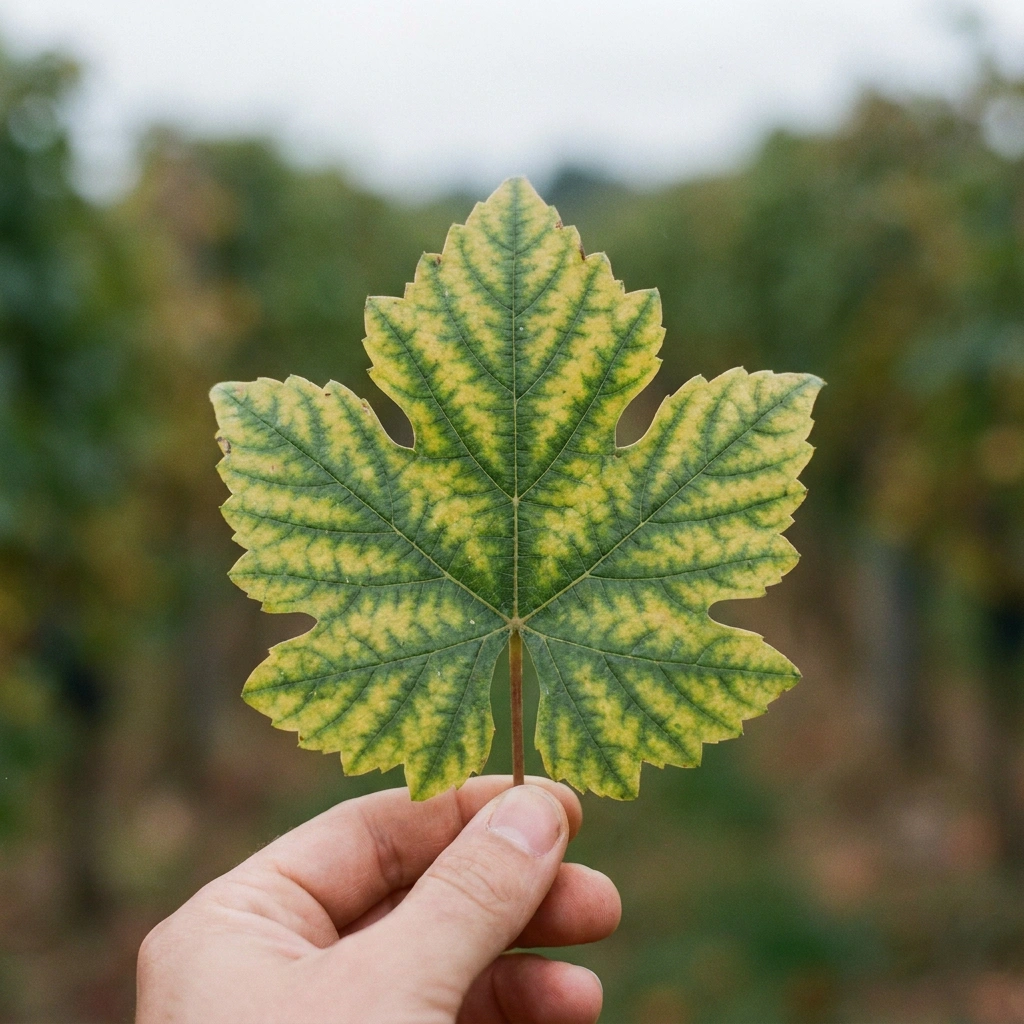
Almost always this is a shortage of available iron, not soil iron itself. In calcareous or high-pH soils (above roughly pH 7.2-7.5), bicarbonate ties iron up into a form roots can’t absorb even when total soil iron is adequate – Cornell viticulture soil resources and Pacific Northwest extension plant-disease references point to bicarbonate, not phosphate, as the main driver. That’s why iron chlorosis clusters near foundations and driveways, which leach lime into nearby soil over years. A soil test settles this indirectly: grapes prefer pH 5.5-6.5, and a reading above 7 points to an availability problem, fixed with a foliar chelated-iron spray at label rates.
Magnesium: Interveinal Yellowing on Old Leaves
Magnesium is mobile, so like nitrogen it shows up on older, basal leaves first, typically mid-to-late summer as crop load peaks. But the leaf pattern looks more like iron: interveinal chlorosis, with green persisting along the main veins, sometimes shading reddish-purple at the margins in red-fruited varieties, progressing to necrotic (dead, brown) tissue if uncorrected.
So magnesium and iron are told apart by position, not pattern: magnesium hits old leaves near the base; iron hits new leaves at the tip. Most extension soil tests report magnesium alongside pH, phosphorus, and potassium. Extension sources describe a foliar Epsom-salt (magnesium sulfate) spray for short-term correction and a soil-applied amendment for the longer term, both at label rates.
Potassium: Marginal Scorch on Old Leaves
Potassium also hits older, basal leaves first, but differs from magnesium’s clean interveinal pattern: a bronzed or scorched discoloration starting at the margins, sometimes with marginal necrosis, progressing inward. Cornell CALS notes potassium demand peaks after veraison as fruit matures – which is both when a shortage is most likely to show and when it does the most damage to ripening.
Because visible symptoms lag the actual shortage, Cornell’s guidance leans on petiole (leaf-stem) tissue testing at bloom rather than waiting for leaves to show it. A standard soil test reports potassium too and is a reasonable early check, but petiole testing is the more precise tool.
Herbicide Drift: The Under-Diagnosed Cause
This is the one home growers miss most, because it doesn’t look like a nutrient chart – it looks like the leaf grew wrong. Grapevines are famously sensitive to growth-regulator herbicides like 2,4-D and dicamba, common in lawn weed-and-feed products and pasture sprays, and even tiny drifted amounts from a neighbor’s treatment or unrinsed spray equipment can injure vines well downwind.
University of Minnesota Extension’s fruit and vegetable IPM program describes the tell-tale signs: leaves that “fan” or “shoe-string” into narrow, cupped shapes, downward or upward curling (epinasty), strapping, and chlorotic mottling that skips the clean vein pattern nutrient deficiencies show. New growth is hit hardest, and symptoms can appear within days – far faster than a deficiency develops. The giveaway is leaf shape, not color. There’s no fertilizer fix – only eliminating the spray source and giving the vine a season or more to grow out of it.
Downy Mildew: Yellow “Oil Spots,” Not a Uniform Fade
Downy mildew yellows leaves too, but it looks nothing like a deficiency once you check for it: pale yellow, oily-looking “oil spot” blotches scattered irregularly across the upper leaf surface, not confined to old or new growth and not following a vein pattern. The confirming test takes ten seconds – flip the leaf during humid weather and look for white, cottony growth on the underside beneath the spots, which nutrient deficiencies never produce. It needs free moisture and warm, humid weather to spread, so it clusters in wet stretches rather than fading in gradually. Our full downy mildew guide covers the spot pattern, fungicide options, and resistant varieties in depth.
Root Problems and Waterlogging
When roots can’t function – chronically waterlogged soil, compaction, a low spot that never drains – the vine loses its ability to take up nutrients regardless of what’s in the soil, often producing a general, blotchy yellowing that doesn’t cleanly match one nutrient’s pattern, paired with stunted growth and wilting despite wet soil. Dig down: dark, mushy, or foul-smelling roots (instead of firm and pale) point to root rot on top of the drainage problem, with Phytophthora species a common culprit in chronically wet vineyard soils per university plant pathology resources. No fertilizer fixes a drainage problem – the fix is regrading, tiling, or accepting the spot isn’t right for a vine. A soil test won’t catch this either; it reports chemistry, not drainage, so this cause is diagnosed by digging, not by mailing in a sample.
Normal Autumn Senescence (the One That Panics People Every September)
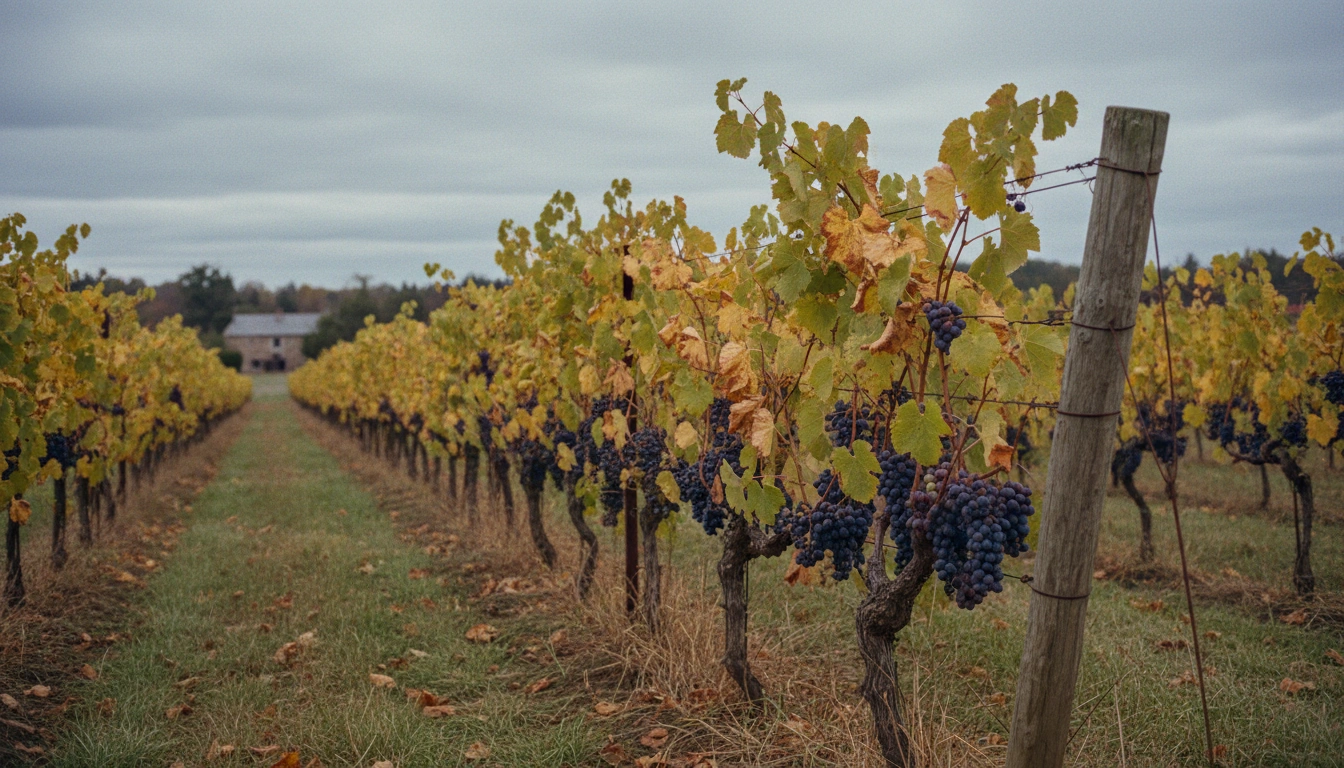
Every fall I get some version of “my whole vine just turned yellow overnight – what’s wrong?” Usually, nothing. As days shorten and temperatures drop, grape leaves stop producing chlorophyll and the vine reabsorbs what it can before dropping leaves for winter, the same process that colors up maples and oaks. White and green-fruited varieties commonly go golden-yellow; many red-fruited varieties turn red or purple instead. It tends to move evenly across the canopy, or from the base upward, rather than showing up as isolated spots or a sharp old-versus-new split.
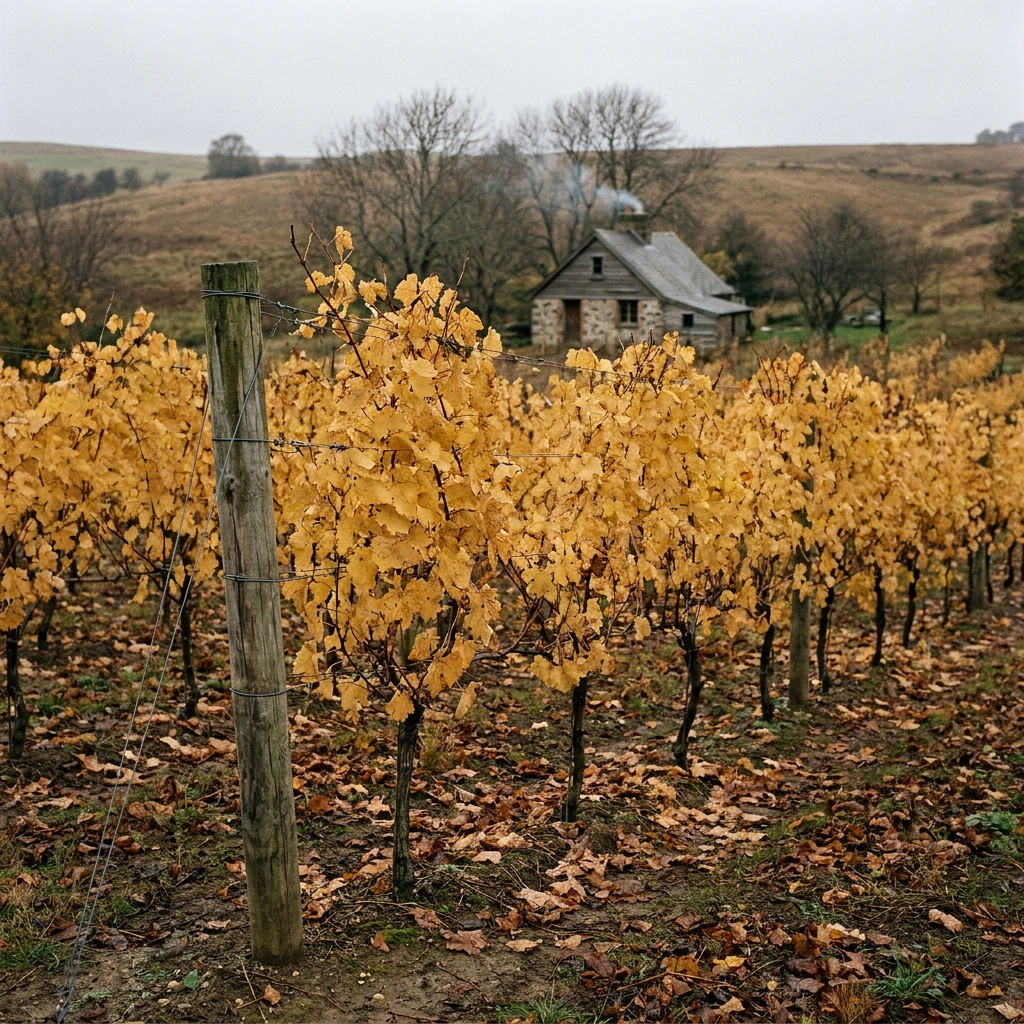
Context matters as much as color: late season, spreading evenly, on a vine that looked healthy all summer – that’s a normal seasonal shutdown, not deficiency or disease. An early frost can trigger the same sudden, vine-wide yellowing ahead of typical timing; that’s cold stress, not a nutrient problem.
What a Soil Test Settles – and What It Doesn’t
- It settles: soil pH (explains iron chlorosis risk), phosphorus, potassium, and usually magnesium and organic matter.
- It’s a poor tool for: nitrogen, which is transient in soil – vine vigor and shoot length are the better read, and a petiole (tissue) test is more precise for nitrogen and potassium status during the season.
- It settles nothing about: herbicide drift, disease, root rot, or normal autumn senescence. Those are diagnosed by symptom pattern and timing, not soil chemistry.
My own routine is a soil test every 3-4 years plus watching vine vigor between tests – it removes most of the guesswork on the nutrient side of this list. See our guide to fertilizing grape vines for building a schedule around it.
Browse soil test kits on Amazon
A home kit is a quick check, not a lab substitute – send a real sample to your state extension service every 3-4 years for the numbers that actually guide fertilizing decisions.
Quick Diagnostic Checklist
- Leaves cupped, strapped, or fan-shaped? → Suspect herbicide drift.
- White, cottony growth on the underside during humid weather? → Downy mildew.
- Old (basal) leaves, whole leaf evenly pale? → Nitrogen.
- Old leaves, yellow between green veins? → Magnesium.
- Old leaves, scorched/bronzed margins? → Potassium.
- New (shoot-tip) leaves, yellow between sharply green veins? → Iron chlorosis – check soil pH.
- Soil chronically wet, or roots dark and mushy when you dig? → Root/drainage problem.
- September or later, yellowing spreading evenly? → Probably normal senescence.
If a vine shows more than yellow leaves – spots, lesions, dieback, or fruit failing to develop – widen the search. Our grape pests and diseases overview covers the rest of what can go wrong beyond leaf color.
Yellow leaves are one branch of the diagnosis. For spots and lesions, shriveled fruit, or a vine that looks dead in spring, start at the symptom-to-cause diagnostic guide.
Frequently Asked Questions About Yellow Grape Leaves
What’s the fastest way to tell if yellow grape leaves are a nutrient deficiency or a disease?
Check leaf shape first. Deformed, cupped, or fan-shaped leaves point to herbicide drift. Normal-shaped leaves with irregular yellow “oil spot” blotches and white, cottony growth underneath in humid weather point to downy mildew. Normal-shaped leaves with a uniform pale color or a clean pattern of yellow tissue between green veins point to a nutrient deficiency – and the next question is which leaves, old or new, are affected.
Why are only the older, lower leaves on my vine turning yellow?
Nitrogen, magnesium, and potassium are mobile – the vine pulls them from older leaves to feed new growth when supply is short, so deficiencies show up on basal, older leaves first. A uniform pale-green fade points to nitrogen; interveinal yellowing with green veins points to magnesium; a bronzed or scorched margin points to potassium.
Why are the new leaves at my shoot tips turning yellow while the rest of the vine looks fine?
This points to iron, which is essentially immobile in the plant – the vine can’t relocate what little it has, so young leaves at the shoot tips show it first. It’s usually a lack of available iron from high soil pH (roughly above 7.2-7.5), common near foundations and driveways, rather than a true shortage of iron.
Can a soil test tell me why my grape leaves are turning yellow?
Partly. A standard soil test reports pH, phosphorus, potassium, and usually magnesium, covering most of the nutrient causes above and explaining iron chlorosis risk through pH. It’s a poor tool for nitrogen, since soil nitrogen is transient – vine vigor and shoot length are a better read. It tells you nothing about herbicide drift, disease, root rot, or normal seasonal color change; those need a visual and situational diagnosis, not a lab report.
Is it normal for grape leaves to turn yellow in the fall?
Yes. As the season ends, grape leaves stop producing chlorophyll and the vine reabsorbs nutrients before dropping leaves for winter – white and green-fruited varieties commonly turn yellow, while red-fruited varieties often turn red or purple. This spreads fairly evenly across the canopy rather than as an isolated spot pattern or a sharp old-versus-new split, and it isn’t a sign of deficiency or disease.
🍇 Don’t plant the wrong grape
Vines take years to fruit. Get the free cheat-sheet of varieties that actually survive and ripen in your zone.
By subscribing you agree to our Privacy Policy.