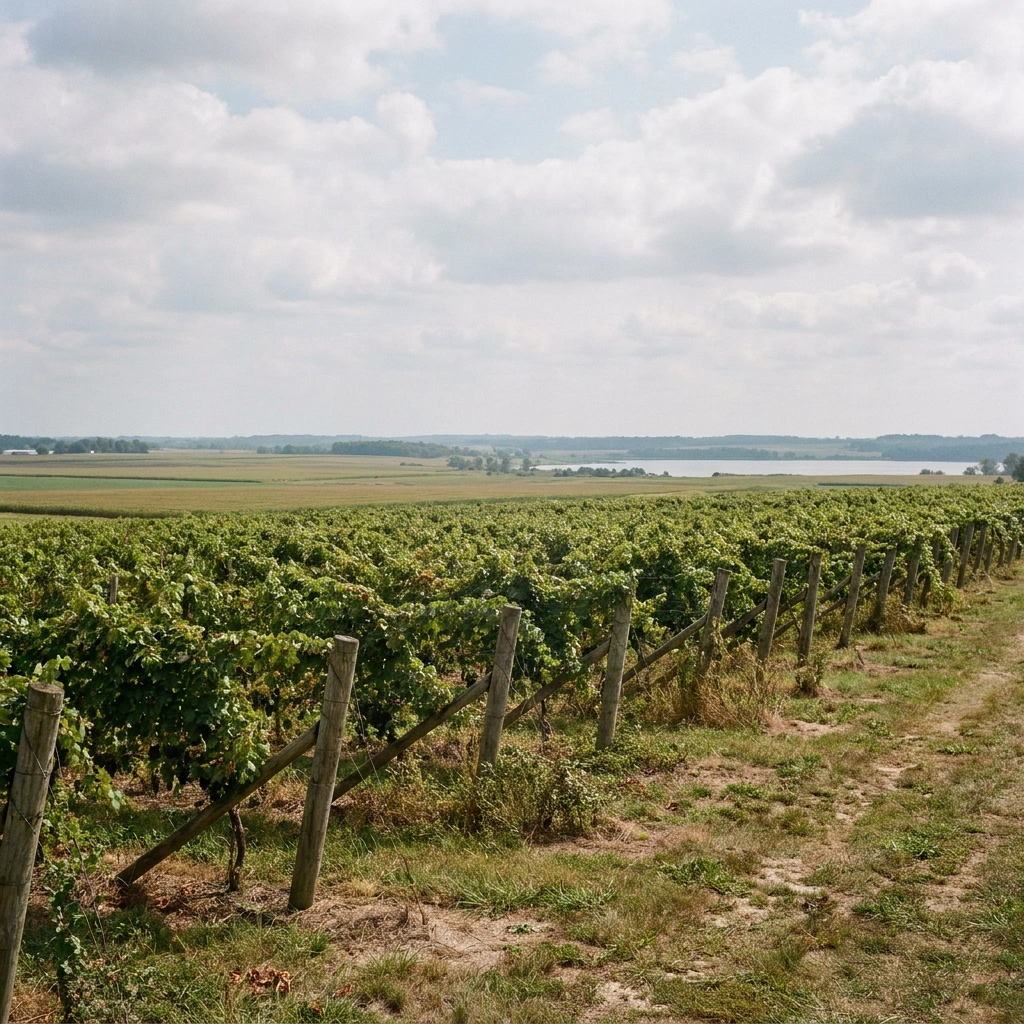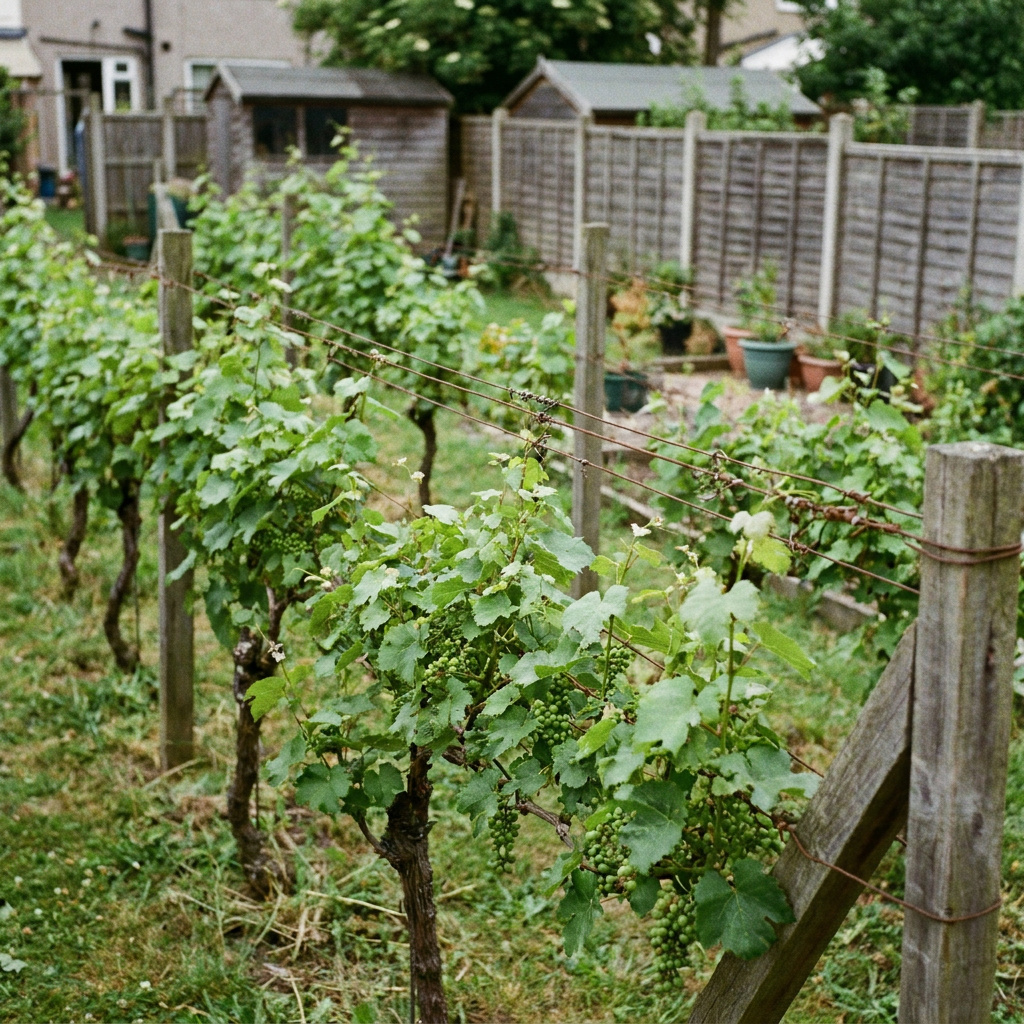
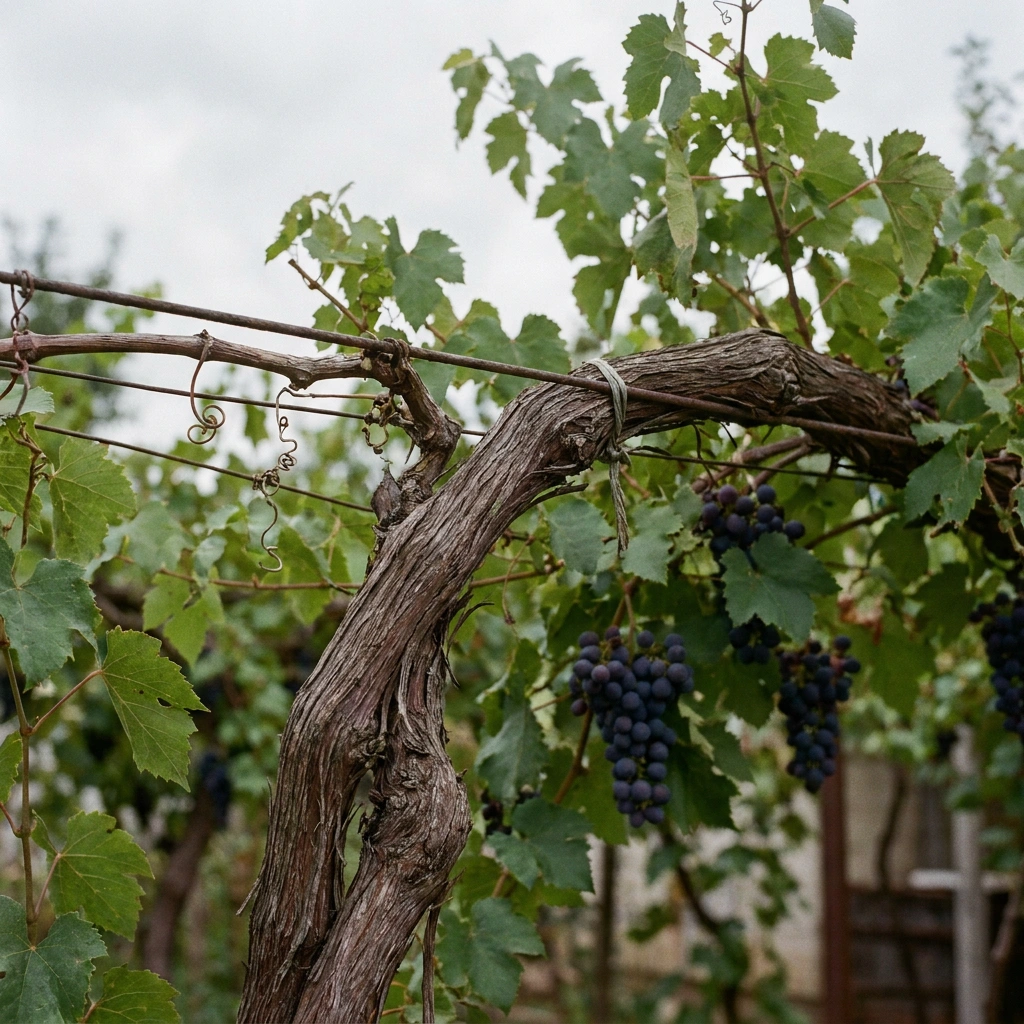
No, grapes do not grow on trees. Grapes grow on woody, perennial climbing vines in the genus Vitis. A grapevine is not a tree – it has a flexible woody trunk that can’t stand upright on its own and relies on a trellis, fence, or arbor (or a real tree in the wild) for support. The confusion is understandable, but the difference matters a lot once you start growing your own.
Vines vs. Trees: What’s the Actual Difference?
A tree has a self-supporting, rigid trunk made of dense hardwood. It grows upright without any help. A grapevine is a liana – a woody climbing plant. Its trunk (called the “permanent wood” or “old wood”) is woody and can get thick and gnarled after many years, which is where the tree confusion comes from. But unlike a tree trunk, the vine trunk can’t hold itself vertical. Without something to lean against, it sprawls along the ground.
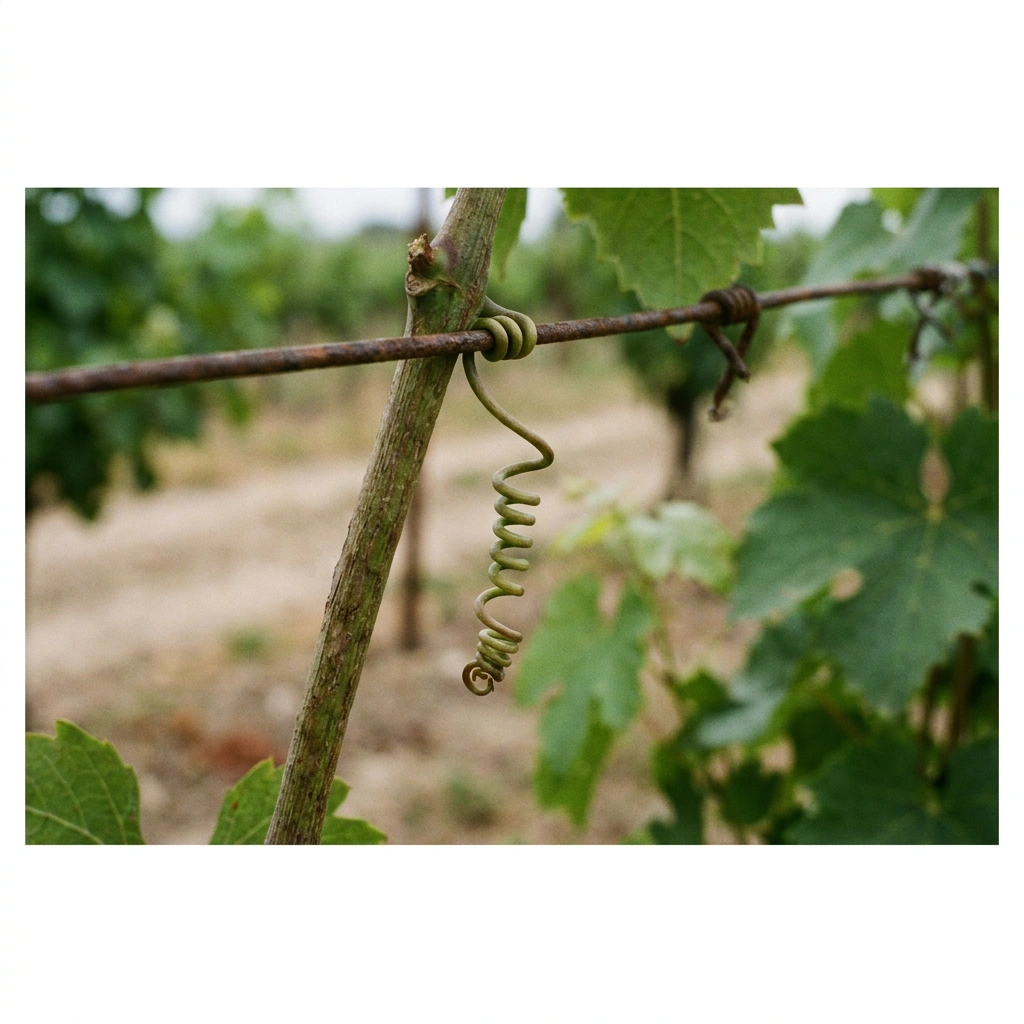
The key feature that makes a grapevine a vine: tendrils. Those small, coiling structures you see reaching out from new shoots are how the plant climbs. A tendril touches a wire or branch, coils around it within a few hours, and locks the shoot in place. Trees don’t do this. A grapevine is essentially a plant that outsources its structural support to whatever is nearby.
Why Do People Think Grapes Grow on Trees?
There are a few reasons this mix-up is so common:
- Old established vines look tree-like. A grapevine that’s 20 or 30 years old can have a trunk 4-8 inches (10-20 cm) thick, deeply furrowed bark, and multiple thick arms (called cordons) stretching several feet in each direction. If you didn’t know what you were looking at, you might reasonably call it a tree.
- Wild grapes really do grow in trees. In the eastern United States and parts of Europe, wild grapevines (like Vitis riparia and Vitis labrusca) routinely climb up oaks, maples, and other forest trees, sometimes reaching 50-80 feet (15-24 m) into the canopy. The grapes hang from the tree’s branches. The vine is using the tree as a living trellis – but the grapes are still coming from the vine, not the tree.
- Language gets fuzzy. People say “the grape tree in the backyard” the way they say “the tomato plant” – informal language for something they can see is producing fruit.
How a Grapevine Is Actually Structured
Understanding the structure helps when you’re setting up your own vines. According to University of Minnesota Extension, a grapevine has a predictable architecture:
- Trunk – the main vertical stem coming out of the ground, typically 2-4 feet (60-120 cm) tall in a managed vineyard. This is the permanent wood that persists for decades.
- Cordons – horizontal “arms” that extend from the top of the trunk along the trellis wires. These are also permanent wood, trained left and right.
- Canes or spurs – the one-year-old wood that grows from the cordons each season. This is where the current year’s shoots emerge.
- Shoots – the green growth of the current season. Leaves, tendrils, and eventually grape clusters all emerge from these shoots.
- Clusters – the grapes themselves form on the shoot, typically at nodes 3-6 counting from the base of the shoot (the lower to mid-shoot nodes). Exact position varies by variety and season.
The fruit you harvest is always on the current season’s green growth – wood that grew that very year, emerging from older permanent wood. This is why proper pruning matters so much: you’re managing which one-year-old wood stays to produce the next crop.
In the Wild, Grapevines DO Use Trees – But the Grapes Are Still From the Vine
I think the clearest way to put this: in a forest, a wild Vitis riparia vine may wind its way 40 feet (12 m) up an elm tree and drape clusters of small dark grapes across the elm’s canopy. To someone walking by, it genuinely looks like the elm is producing grapes. But the vine has its own roots, its own trunk at the base of the elm, and its own fruiting wood. The elm is just a very tall trellis. Cut the vine’s trunk and the grapes stop appearing on that tree, while the elm keeps growing just fine.
This wild behavior is also where cold-climate growers find a lot of genetic value. Varieties like Marquette and Frontenac (developed at the University of Minnesota) carry genetics from cold-hardy wild species like Vitis riparia – the same species that scrambles up trees in Minnesota winters. That cold hardiness is bred into the modern hybrid grape.
So, What Do Grapes Actually Need to Grow Well?
Since grapevines can’t stand upright on their own, support is not optional – it’s fundamental. In a home vineyard, you’ll want to install a trellis before or right as you plant. The classic setup for cold-climate zones is a high-wire cordon or VSP (vertical shoot positioning) trellis: two posts with one or two horizontal wires at roughly 36-42 inches (90-105 cm) and 60 inches (150 cm) height.
I use a simple galvanized wire trellis in my Wisconsin backyard, and honestly it handles 10+ year old Marquette and La Crescent vines without complaint. If you’re just starting, a simple kit makes getting the wire tension right much easier. Here’s the type I’d look for:
Our pick: A basic grape trellis wire kit with tensioners and anchors – search for vineyard trellis wire on Amazon. Getting the tension right from day one saves a lot of re-doing later. (Disclosure: Amazon affiliate link.)
Once you have the structure in place, starting vines from cuttings is a cost-effective way to fill it out. I cover that process in detail in my guide on propagating grapevines from cuttings. And if you want a full walkthrough of getting a backyard vineyard going from scratch, start with these steps to grow grapes in your backyard.
Frequently Asked Questions
Do grapes grow on trees or vines?
Grapes grow on vines, not trees. The grapevine (genus Vitis) is a woody perennial climbing plant that needs an external support structure – a trellis, arbor, fence, or in the wild, an actual tree – to hold its shoots upright.
Why do some grapevines look like trees?
Mature grapevines develop a thick, gnarled woody trunk over many decades, sometimes reaching 4-8 inches (10-20 cm) in diameter with deeply furrowed bark. This old wood can look very tree-like from a distance. But the trunk still can’t stand unsupported – it relies on a trellis or wall to stay upright.
Is there any grape that grows on a tree?
No grape variety grows from a tree. However, wild grapevines like Vitis riparia frequently climb up trees in forests, and their fruit clusters dangle from the tree’s canopy. The grapes are still produced by the vine – the tree is just acting as a natural trellis.
Can I let my grapevine grow up a tree?
You can, but it’s not ideal for fruit production. Vines growing into a tree canopy are hard to prune and manage, and you’ll get much lower yields than a vine trained on a proper trellis. For any serious harvest, a grape trellis is the practical choice.
What is the difference between a grapevine and a grape tree?
There is no such thing as a “grape tree” in horticulture. All grapevines in the genus Vitis are climbing vines. The phrase “grape tree” is informal and usually means an established grapevine on a trellis or arbor that has grown large enough to look tree-like.
🍇 Don’t plant the wrong grape
Vines take years to fruit. Get the free cheat-sheet of varieties that actually survive and ripen in your zone.
By subscribing you agree to our Privacy Policy.