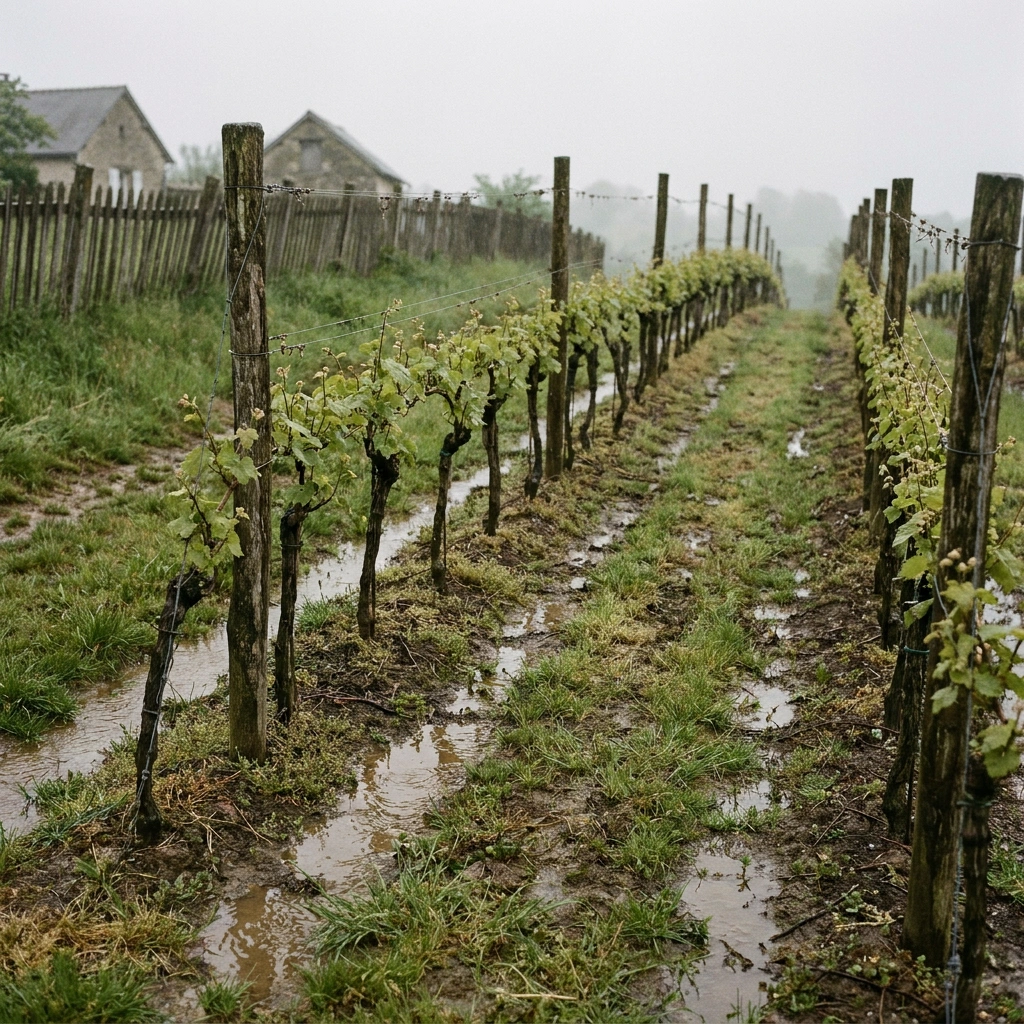
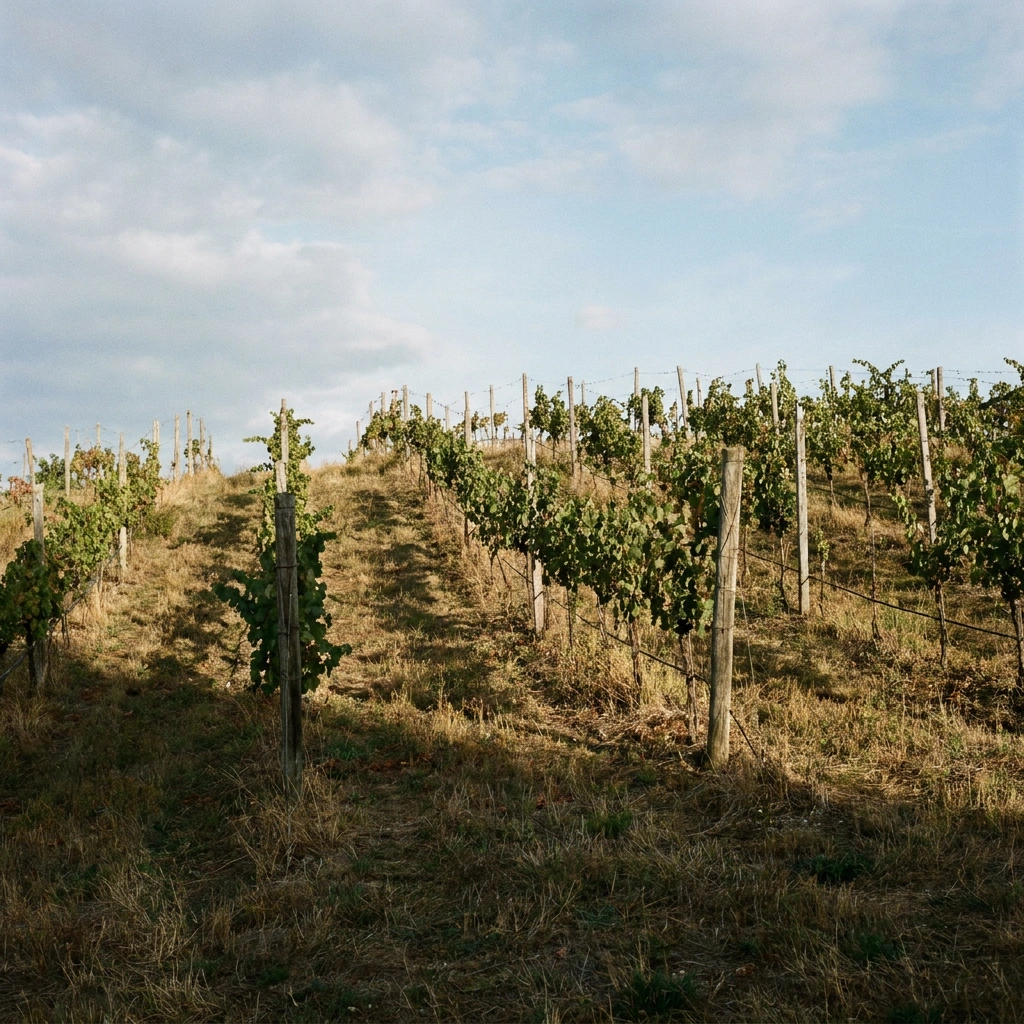
The best site for a backyard vineyard has at least 6 hours of direct sun per day, a gentle slope for cold-air drainage, good airflow to keep foliage dry, and well-drained soil. Get those four things right – especially the slope – and you’ll fight far less disease without spraying a drop. Site selection is the single most effective organic disease-control tool you have.
Vines planted on flat, low spots tend to battle downy mildew and botrytis every summer, while vines on a breezy hillside need far less spraying. The difference is usually the site, not the variety. Here’s how to evaluate yours before you drive a single post.
Full Sun: 6+ Hours Per Day
Grapevines need a minimum of 6 hours of direct sunlight daily; 8 hours is better, especially in cold climates where growing seasons are short. In zones 4-6, every degree and every hour of sun counts toward ripening your fruit before the first hard frost arrives in late September or October.
Walk your candidate site through the day in late June – note where shadows fall at 9 a.m., noon, and 4 p.m. Tall trees on the south or west side are the most common sun-blocker on backyard sites. A tree you plant today will become a major problem in 10 years. Check what’s south, southwest, and southeast of the site, and plan accordingly.
For cold-climate varieties like Marquette, Frontenac, or La Crescent in zones 3-5, full sun also helps accelerate sugar accumulation (Brix) in a compressed ripening window that might only run 90-110 frost-free days.
Slope and Aspect: Your Frost and Disease Insurance
A gentle slope – 3-8% grade (about 3-8 ft / 1-2.5 m of elevation change per 100 ft / 30 m of run) – does two things that flat ground simply can’t: it drains cold air away from your vines on still spring nights, and it improves air circulation around the canopy during humid summer weather.
For cold climates, a south-facing or southwest-facing slope is the single best thing you can do for your vineyard. It catches low-angle winter sun that warms the soil earlier in spring, accelerates bud break by a week or more compared to flat ground, and gives the vines extra heat units during the season. Southwest is often better than due south in the Upper Midwest and Great Lakes region because you get the hottest afternoon sun while still shedding cold air downhill at night.
University of Minnesota Extension recommends slightly elevated sites – even a modest 10-15 ft / 3-4.5 m of relative elevation above the surrounding low ground – because that small difference moves you out of the worst frost pockets. On a still, clear night in May (prime bud-break time), cold air flows downhill like water and pools at the bottom of slopes, in drainage ditches, and around buildings. That pool can easily be 5-8°F / 3-4°C colder than the slope above it. Your vines on the hill shrug it off; the vines in the hollow lose their new shoots.
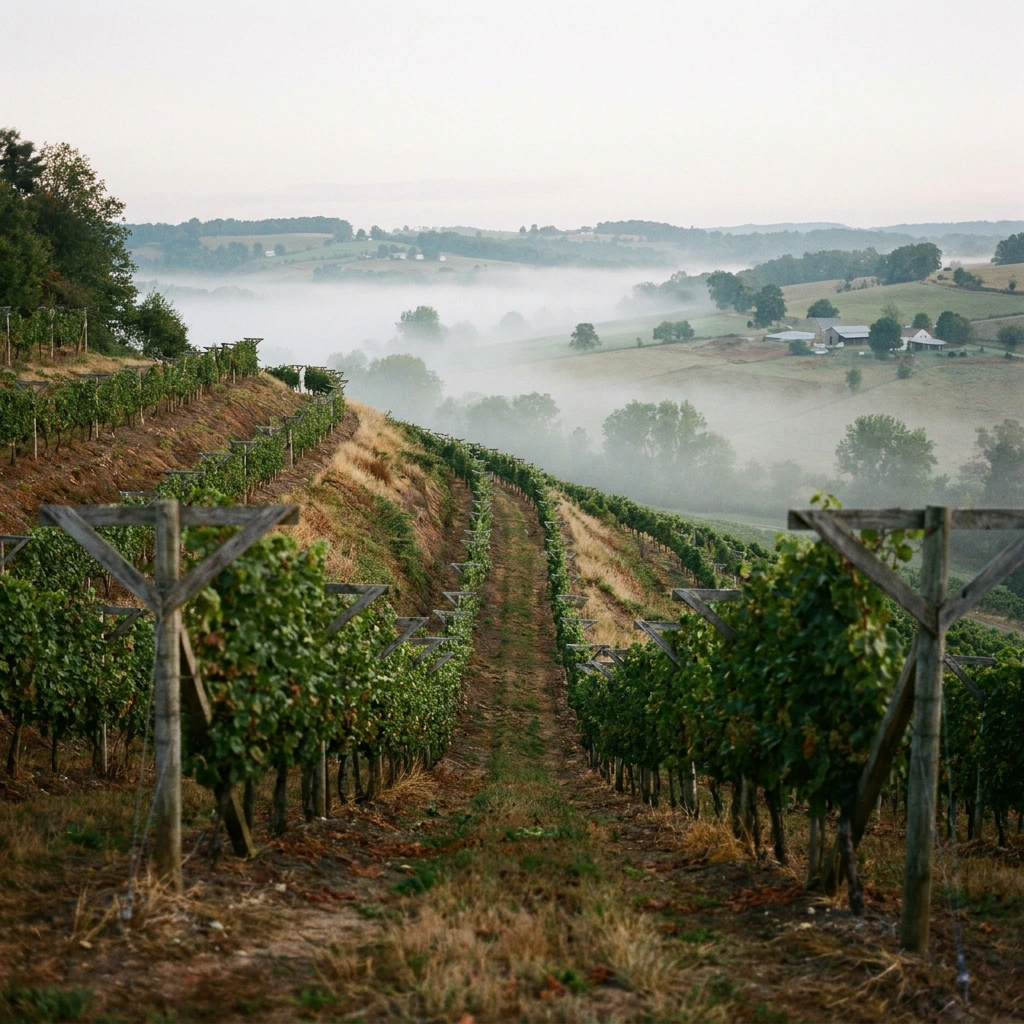
Avoid north-facing slopes in zones 3-6. You’ll lose several hundred growing degree days compared to a south-facing site, and in a short season that’s the difference between ripe fruit and green, tannic wine.
Airflow: The #1 Organic Disease-Control Lever
Here’s the organic angle most people miss: site selection does more for disease prevention than any spray program. Downy mildew, powdery mildew, and botrytis all require prolonged leaf wetness to infect. A site with good air drainage – where breezes move through the canopy and morning dew burns off quickly – removes the conditions that trigger infection in the first place.
The slope helps, but so does your orientation. North-south row orientation lets both sides of the canopy receive morning and afternoon sun, drying leaves faster. Avoid planting at the base of a windbreak or directly behind a dense hedgerow – those block air movement and create humid microclimates. You want gentle airflow, not a wind tunnel, but stagnant air is the enemy.
Cornell University’s viticulture team has documented that sites with poor air drainage require significantly more fungicide applications – even in conventional programs – compared to well-ventilated sites with the same varieties. For an organic grower relying on copper and sulfur as the last line of defense, a breezy hillside isn’t a luxury; it’s the foundation of your disease program.
See our complete guide to grape pest and disease control for what to do once the vines are in, but remember: prevention starts before planting.
Well-Drained Soil: Grapes Hate Wet Feet
Grapes are drought-tolerant once established but will rot at the crown if their roots sit in standing water. You need at least 3 ft (90 cm) of well-drained soil. The classic test: dig a hole 12 inches (30 cm) deep, fill it with water, and check back in an hour. If water is still pooled at the bottom, you have a drainage problem that will cost you vines.
Heavy clay soils that stay wet in May are a serious problem in cold climates because they slow soil warming in spring, delaying bud break and shortening your already-compressed growing season. They also hold conditions that favor Phytophthora root rot and crown rot.
Sandy loam or loam soils are ideal – they warm quickly, drain well, but still hold some moisture and nutrients. If you’re stuck with clay, raised beds or tile drainage can help; see our guide on vineyard site drainage for the options.
Soil Test Before You Plant
Do this before anything else. A basic soil test tells you pH (target 5.8-7.0 for grapes – most varieties do well at 6.0-6.5, and cold-hardy hybrids like Marquette and Frontenac tolerate up to 7.0 without issue), phosphorus, potassium, and organic matter. Lime to raise pH takes 1-2 years to work fully, so if your soil tests at 5.0 you need to know that now, not after you’ve already planted 20 vines. The risk to avoid is over-liming past 7.0 – pushing well above neutral is where iron and manganese availability drops off.
Your local county extension office usually processes soil tests for $15-25. If you’d prefer a mail-in kit to get started quickly, the Luster Leaf Rapitest type kits available on Amazon are fine for a quick field check – they won’t replace a lab test, but they’ll tell you immediately if your pH is wildly off before you invest in a full lab panel. (Amazon affiliate link.)
For what to do after the test – amendments, tilling, cover cropping – see how to prepare your soil and plant a grape vine.
Avoid Frost Pockets and Wind Tunnels
Two site-killers that are easy to overlook:
- Frost pockets: Low-lying areas, stream bottoms, the foot of a hill – anywhere cold air collects on still nights. A late May frost that kills your new shoots can wipe out the entire year’s crop. A frost pocket can sit just downhill from a perfectly fine planting site.
- Wind tunnels: A gap between buildings or a break in a treeline can funnel wind at 2-3x normal speed. That kind of constant buffeting damages shoots, desiccates clusters, and physically stresses the vines. It also tears up trellises. A light prevailing breeze is fine – a reliable wind channel is not.
Observe your site in multiple seasons before committing. Talk to neighboring gardeners about late frost dates. Check whether a low spot ever collects fog on calm mornings – fog maps closely to where cold air pools.
Putting It Together: A Simple Site Checklist
- 6+ hours direct sun per day (south, southwest, or southeast orientation preferred)
- Gentle slope (3-8% grade / 1-2.5 m per 30 m) for cold-air and water drainage
- Good airflow – not sheltered, not a wind tunnel
- Well-drained soil, 3 ft (90 cm) depth minimum – passes the 1-hour percolation test
- Not a frost pocket – slight elevation above surroundings is ideal
- Soil test completed, pH adjusted toward 5.8-7.0 before planting (target 6.0-6.5 for most varieties; hybrids tolerate up to 7.0)
Once you’ve confirmed a good site, you’re ready to think about layout and variety selection. Start with our beginner guide to starting a vineyard for the full sequence – site, trellis, variety, planting.
Frequently Asked Questions
Does vineyard aspect matter in cold climates?
Yes – significantly more than in warm climates. A south- or southwest-facing slope in zones 3-6 can accumulate hundreds of additional growing degree days compared to a north-facing or flat site. That extra heat often means the difference between ripe fruit and fruit that never finishes. UMN Extension consistently recommends south-facing slopes for Minnesota and Wisconsin home vineyards.
Can I grow grapes on flat land?
You can, but flat land in cold climates comes with two problems: frost pockets and slow soil drainage. If you’re on flat ground, raise your planting rows slightly with bermed soil, ensure there’s no low area nearby collecting cold air, and choose the hardiest variety for your zone. Flat does not automatically mean bad – but you need to compensate for what a slope gives you for free.
Why is site selection so important for organic vineyards?
Because the organic toolkit for disease control is limited. You have copper, sulfur, and some biologicals – and all of them work better as protectants than curative treatments. A site with good airflow and quick leaf dry-down significantly reduces infection pressure, which means you need far fewer applications. A poorly ventilated flat site will require aggressive spraying even with conventional fungicides; organically, it’s nearly impossible to manage without sacrificing fruit quality.
How deep does vineyard soil need to be?
At minimum 3 ft (90 cm) of workable soil above any hardpan, bedrock, or seasonally high water table. Grapevine roots will readily go 6 ft (180 cm) deep given the chance, which is part of why established vines handle drought so well. Shallow or wet subsoil limits root depth, stresses the vine, and invites root diseases.
What soil pH is best for grapes?
Most grapevines prefer a pH of 5.8-7.0. Most varieties do well at 6.0-6.5; cold-hardy hybrids like Marquette and Frontenac tolerate up to 7.0 without issue. Below 5.5, manganese and aluminum can reach toxic levels; above 7.0, iron and zinc become unavailable. The old 6.5 ceiling is conservative – the real concern is over-liming past 7.0, not the 6.5-7.0 range. If your soil tests below 5.8, apply agricultural lime 1-2 years before planting. Always adjust pH before planting – it’s much harder to correct once vines are in the ground.
🍇 Don’t plant the wrong grape
Vines take years to fruit. Get the free cheat-sheet of varieties that actually survive and ripen in your zone.
By subscribing you agree to our Privacy Policy.