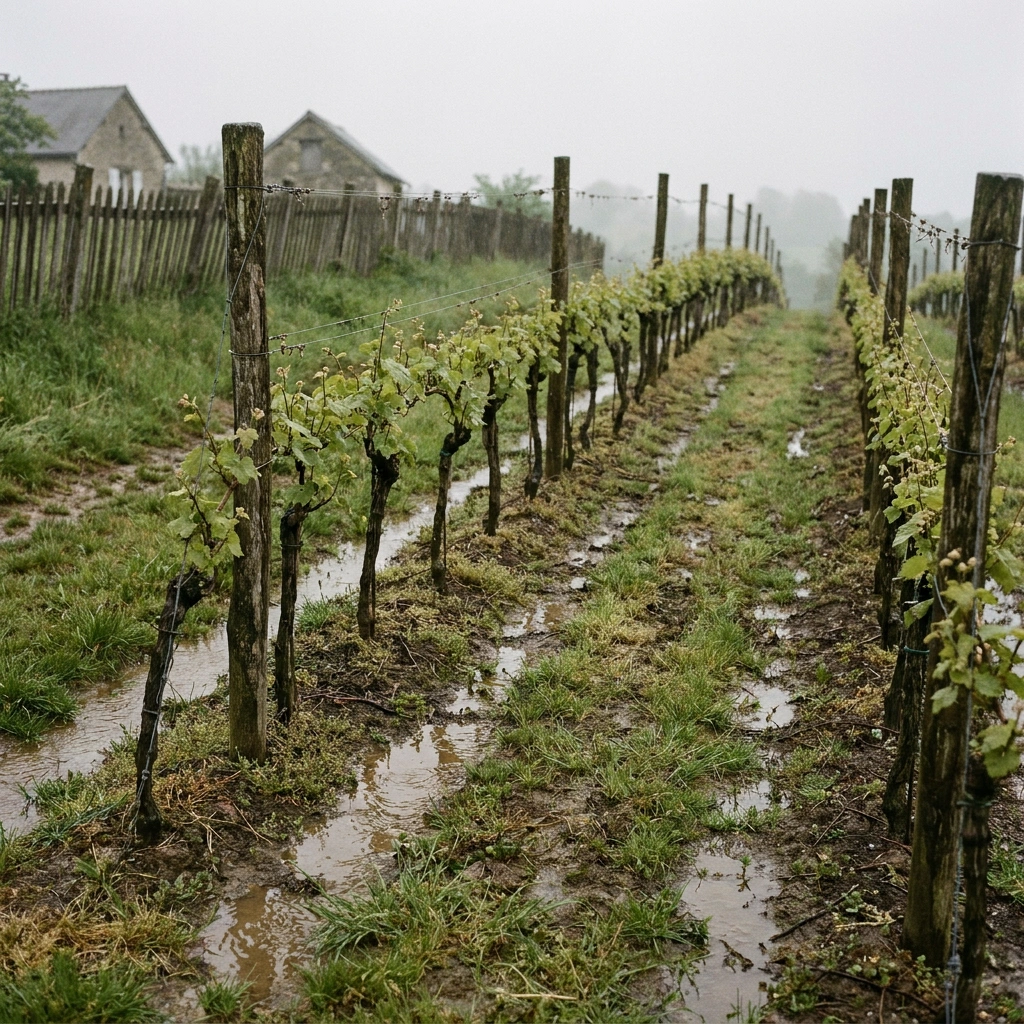
Grapes need well-drained soil — it’s not optional. If water sits around the root zone for more than a day or two after rain, the roots can’t get the oxygen they need, and you’ll see root rot, weak growth, and poor winter hardiness. In cold climates especially, waterlogged soil increases frost-heaving and winter injury. The good news: drainage is something you can assess before you plant, and often improve if the site isn’t perfect.
Why Drainage Matters More Than Most People Think
A low corner of the yard can look tempting because it gets full sun all day, but it is often the wettest spot. Wet roots going into winter can do more damage than the cold itself. Wet soil also stays cold longer in spring, delaying shoot emergence and shortening your already-short growing season.
University of Minnesota Extension and Cornell viticulture guides both put drainage at the top of their site-selection checklists. Grapevines can handle drought stress better than waterlogging — they’ve evolved on Mediterranean hillsides where soil drains fast. Cold-climate hybrids like Marquette, Frontenac, and La Crescent tolerate Zone 4 winters reliably only when their root systems aren’t under additional stress from wet soil.
Waterlogging causes three specific problems in cold climates:
- Root rot (Phytophthora): saturated soil favors anaerobic pathogens. Vines can die outright in badly drained spots.
- Frost heaving: wet soil expands more when it freezes. Shallow roots in wet, frost-prone spots get physically displaced over winter.
- Delayed dormancy hardening: vines in chronically moist soil keep growing later in fall, entering winter with immature cane tissue that cold-damages more easily.
How to Assess Drainage Before You Plant
You don’t need a soil scientist. A simple perc test takes about 30 minutes and tells you what you need to know.
The Percolation (Perc) Test
Dig a hole about 12 inches (30 cm) deep and 6 inches (15 cm) wide. Fill it with water and let it drain completely — this pre-soaks the surrounding soil. Then fill it again and time how long it takes to drain completely.
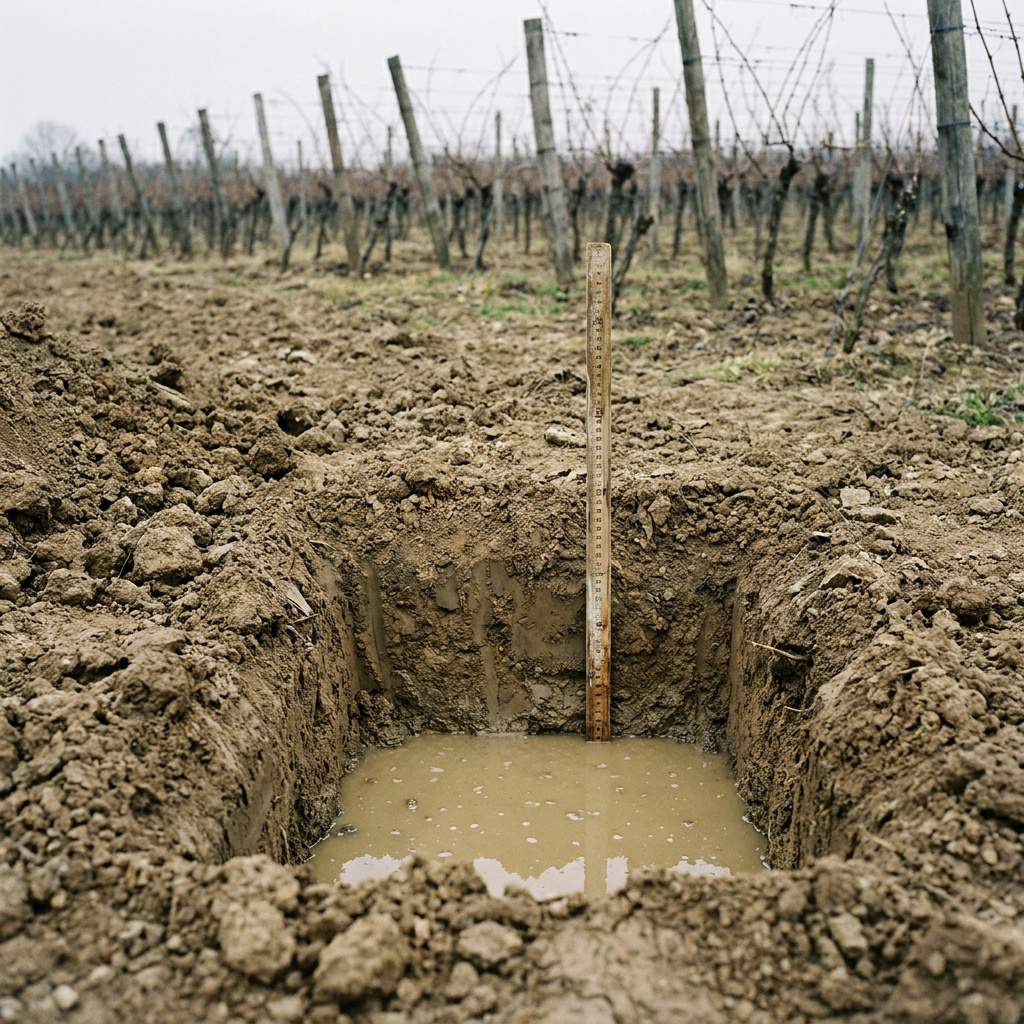
- Drains in under 1 hour: excellent drainage. You’re in good shape.
- 1–3 hours: acceptable. Fine for grapes in most situations.
- 3–4 hours: marginal. Grapes prefer water draining within 2–3 hours; 3–4 hours is not automatically disqualifying but warrants raised rows or improved drainage before planting.
- Over 4 hours or still standing after 24 hours: poor drainage. You’ll need to improve it or choose a different spot.
Do this test in spring when the soil is at its wettest — that’s when drainage matters most for grapes.
Other Signs of Poor Drainage
Walk your site after a heavy rain and look for standing water. Low spots, areas where the soil is always muddy, and places where moss grows in the lawn are all red flags. Clay-heavy soil has a slick feel when wet and cracks when dry. If you dig down 18–24 inches (45–60 cm) and see a grayish or bluish mottled pattern, that’s a sign of a seasonal high water table — a serious problem for deep-rooted vines.
Also note whether the site is in a natural frost pocket — a low bowl or valley where cold air drains and collects on still, clear nights. Poor air drainage correlates with poor soil drainage and compounds cold-climate risk.
How to Improve Drainage
Plant on a Slope or Raised Row
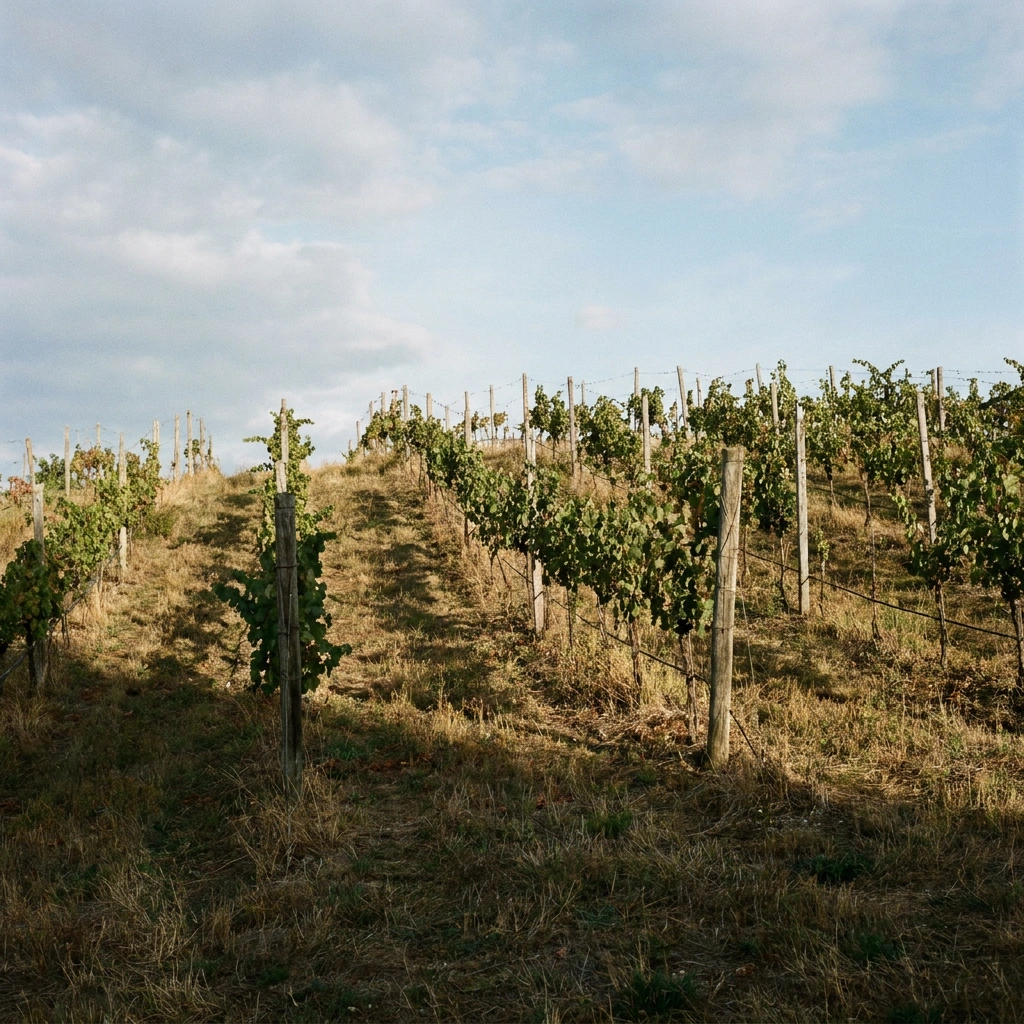
The simplest fix is using topography in your favor. A gentle slope of even 2–5% is enough to move surface water away from the root zone. North American extension guides consistently recommend south- or southeast-facing slopes for cold-climate vineyards — you get better air drainage (less frost), better sun exposure, and better soil drainage in one move.
If your site is flat, build raised rows or berms. Pull topsoil into a ridge 8–12 inches (20–30 cm) high and 18–24 inches (45–60 cm) wide, then plant the vines on top. This keeps the root zone above the water table and improves both drainage and soil warming in spring. Minnesota commercial growers on heavy soils use this approach routinely. For prep and planting details, see our post on how to prepare your soil and plant a grape vine.
Add Organic Matter
Working compost or aged wood chips into heavy clay soil opens up the structure and improves infiltration. You won’t fix a truly waterlogged site with organic matter alone, but for borderline clay-loam soils it can tip drainage from marginal to acceptable. Aim to work in 3–4 inches (7–10 cm) of compost to a depth of 12 inches (30 cm) before planting. Avoid rototilling repeatedly year after year — that destroys soil structure over time.
Tile or French Drains
For sites with a shallow water table or heavy clay subsoil, subsurface drainage tile is the real fix. A basic French drain is a trench 18–24 inches (45–60 cm) deep, lined with landscape fabric, filled with gravel, and running a perforated pipe to a lower outlet. Tile drains installed between vine rows at 20–30 foot (6–9 m) spacing are standard in Great Lakes commercial vineyards.
This is a real investment, and costs vary widely by soil type, topography, depth required, and local contractor rates — get quotes from a local agricultural-drainage contractor rather than relying on published estimates. For a permanent planting on marginal ground it typically pays back over the life of the vineyard. Your local NRCS office can help design a system and may have cost-share programs for agricultural drainage.
Avoid Heavy Clay Lows and Frost Pockets
Sometimes the best drainage improvement is choosing a better spot. If you have multiple site options, always pick the higher ground with lighter soil over the low clay area, even if the low spot gets slightly more sun. You can manage sun exposure with trellis design; you can’t easily fix a site that’s chronically wet. For more on evaluating the full site picture before you commit, see our post on organic vineyard site selection.
Soil Aeration in Tight Soils
Even soils that drain adequately can become compacted over time from equipment or foot traffic, reducing oxygen in the root zone. If you’re seeing slow vine growth, yellowing on established vines, or more winter injury than the variety rating suggests, compaction and poor aeration can be contributing. There is more on this in the post on soil aeration methods for grapevines.
Our Pick: Soil Moisture Meter
One genuinely useful tool for monitoring whether an area stays too wet is a basic soil moisture meter. Push the probe in after rain and check again 24–48 hours later — if it’s still reading “wet” two days after rain, that soil has a drainage problem. It’s also handy for irrigation management once vines are established. See current soil moisture meters on Amazon — most practical options run $15–$30 USD.
Frequently Asked Questions
How deep should grapevine roots be, and why does drainage matter at that depth?
Mature grapevines root 3–5 feet (1–1.5 m) deep on well-drained soils. A high water table even 24 inches (60 cm) down limits rooting depth and keeps the lower root zone anaerobic — leading to shallow roots more vulnerable to drought, winter heaving, and disease.
Can grapes grow in clay soil?
Yes, with modifications. Clay holds nutrients and moisture well, which grapes don’t mind in moderation. What they can’t tolerate is waterlogging. If you’re planting in clay, use raised rows, add compost to improve structure, and consider subsurface drainage tile. Avoid heavy clay in true low spots; clay-loam on a gentle slope can work fine.
How much slope do I need for good vineyard drainage?
Even a 2–3% slope (about a 2–3 foot drop per 100 feet / 0.6–0.9 m per 30 m) provides meaningful improvement over flat ground. Steep slopes above 15% can cause erosion and require terracing. Most home vineyards in the Midwest and Northeast do well on gentle 3–8% slopes.
Does poor drainage affect cold hardiness in grapes?
Yes — this is a real cold-climate concern. Vines in chronically wet soil grow later into fall and don’t harden off as well before winter. Wet soil also freezes and thaws more aggressively, increasing frost heaving. Cold-climate varieties like Marquette or Frontenac are bred for Zone 4 winters, but even they show more winter injury in poor drainage conditions.
What’s the simplest way to improve drainage before planting?
Build raised planting rows 8–12 inches (20–30 cm) high if the site is borderline. Work compost into the soil before ridging it up. This costs almost nothing on a small planting and meaningfully improves root-zone conditions. For true waterlogged spots, tile drainage or choosing a better site are the real answers.
🍇 Don’t plant the wrong grape
Vines take years to fruit. Get the free cheat-sheet of varieties that actually survive and ripen in your zone.
By subscribing you agree to our Privacy Policy.