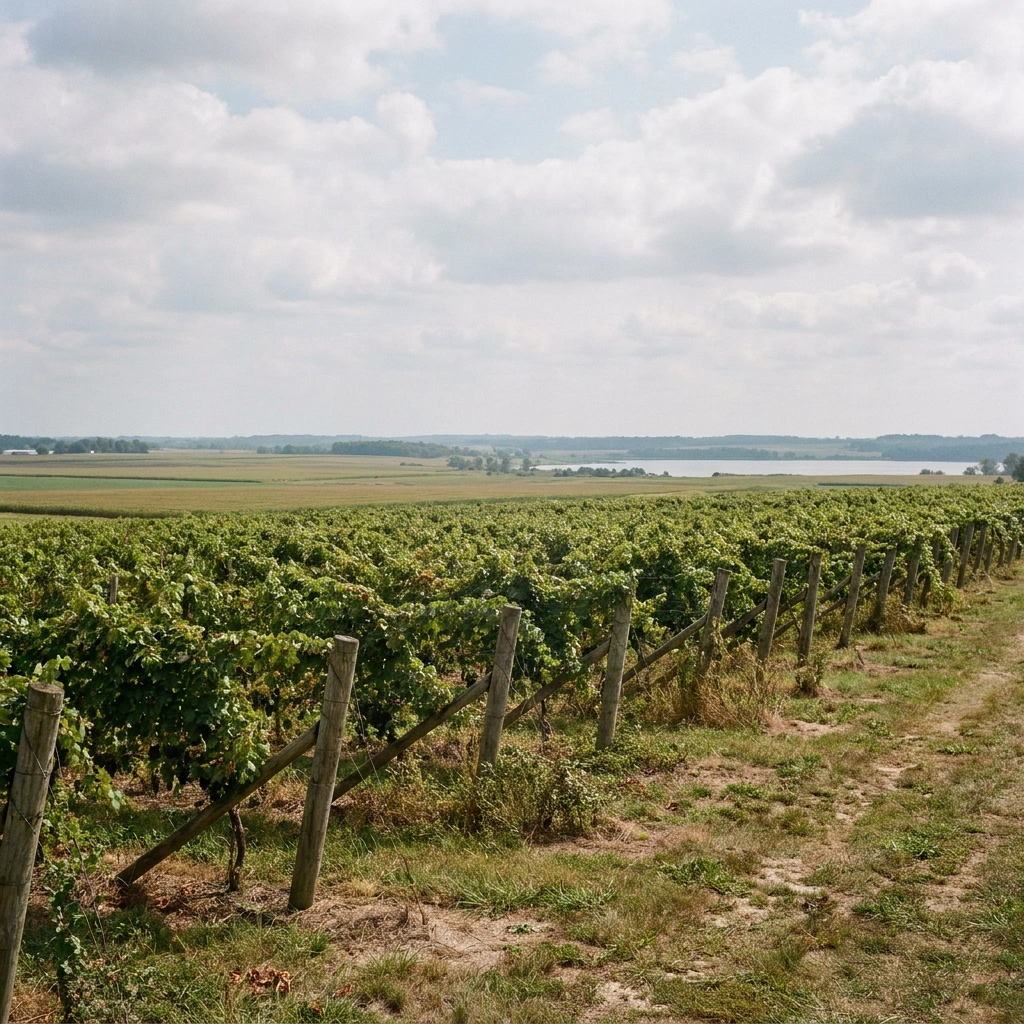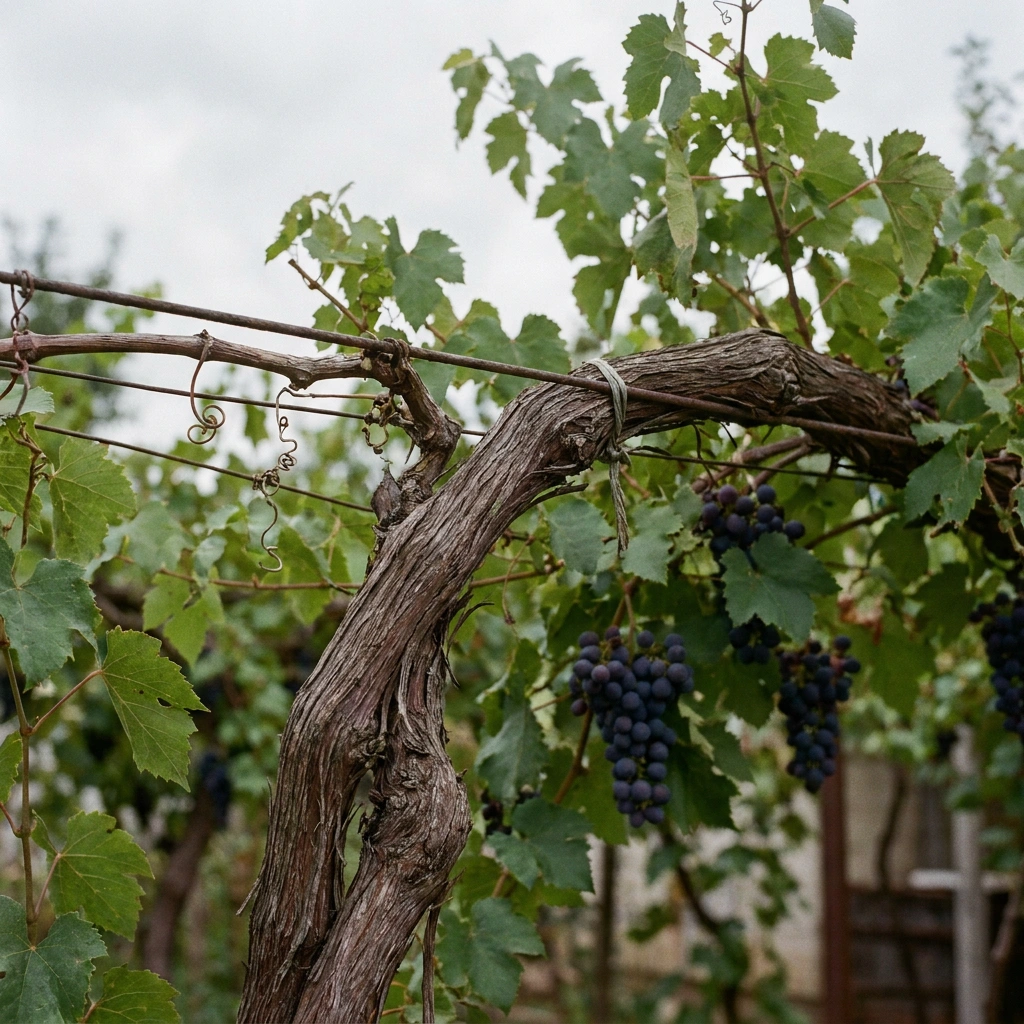
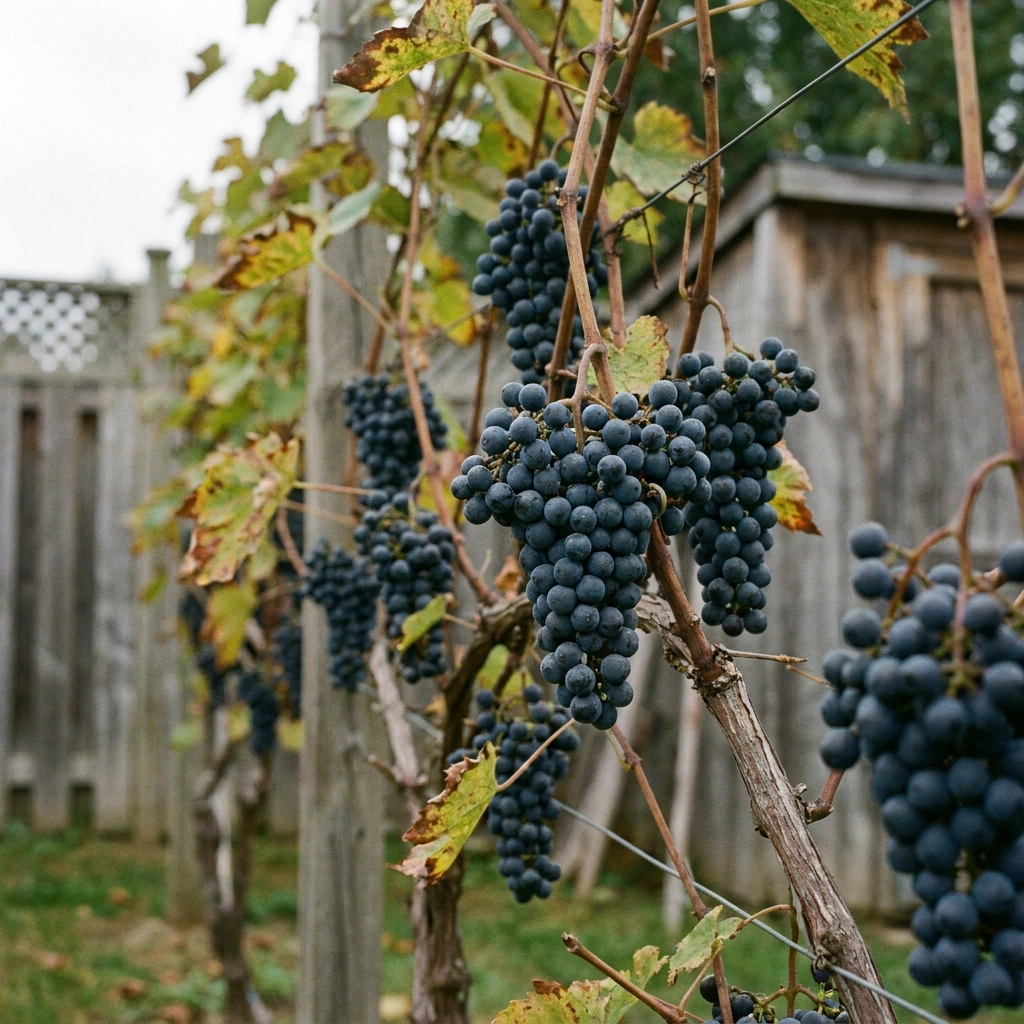
Marechal Foch (also spelled Maréchal Foch) is one of the most reliably cold-hardy red wine grapes you can grow in the northern United States and Canada. It tolerates winter temperatures down to around -25°F to -30°F (-32°C to -34°C), it ripens very early in the season, and it produces a light-to-medium bodied red wine that’s completely achievable in a home cellar. If you’re gardening in USDA Zone 3 to 5 and you want to make real red wine from your own grapes, Foch is the variety we’d start with.
This guide draws on university extension research, especially out of the University of Minnesota and Cornell, to cover what works for Foch in cold climates.
Marechal Foch at a Glance
| Characteristic | Details |
|---|---|
| Type | Red wine hybrid (French-American interspecific) |
| Breeder / Origin | Eugène Kuhlmann, Alsace, France (crossed circa 1911; named after WWI) |
| Hardiness | Approximately -25°F to -30°F (-32°C to -34°C); USDA Zone 4 (some sources cite Zone 3 with protection) |
| Ripening | Very early – among the first reds to ripen; typically late August to mid-September in Zone 4 |
| Brix at Harvest | Typically 18-22° Brix (often 15-18° in the coldest climates; chaptalization frequently needed) |
| Cluster / Berry | Small, compact clusters; small dark blue-black berries |
| Wine Style | Light-to-medium red; Beaujolais / Burgundy-style; some hybrid character |
| Disease Pressure | Moderate susceptibility to powdery and downy mildew; manageable with standard spray program |
| Vine Spacing | 6-8 ft (1.8-2.4 m) in row; 9-10 ft (2.7-3.0 m) between rows |
Background: What Is Marechal Foch?
Marechal Foch is a French-American interspecific hybrid – meaning it carries genetics from both wild American Vitis species and European Vitis vinifera. It was bred by the Alsatian viticulturist Eugène Kuhlmann in the early twentieth century and named in honor of the French Marshal Ferdinand Foch after World War I. The vine is officially registered under the synonyms Kuhlmann 188-2 and 188 2.
The exact parentage of Marechal Foch has been historically debated among ampelographers. It is commonly described in extension literature as a hybrid of American species (Vitis riparia and V. rupestris) with a vinifera cultivar – Goldriesling is the name most often cited – but this parentage is not universally confirmed and should be taken as a working hypothesis rather than settled fact. The VIVC genetic database (entry 7388) has since supported Goldriesling as the vinifera parent, though some sources still cite Oberlin 595; treat either as probable, not certain. What is not in dispute is its cold hardiness, its early ripening, and its performance in short-season climates where vinifera varieties simply cannot survive unprotected winters.
For home growers in northern climates, this heritage is exactly what you want. The American species genes deliver the cold tolerance; the vinifera contribution shapes the fruit character toward something wine-worthy. See our guide to cold-hardy grape varieties if you’re deciding between Foch and other hybrids like Marquette, Baco Noir, or Frontenac.
Growing Marechal Foch: Site, Soil, and Planting
Choosing Your Site
Like all grapevines, Foch wants maximum sun – a south or southeast-facing slope in full sun (at least 6-8 hours of direct light daily) is ideal. Good air drainage matters almost as much as sun. Cold air is heavier than warm air and settles in low spots; a gentle slope lets frost flow away from your vines, protecting buds during spring cold snaps. If you’re on flat ground, avoid planting in a hollow or at the base of a depression.
Soil should drain well. Grapevines deeply resent waterlogged roots, especially in winter when standing water around roots can cause rot. Loam or sandy loam with a pH in the 5.5-6.5 range works well. Heavy clay soils can be amended or you can mound your planting rows to improve drainage. For a thorough walkthrough, see our post on how to prepare your soil and plant a grapevine.
Planting
Plant bare-root vines in early spring as soon as the ground can be worked – in Zone 4 that’s typically April. Space vines 6-8 ft (1.8-2.4 m) apart within the row and keep rows 9-10 ft (2.7-3.0 m) apart to allow equipment or foot traffic and good air circulation. Dig a hole wide enough to spread the roots without cramming them, set the graft union (if there is one) about 1-2 inches (2.5-5 cm) above soil line, and water well at planting. Our post on grape vine spacing goes deeper on the row math.
Training and Pruning
Marechal Foch is most commonly trained to a high bilateral cordon or to the Kniffin system – both suit northern climates where you’re working on a 2- or 3-wire trellis. The vine has moderate vigor, which is actually helpful: it’s easier to manage than the most rampant hybrids, and it sets fruit reliably without becoming a tangled mess. Annual dormant pruning in late winter (late February to early March in Zone 4, just before bud swell) is essential. Foch is spur-pruned or cane-pruned; many northern growers prefer cane pruning to keep fruit closer to the trunk and reduce overwintering damage to the fruiting wood. See our guide to grape pruning and the companion piece on setting up your grape trellis.
Winter Care in Cold Climates
At roughly -25°F to -30°F (-32°C to -34°C), Foch is genuinely cold-hardy for an unprotected vine. In most Zone 4 locations you don’t need to bury canes or apply insulating material – the vine will take a normal Wisconsin or Minnesota winter without much trouble. In Zone 3 sites that see regular -30°F (-34°C) or colder temperatures, growers have reported survival with minimal protection (mounding soil around the base, or loosely laying canes and covering with straw), but the deeper you get into Zone 3, the more critical that becomes. Watch for winter injury to the trunk at the soil line in wet autumns followed by hard freezes.
Disease Management
Foch has moderate disease susceptibility – it is not as resistant as some newer University of Minnesota releases (Marquette, for example, has better powdery mildew resistance). You should plan on a basic spray program for powdery mildew and downy mildew, especially during wet springs. Sulfur-based fungicides on a 10-14 day interval during bloom and early fruit set are standard. Good canopy management – leaf pulling around the fruiting zone after bloom – improves air circulation and dramatically cuts disease pressure. Don’t overcrop: leave 2-3 clusters per shoot maximum, remove any extras early.
Harvest and Winemaking
The single biggest advantage of Marechal Foch in northern climates is its very early ripening. In Zone 4, expect to start tasting clusters in late August and pick in the first two weeks of September. For comparison, a late-season red like Cabernet Franc wouldn’t ripen in Zone 4 at all – it would still be green when frost hits. Foch gives you a genuine harvest window even in the shortest northern seasons. Use our Will My Grapes Ripen tool to check whether your specific location has enough growing degree days for Foch – it’s very informative if you’re in a marginal Zone 3 or 4 location.
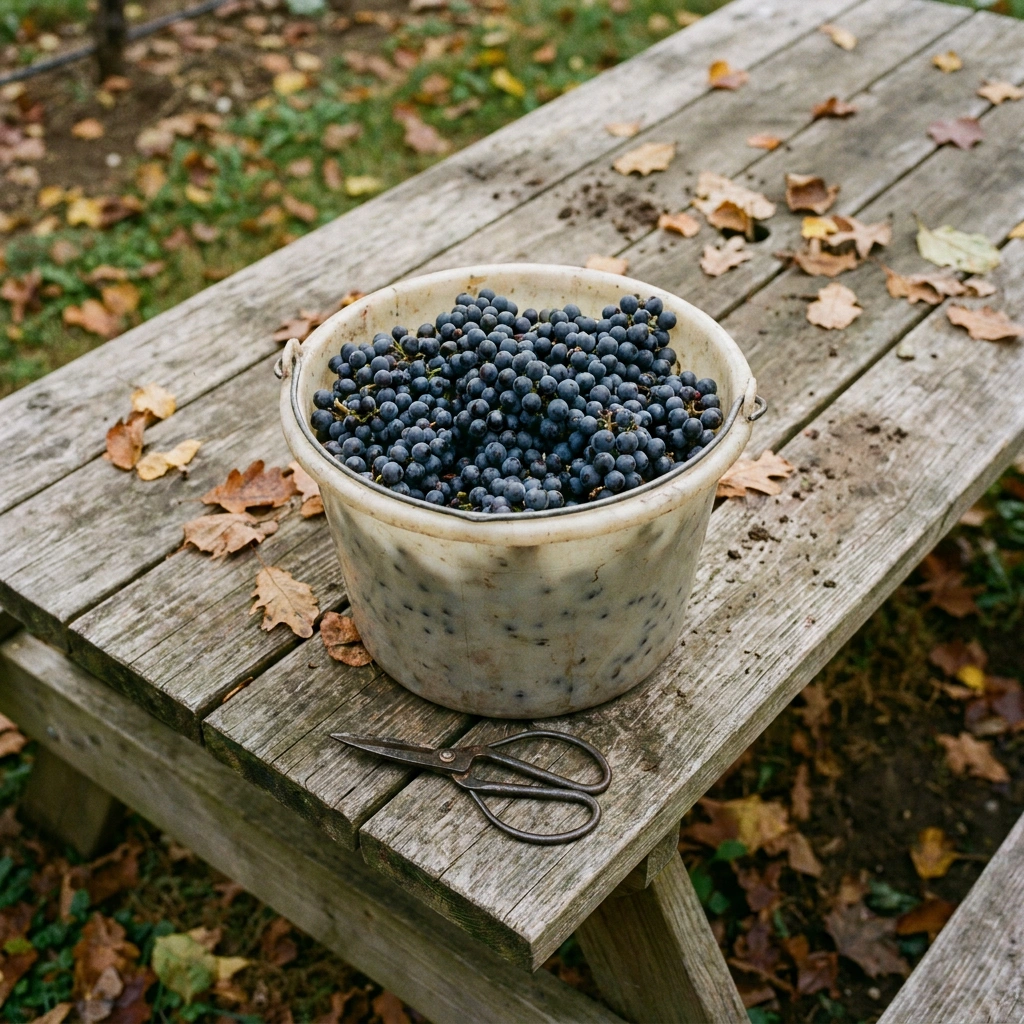
Target harvest at 20-22° Brix for a dry red table wine. The berries turn dark blue-black and develop a slightly waxy bloom – taste them as you get close to target. Seeds should be crunchy and brown-tan rather than green. Total acidity can run on the higher side (0.8-1.0 g/100 mL or higher), which is actually a plus in warm fermentations but may benefit from a partial malo-lactic fermentation to soften. If you’re new to measuring Brix and estimating alcohol, the Brix to Alcohol Calculator on this site gives you a quick conversion.
Wine Style: What to Expect
Marechal Foch produces a light-to-medium bodied red – think more Beaujolais than Bordeaux. Color can be surprisingly deep given the small berry size. You may detect what winemakers call a “hybrid character” or “foxy” note – a slightly earthy or musky quality that is characteristic of wines made from French-American hybrids. Many people enjoy this; others find it off-putting. Techniques that help include: cold settling the juice before fermentation, fermenting cooler (around 65-68°F / 18-20°C), and racking to remove gross lees quickly. Some cold-climate winemakers make a Beaujolais Nouveau-style Foch with carbonic maceration and release it just weeks after harvest. It’s fun, approachable, and a great way to use the earliest harvest of the season. For more on the home winemaking process, our wine making instructions page walks through the full process from crush to bottle.
Where to Buy Marechal Foch Vines
Marechal Foch is widely available from cold-climate grape nurseries across the upper Midwest and Northeast. St. Lawrence Nurseries in Potsdam, New York has historically carried cold-hardy hybrid varieties including Foch; Stark Bro’s Nurseries in Louisiana, Missouri also carries a range of grape varieties. Check with your state’s land-grant extension service for a list of approved local nurseries – buying from a reputable cold-climate specialty nursery ensures you’re getting a healthy, regionally acclimated plant rather than a mail-order vine grown in a warm-climate state that may struggle with your winters.
Frequently Asked Questions About Marechal Foch
How cold-hardy is Marechal Foch?
Marechal Foch is generally rated to withstand winter temperatures of approximately -25°F to -30°F (-32°C to -34°C) without vine protection, placing it in USDA Zone 4 (and potentially Zone 3 with some protection). It is one of the most cold-tolerant red wine hybrids available to home growers in northern North America.
When does Marechal Foch ripen?
Foch is a very early-ripening variety. In Zone 4 climates like Wisconsin or Minnesota, expect harvest in late August to early-to-mid September. It is typically one of the first red varieties to reach maturity in a cold-climate vineyard, which is a significant advantage in regions with short growing seasons.
What kind of wine does Marechal Foch make?
Marechal Foch produces a light-to-medium bodied red wine with good color and moderate tannin. It is often compared to a Beaujolais or light Burgundy style. Like many French-American hybrids, it can show a characteristic “hybrid” or earthy note. With good winemaking technique (cold settling, clean fermentation, early racking) this character can be minimized. Some growers make a fresh carbonic maceration-style wine; others age in neutral oak for added complexity.
Is Marechal Foch easy to grow for beginners?
Yes, relative to vinifera grapes. Foch is moderately vigorous (not wildly rampant), reliably cold-hardy, and a consistent bearer. Its main challenge is disease susceptibility – it needs a basic fungicide spray program during the growing season, unlike the most resistant newer hybrids. But it does not demand the intensive management that European vinifera varieties require in cold climates.
What is the parentage of Marechal Foch?
The exact parentage of Marechal Foch (also known as Kuhlmann 188-2) has been debated in viticultural literature. It is widely described as a Kuhlmann hybrid involving American species (Vitis riparia and V. rupestris) crossed with a vinifera cultivar, with Goldriesling most often cited as the vinifera parent – but this has not been universally confirmed by modern genetic analysis. Treat published parentage claims as probable, not certain.
🍇 Don’t plant the wrong grape
Vines take years to fruit. Get the free cheat-sheet of varieties that actually survive and ripen in your zone.
By subscribing you agree to our Privacy Policy.