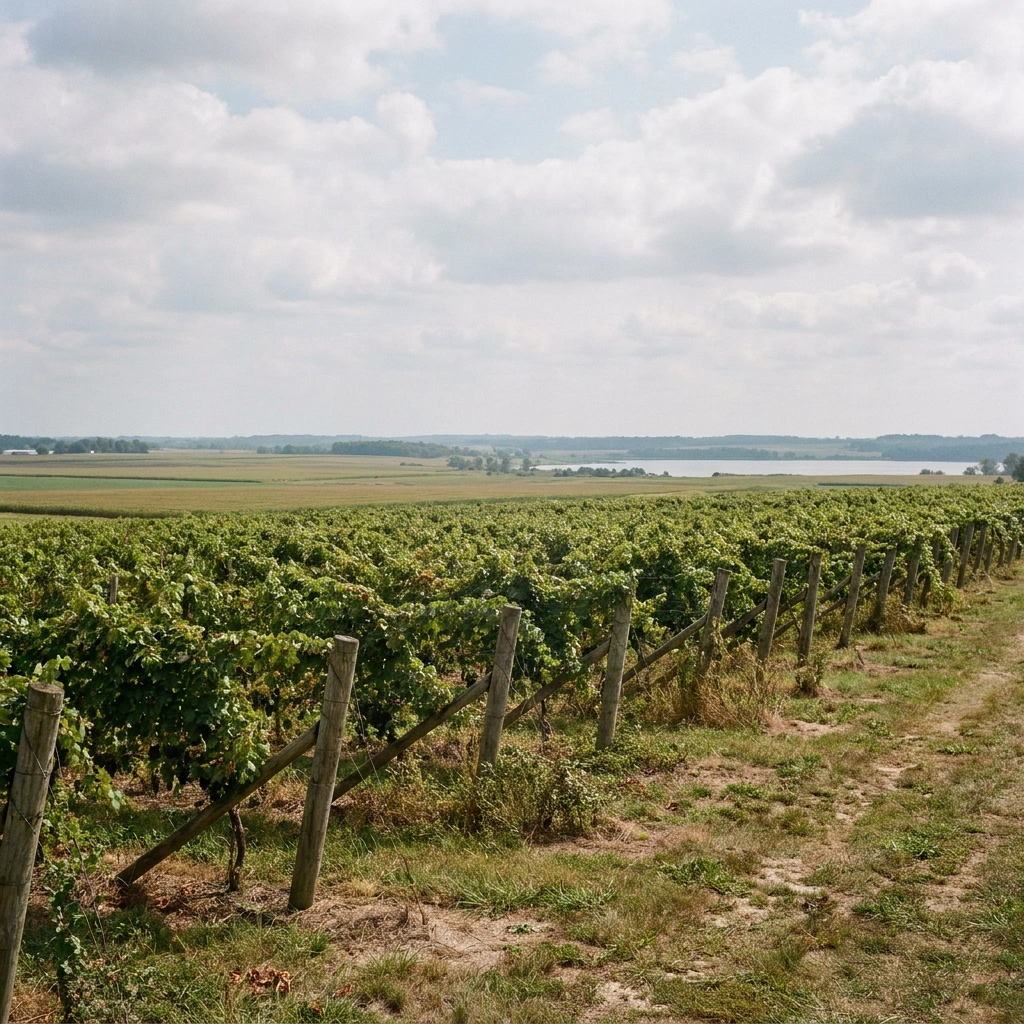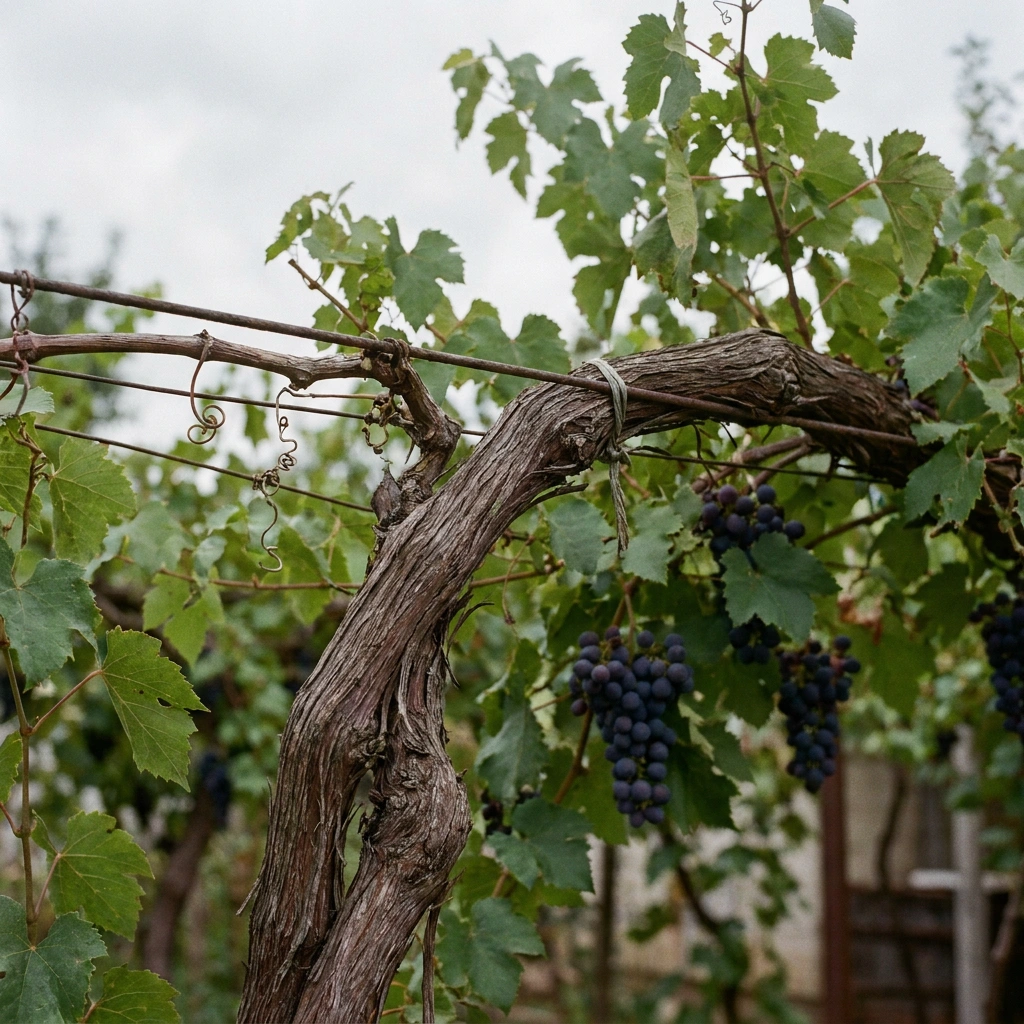
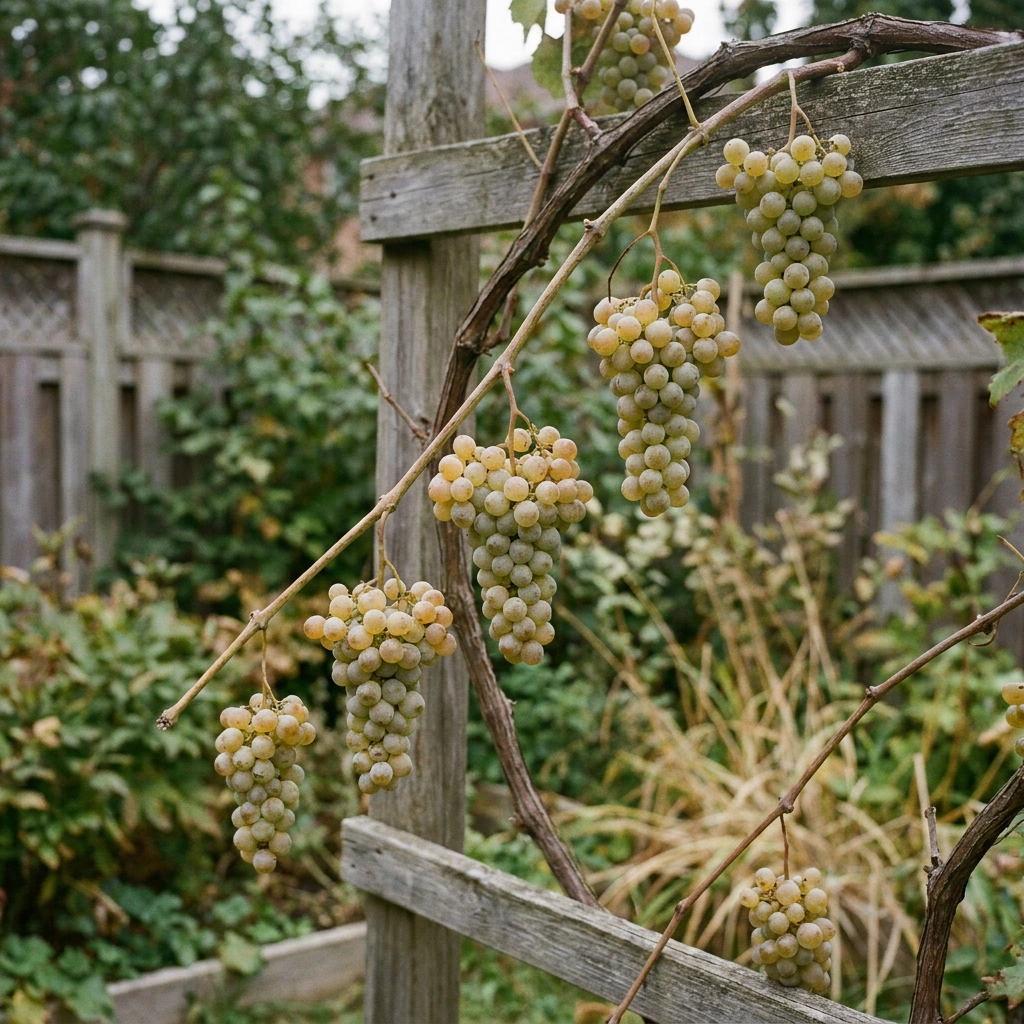
Niagara is a white Vitis labrusca-dominant (technically Vitis × labruscana) American grape – often called the “White Concord” – bred in Niagara County, New York in 1868 from a cross of Concord and Cassady. It produces large, pale green-gold clusters with a sweet, distinctly “foxy” labrusca aroma, and is the leading variety behind most white grape juice sold in the United States. Hardiness sits at about -15 to -20°F (-26 to -29°C), reliably USDA Zone 5 (Zone 4b is possible with winter protection), though it is NOT as cold-tolerant as the University of Minnesota hybrids such as Frontenac or Marquette, and gardeners in Zone 4 should plan for extra winter protection or look at hardier alternatives. It also needs a fairly long, warm growing season to ripen fully – something worth weighing if your summers are short.
- Grape Variety Finder – compare Niagara against cold-hardier options for your zone
- Will My Grapes Ripen? – check if your season is long enough for Niagara
- Brix to Alcohol Calculator – for when harvest arrives
Niagara Grape at a Glance
| Characteristic | Detail |
|---|---|
| Type | White American (Vitis labrusca-dominant), slip-skin, seeded |
| Parentage | Concord × Cassady (bred 1868, Niagara County, NY) |
| Hardiness | USDA Zone 5 (reliably); about -15 to -20°F (-26 to -29°C) minimum (Zone 4b possible with winter protection) |
| Ripening | Late-midseason; typically late August to early September |
| Brix at harvest | Typically 14-18° Brix (harvest at 14-16° for juice/wine; table eating at riper end) |
| Best uses | White grape juice, jelly/jam, fresh eating, sweet white wine |
| Disease susceptibility | High: black rot, downy mildew; Moderate: powdery mildew; Low/occasional: botrytis |
| Vine spacing | 6-8 ft (1.8-2.4 m) between vines; 8-10 ft (2.4-3 m) between rows |
Is Niagara Right for Your Climate?
To be straight with you: in Zone 4, Niagara is a stretch. It can handle winters down to about -15 to -20°F (-26 to -29°C), which puts it firmly in Zone 5 territory (Zone 4b with good winter protection). That’s warmer than the UMN cold-hardy hybrids like Frontenac or Marquette, which survive -30 to -35°F (-34 to -37°C). If you’re in Zone 4 and want to try Niagara, you’ll need to mound soil around the base of the vine each November and consider laying canes down for extra insulation – and still accept some risk of winter kill in a brutal year.
The other issue is season length. Niagara is a late-midseason variety that typically ripens in late August to early September. In a short northern summer that can be tight. Use the Will My Grapes Ripen? calculator to check your growing degree days before planting. In Zone 5 and 6 – Ohio, Pennsylvania, New York, Michigan, Ontario – Niagara is right at home and produces reliably excellent crops. You can also check the full cold-hardy grape variety guide to compare your options across zones.
Site Selection and Soil Prep
Niagara is a vigorous vine – it will grow 15-20 ft (4.5-6 m) or more in a season if you let it. Give it plenty of space and the right site from the start.
- Full sun is non-negotiable. Aim for at least 6-8 hours of direct sunlight daily. A south- or southwest-facing slope is ideal in cold climates; it warms faster in spring and drains cold air downhill away from the buds.
- Good air circulation. Niagara is highly susceptible to downy mildew and black rot (more on that below). A breezy hilltop or gentle slope dries leaves faster after rain, cutting disease pressure significantly.
- Well-drained soil. Sandy loam or loamy soils with a pH of 6.0-6.5 are ideal. Avoid heavy clay or any spot that holds water – wet roots invite rot. If drainage is poor, plant on a raised bed or ridge.
- Avoid frost pockets. Cold air settles in low spots. A late spring frost can wipe out an entire season’s crop – choose elevated ground where possible.
Planting Niagara Grape Vines
Plant bare-root vines in early spring as soon as the ground can be worked – typically March to April in Zone 5-6. Container-grown vines can go in through early summer. Here’s the basic process:
- Space vines 6-8 ft (1.8-2.4 m) apart within the row. Allow 8-10 ft (2.4-3 m) between rows to accommodate mowing and spraying equipment (Penn State Extension recommends at least as much row spacing as trellis height to avoid shading).
- Dig a hole wide enough to spread the roots without bending. Set the crown (bud union) at or just below soil level.
- Backfill with native soil – no need to amend heavily. If your soil pH is off, correct it with lime (to raise) or sulfur (to lower) before planting based on a soil test.
- Water well and mulch around the base, keeping mulch a few inches away from the trunk.
- Cut the vine back to 2 buds on the strongest cane at planting. This feels brutal but forces strong root development in year one.
Trellis, Training, and Pruning
Because Niagara is an American labrusca-type, its canes tend to droop or trail (a willowy, downward growth habit noted by Ohio State Extension). The Kniffin system – a two- or four-wire trellis that allows canes to hang down – suits this variety well and is the traditional choice for home Concord-type growers. A standard Geneva Double Curtain (GDC) trellis also works well for vigorous American varieties.
For vine spacing and trellis design details, see the grape vine spacing guide. The short version: build your trellis before or at planting. A sturdy two-wire trellis with a top wire at 5-6 ft (1.5-1.8 m) and a lower wire at 3 ft (0.9 m) is workable for a backyard row.
Annual pruning is the single most important maintenance task. Niagara is very vigorous – if you skip pruning, you get a dense canopy, poor air circulation, and disease explosions. Prune in late winter while the vine is still dormant (late February to mid-March in Zone 5-6, before buds swell). For cane pruning on a Kniffin system:
- Select 4 healthy canes from last year’s growth (two per wire side), each with 8-12 buds.
- Remove all other wood. Yes, that means cutting off 70-90% of the growth you see.
- Leave 2-4 short renewal spurs (2 buds each) near the head to grow next year’s fruiting canes.
Disease Management: The Spray Program You Cannot Skip
This is where Niagara demands more work than the UMN hybrids. Ohio State Extension classifies Niagara as highly susceptible to black rot and downy mildew and moderately susceptible to powdery mildew. In a humid summer with no spray program, you can lose most of your crop to black rot alone.
A basic fungicide schedule for backyard growers (following OSU and Penn State Extension guidance):
- Pre-bloom (tight cluster through bloom): This is the critical window. Apply a protectant fungicide (copper-based or captan) as buds open and through the bloom period. Missing this timing is the most common mistake.
- Post-bloom (3-4 weeks after bloom): Continue 7-14 day intervals for black rot protection while berries are sizing.
- Canopy management: Shoot positioning, leaf removal around the fruit zone, and proper pruning all reduce humidity and cut disease pressure as much as any spray. Clean up fallen leaves and mummified berries each fall – they overwinter fungal spores.
If the idea of a spray program puts you off, that’s understandable. The cold-hardy UMN hybrids like Frontenac and Marquette have significantly better disease resistance – see the cold-hardy varieties guide for a full comparison.
Harvest, Uses, and Making Wine
Niagara ripens in late August to early September in most Zone 5-6 locations. Don’t go purely by color – the clusters stay pale green-gold even when ripe. Taste them, and check sugar with a refractometer. Target 14-18° Brix depending on use:
- Fresh eating / table grapes: Pick at the riper end, 16-18° Brix. Slip-skin, sweet, juicy, and fragrant with that classic labrusca “foxy” grape aroma.
- White grape juice and jelly: This is what Niagara was built for. The juice is sweet, full-flavored, and beautifully golden. Niagara is the leading variety behind most commercial white grape juice in the US.
- Sweet white wine: Harvest at 14-16° Brix for a fresher, lighter wine. Minimize skin contact during pressing to keep the diesel-like compounds in check. Niagara wine is sweet, aromatic, and unmistakably labrusca – it’s not a subtle vinifera-style wine, but it has real charm if you lean into what it is. Use the Brix to Alcohol Calculator to estimate potential alcohol before fermentation.
Clusters store briefly in the refrigerator – Niagara ships and stores poorly compared to vinifera varieties, which is why you rarely see it in supermarkets. That’s actually an advantage for home growers: the freshest Niagara you’ll ever taste comes straight off your own vine.
Check the full guide to knowing when grapes are ready to harvest for a deeper look at ripeness indicators beyond Brix.
Where to Buy Niagara Grape Vines
Niagara is one of the most widely available American grape varieties. Look for bare-root vines from a reputable cold-climate specialty nursery – Stark Bro’s (starkbros.com) is a well-known US mail-order nursery that carries it regularly. When buying, confirm the vine is grafted or own-rooted and suitable for your zone.
Frequently Asked Questions
How cold-hardy is the Niagara grape?
Niagara grape vines are generally hardy to about -15 to -20°F (-26 to -29°C), placing them reliably in USDA Hardiness Zone 5 (Zone 4b is possible with winter protection). They are not as cold-tolerant as the University of Minnesota cold-climate hybrids such as Frontenac or Marquette, which survive -30 to -35°F (-34 to -37°C). Gardeners in Zone 4 can try Niagara with winter protection (mounding soil over the crown, laying canes down under straw) but should expect some risk of winter damage in severe years.
What is Niagara grape used for?
Niagara is primarily grown for white grape juice and jelly – it is the leading variety behind most commercial white grape juice in the United States. It is also eaten fresh as a table grape, and makes a sweet, aromatic white wine with a characteristic labrusca “foxy” aroma. Because the berries ship and store poorly, home-grown Niagara is at its best eaten or juiced shortly after harvest.
When does Niagara grape ripen?
Niagara ripens late-midseason, typically in late August to early September in Zone 5-6 growing regions such as upstate New York, Pennsylvania, Ohio, and Michigan. It requires a reasonably long, warm summer. In areas with short growing seasons, check your growing degree days before planting – Niagara may not ripen fully before frost.
What is the difference between Niagara and Concord grapes?
Niagara is often called the “White Concord” because it was bred from Concord (crossed with Cassady) and shares similar vigor, productivity, and labrusca flavor characteristics. The key differences: Concord is dark purple-black and is the standard for purple grape juice and jelly, while Niagara produces pale green-gold berries and is the standard for white grape juice. Both are slip-skin, foxy, and highly vigorous. Niagara is somewhat more susceptible to powdery mildew than Concord but similarly susceptible to black rot and downy mildew.
Does Niagara grape need a spray program?
Yes. Ohio State University Extension classifies Niagara as highly susceptible to black rot and downy mildew and moderately susceptible to powdery mildew. In humid growing regions, a preventive fungicide program starting at bud burst and continuing through post-bloom is essential to protect the crop. Good canopy management (annual pruning, shoot positioning, leaf removal around fruit) also significantly reduces disease pressure. Gardeners who prefer a lower-spray approach should consider cold-hardy hybrid varieties with better disease resistance.
🍇 Don’t plant the wrong grape
Vines take years to fruit. Get the free cheat-sheet of varieties that actually survive and ripen in your zone.
By subscribing you agree to our Privacy Policy.