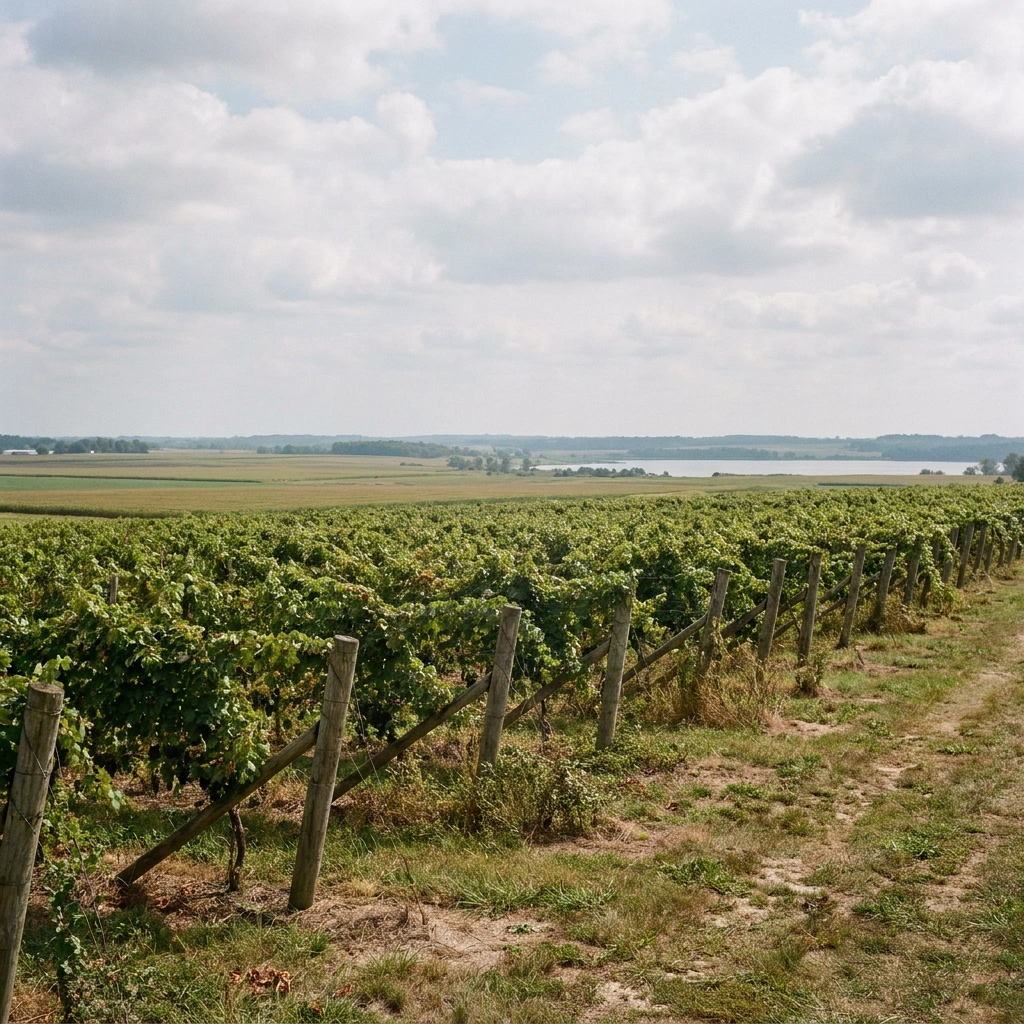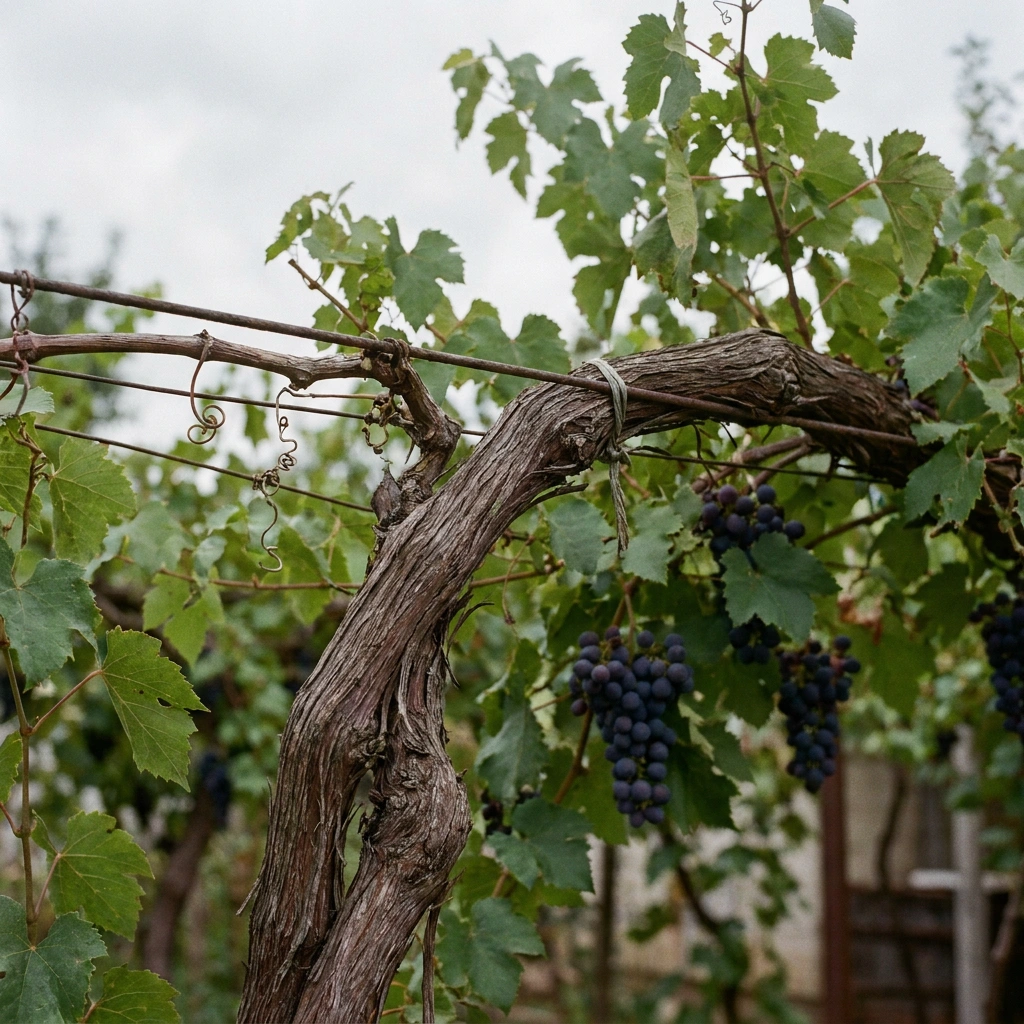
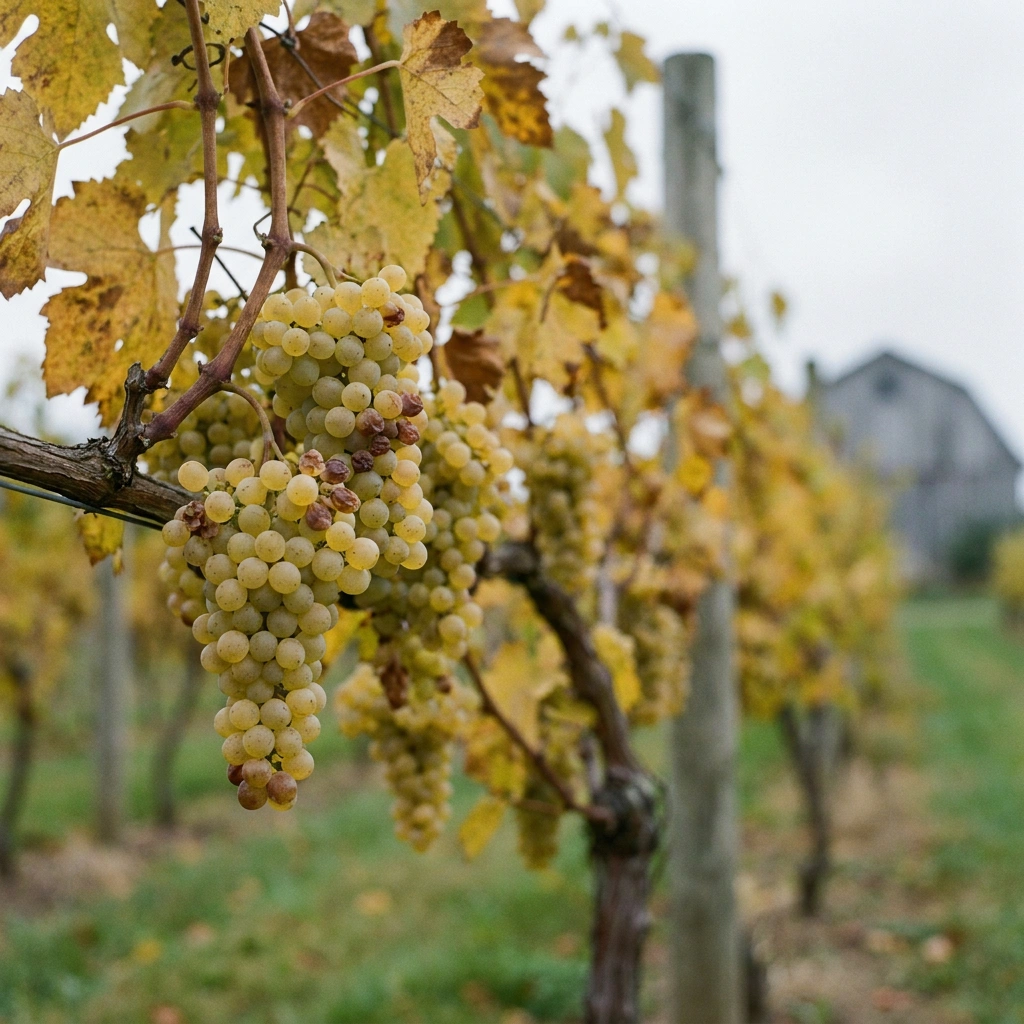
La Crescent is a cold-hardy white wine hybrid released by the University of Minnesota in 2002, capable of surviving winters down to around −36℉ (−38℃) — well into USDA Zones 3 and 4. It ripens late-season (typically late September to early October in Zone 4) with high natural acidity and intensely aromatic flavors of citrus, apricot, peach, and honey, making it ideal for off-dry and dessert-style whites. If you’re growing grapes in a cold climate and want a white that actually delivers on the wine side, La Crescent is worth a serious look.
I grow a small block of La Crescent here in central Wisconsin (Zone 4), and I’ll share what I’ve learned alongside the published university research so you can make good decisions for your own vineyard.
La Crescent at a Glance
| Type | White wine hybrid (interspecific) |
|---|---|
| Breeder / Release | University of Minnesota (James Luby & Peter Hemstad), 2002 |
| Parentage | St. Pepin × E.S. 6-8-25 (Elmer Swenson selection) |
| Cold Hardiness | To approx. −36℉ / −38℃ (USDA Zones 3–5) |
| Ripening | Late-season — typically late September to early October in Zone 4 (range ~Sept 16 – Oct 5) |
| Brix at Harvest | Typically 22–28° Brix (mean ~24–25°) |
| Acidity | High (defining trait; TA often about 10–16 g/L, mean ~12 g/L) |
| Aromatics | Citrus, apricot, peach, pineapple, honey, muscat |
| Best Wine Styles | Off-dry white, semi-sweet, late-harvest / dessert |
| Disease Resistance | Low susceptibility to powdery mildew; moderate susceptibility to downy mildew |
| Vine Spacing | 6–8 ft (1.8–2.4 m) in-row; 9–10 ft (2.7–3 m) row spacing |
Source for parentage, release year, and cold-hardiness: US Plant Patent PP14617 (Luby & Hemstad, University of Minnesota, 2004).
Why La Crescent Belongs in a Cold-Climate Vineyard
Most aromatic white wine grapes — Riesling, Gewurztraminer, Muscat — are European Vitis vinifera varieties that die in a Zone 4 or 5 winter. La Crescent was specifically bred to fill that gap. It carries genetics from native American species (through St. Pepin and Elmer Swenson’s selections) that give it both cold tolerance and freedom from the “foxy” aromas associated with pure V. labrusca. The US plant patent specifically notes that La Crescent wines lack foxy and herbaceous off-aromas while delivering genuine aromatic complexity comparable to a European-style white.
For me, that’s the pitch: you get Riesling-adjacent aromatics from a vine that laughs at a Wisconsin winter. No other cold-climate white comes close on fragrance. Check the cold-hardy grape varieties hub to see how La Crescent compares to other UMN releases like Marquette or Frontenac Gris.
Growing La Crescent: Site, Soil, and Planting
Site Selection
La Crescent is forgiving, but like all wine grapes it performs best with good air drainage. Cold air is heavy and settles in low spots — a slight slope or elevated planting site keeps late spring frosts from catching new shoot growth. Choose a spot that gets full sun for at least 6–8 hours a day. In Zone 3 or 4, south- or east-facing slopes help maximize heat accumulation over the season.
Soil should be well-drained. Grapes dislike wet feet, and standing water in spring can promote fungal disease. Sandy loam or loam soils with a pH of 6.0–6.5 are ideal. If you have clay-heavy soil, consider raised beds or building ridges to improve drainage. See the soil preparation and planting guide for practical steps.
Planting
Plant La Crescent vines in spring after the last frost, once soil temperatures have reached at least 50°F (10°C). Space vines 6–8 ft (1.8–2.4 m) apart in the row, with rows 9–10 ft (2.7–3 m) apart to allow equipment access and air circulation. Dig a hole wide enough to spread the roots without cramping, set the vine so the graft union (if present) is just above soil level, and backfill firmly.
La Crescent must be propagated from licensed nurseries — the variety is protected under US Plant Patent PP14617, and the University of Minnesota requires growers to obtain vines only from licensed propagators. This is worth knowing before you start searching for cuttings.
Training and Pruning
Most cold-climate growers train La Crescent on a high-cordon or bilateral cordon system at 36–48 inches (90–120 cm) off the ground. High cordon keeps the fruiting zone in the warmer air above the frost layer, and it simplifies management. Spur pruning works well — leave 2-bud spurs spaced 6–8 inches (15–20 cm) apart along the cordon.
La Crescent tends to be a productive vine. Overloading it with fruit will push harvest later into the season and dilute the aromatics. Crop-thin to 1–2 clusters per shoot in the early weeks after bloom to keep yield manageable. For proper pruning timing and technique, the grape vine spacing guide covers trellis layouts in detail.
Winter Care in Cold Climates
In Zones 4 and 5, La Crescent generally winters without additional protection. Its -36°F (-38°C) hardiness means it survives most continental winters on established cordons. In Zone 3 or in sites with late spring frosts, some growers lay canes down and cover with soil or foam for the coldest months — the same technique used for less-hardy varieties.
One thing to watch: young vines in their first and second years are more vulnerable before the root system is established. I always pile a bit of mulch around the base of young La Crescent vines through their first two winters.
Disease Management
La Crescent has moderate overall disease resistance. Powdery mildew tolerance is reasonable, but downy mildew can be a problem in wet summers. Standard practice for cold-climate hybrids is a reduced spray program: 4–6 applications of copper or sulfur-based fungicides timed around bloom and during wet periods, rather than the 10–12 applications a pure vinifera vine might require. Keep canopy open through shoot positioning and leaf removal around the fruit zone to improve air movement and dry fruit quickly after rain.
Harvest and Winemaking: Working with La Crescent’s High Acidity
La Crescent’s defining trait in the cellar is its high natural acidity. Total acidity (TA) often runs about 10–16 g/L at harvest (mean around 12 g/L per US Plant Patent PP14617) — considerably higher than most European whites at the same Brix. This is both the variety’s strength and its main technical challenge.
Knowing When to Harvest
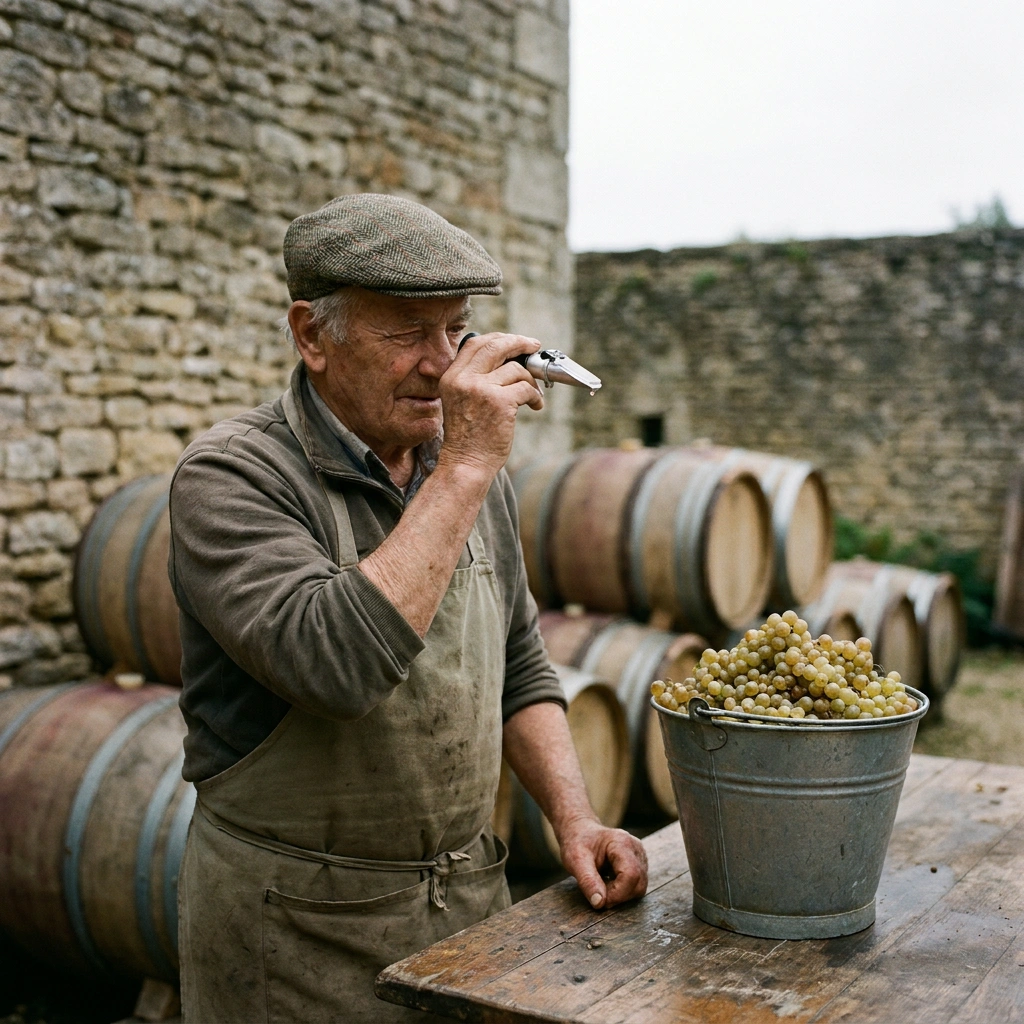
Target 22–28° Brix for off-dry styles (typical range per US Plant Patent PP14617; mean around 24–25°). At that range, you have enough natural sugar to balance the acidity and still finish the wine with some residual sweetness. If you’re aiming for dry wine, harvest slightly earlier (around 20–22° Brix) to keep alcohol from overwhelming the aromatics.
Use the will-my-grapes-ripen calculator to track degree days and estimate your La Crescent harvest window. Late-season in Zone 4 usually means a late September to early October pick — well before the first killing frost in most years.
Managing the Acidity
High TA is La Crescent’s signature, and you have several options for managing it:
- Residual sugar: The simplest approach. Stop fermentation early (with SO or cold crashing) to leave 2–4% residual sugar. The sweetness balances the acid and lets the fruit aromatics shine. This is the classic approach for La Crescent and what most home winemakers do.
- Blending: Blending with a lower-acid variety (such as Frontenac Gris or a neutral hybrid) can soften the overall profile.
- Cold stabilization: Helps precipitate tartrate crystals and can reduce TA slightly. Chill the wine to near 28°F (-2°C) for 1–2 weeks before filtering.
- Malolactic fermentation (MLF): Converts malic to softer lactic acid. Be cautious — full MLF on La Crescent can strip the aromatics and produce a flat, buttery result. Partial MLF is sometimes used, but test on a small batch first.
Use the Brix-to-alcohol calculator to plan your sugar additions and estimated finished alcohol, and see the home winemaking guide for a full fermentation walkthrough.
What La Crescent Wine Tastes Like
Done well, La Crescent wine is stunning for a home-grown fruit. Expect pronounced aromas of fresh apricot, peach, citrus zest, pineapple, and a honeyed floral note. The US plant patent describes these as “desirable aromas of citrus, apricot, pineapple, and muscat” — and in practice, that’s exactly what you get. Off-dry versions have a Riesling-like balance of fruit, acid, and sweetness. Dessert-style late-harvest La Crescent can rival commercial Riesling Spatlese in complexity, in my experience.
Where to Buy La Crescent Vines
Because La Crescent is patented, vines must come from nurseries licensed by the University of Minnesota. A few reputable cold-climate nurseries carry it regularly — St. Lawrence Nurseries (upstate New York) has historically listed cold-hardy hybrid grapes including La Crescent. Searching for licensed propagators through the University of Minnesota’s licensing office (license.umn.edu) is the safest way to find current sources.
You can also search Amazon for La Crescent grape vines from nursery sellers: browse La Crescent vines on Amazon. Availability varies by season, so order in late winter for spring delivery.
Pete’s pick: I’ve had good luck ordering cold-climate grape vines early — by February, the best varieties from specialty nurseries sell out for the year. Search early, and confirm the nursery is a licensed propagator for patented varieties.
Frequently Asked Questions
How cold-hardy is La Crescent grape?
La Crescent is extremely cold-hardy, surviving temperatures down to around −35℉ (−37℃) to −36℉ (−38℃) according to University of Minnesota licensing documentation. It is reliably grown in USDA Hardiness Zones 3 through 5, making it one of the hardiest white wine grapes available.
What does La Crescent wine taste like?
La Crescent produces intensely aromatic wines with notes of citrus, apricot, peach, pineapple, and honey. It is similar in style to Riesling or Gewurztraminer and is best suited to off-dry, semi-sweet, or dessert-style whites where its high natural acidity provides structure and balance.
When does La Crescent ripen?
La Crescent is a late-season ripener. In Zone 4 Wisconsin or Minnesota conditions, it typically reaches harvest readiness in late September to early October (mean harvest around September 26, range September 16 – October 5 per US Plant Patent PP14617). It typically achieves Brix levels of 22–28° (mean ~24–25°) while retaining its signature high acidity.
Is La Crescent disease resistant?
La Crescent has moderate disease resistance. It tolerates powdery mildew reasonably well, but can show susceptibility to downy mildew, especially in wet seasons. Most cold-climate growers use a reduced spray program of 4–6 applications per season rather than the full conventional schedule required for European vinifera varieties.
Who bred La Crescent, and when was it released?
La Crescent was developed by James Luby and Peter Hemstad at the University of Minnesota and released commercially in 2002. Its parentage is St. Pepin × E.S. 6-8-25, the latter being an Elmer Swenson selection. The variety is protected by US Plant Patent PP14617 (awarded 2004), and growers must obtain vines from licensed propagators.
🍇 Don’t plant the wrong grape
Vines take years to fruit. Get the free cheat-sheet of varieties that actually survive and ripen in your zone.
By subscribing you agree to our Privacy Policy.