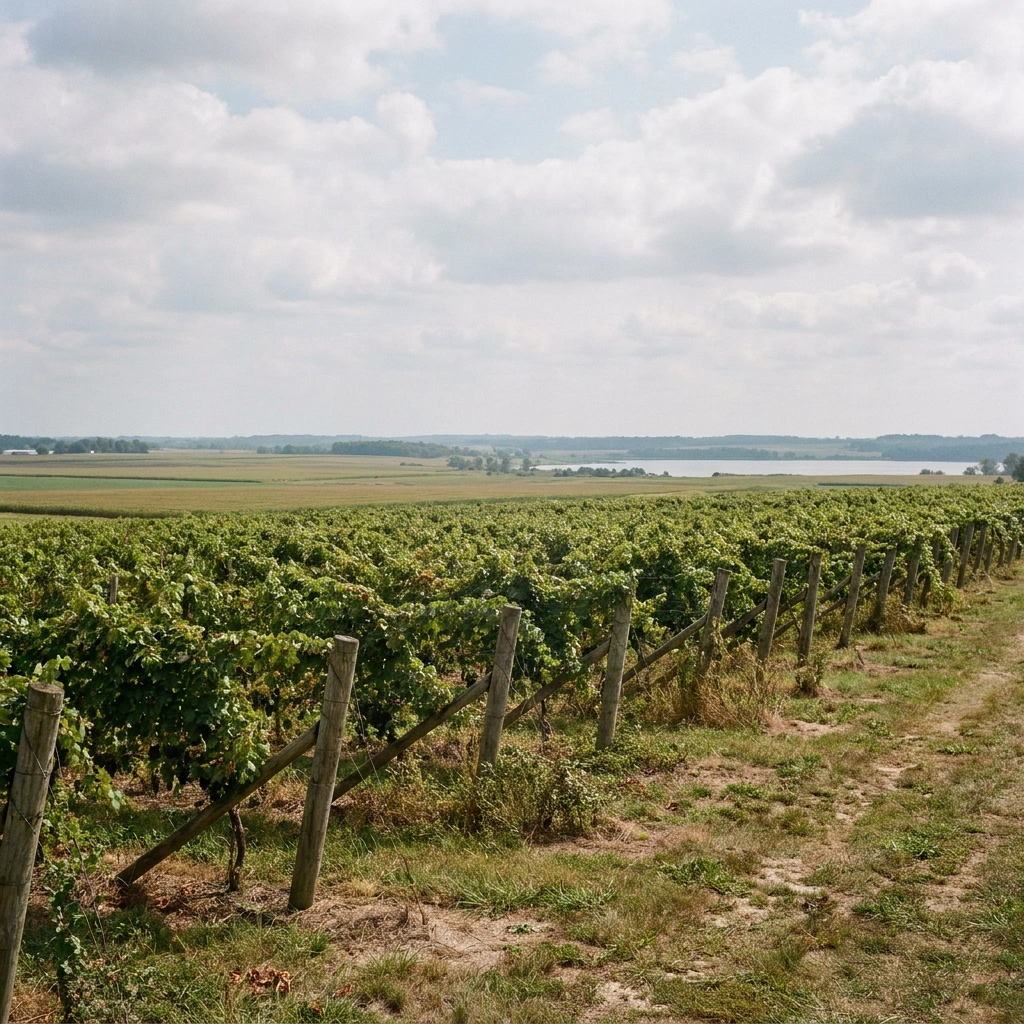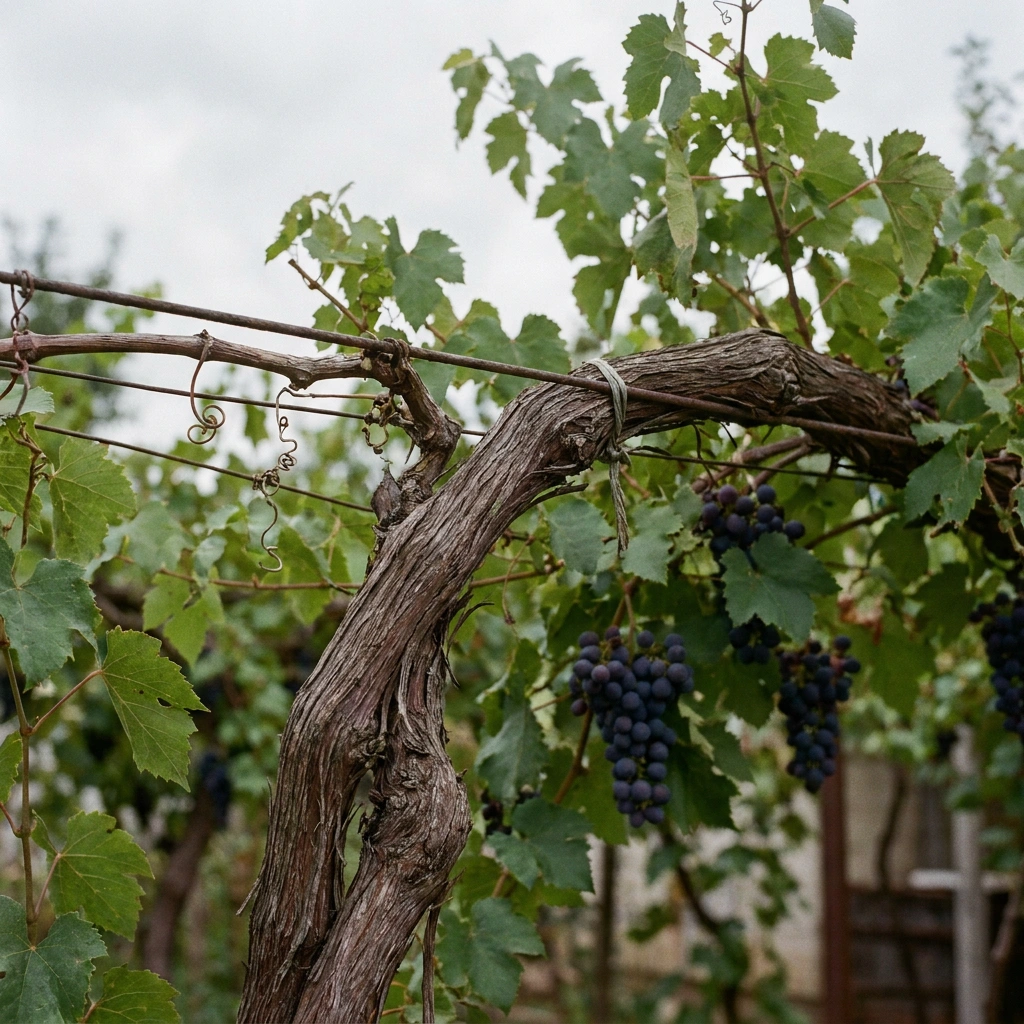
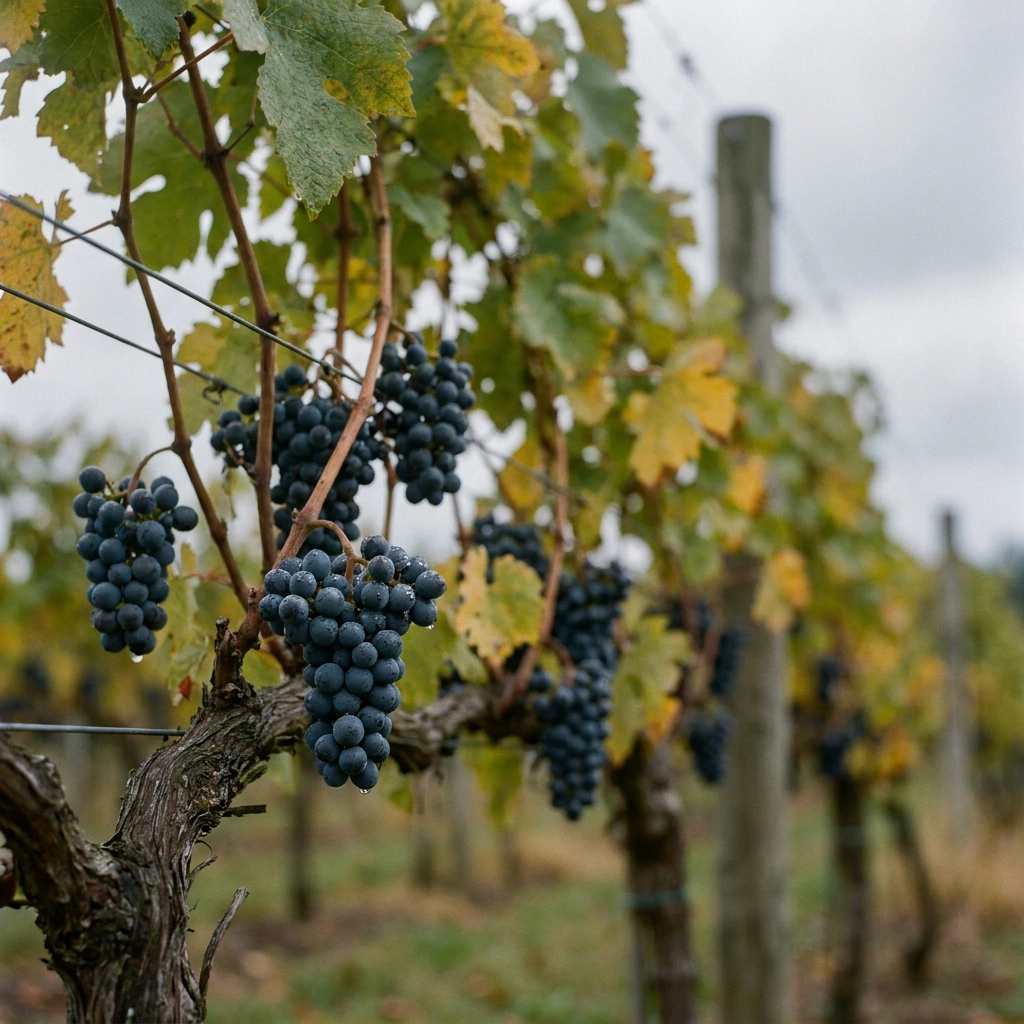
Petite Pearl is one of the most cold-hardy red wine grapes you can grow, rated to -30°F (-34°C) – USDA Zone 4. What makes it stand apart from other cold-hardy reds is its winemaking profile: relatively low acidity paired with soft, well-integrated tannin structure. That combination is genuinely rare in cold-climate viticulture, where most hybrids produce high-acid, thin-bodied reds. Petite Pearl lets you make a serious, age-worthy dry red wine without moving to a warmer climate. It was released in 2009 by independent Minnesota grape breeder Tom Plocher – not the University of Minnesota – and has earned a loyal following among northern growers ever since.
I grow cold-hardy varieties here in Wisconsin (Zone 4), and Petite Pearl is one I keep recommending to neighbors who want to go beyond Marquette and Frontenac. This guide covers what I’ve learned about growing it and making wine from it, supplemented by university extension research.
- Grape Variety Finder – find the right variety for your zone
- Will My Grapes Ripen? – check your growing degree days
- Brix to Alcohol Calculator – plan your harvest and fermentation
Petite Pearl at a Glance
| Characteristic | Detail |
|---|---|
| Type | Red wine interspecific hybrid |
| Breeder / Release | Tom Plocher (independent MN breeder), 2009 |
| Parentage | MN1094 × E.S. 4-7-26 (Elmer Swenson selection) |
| Cold Hardiness | ~-30°F (-34°C) – USDA Zone 4 |
| Ripening | Mid-to-late season |
| Typical Brix at Harvest | 22-24°Bx (site- and season-dependent) |
| Acidity | Relatively low for a cold-hardy red |
| Tannin | Notable – soft and well-structured |
| Best Use | Structured dry red wine, blending |
| Disease Resistance | Good (powdery mildew, downy mildew); monitor black rot |
| Vine Spacing | 6-8 ft (1.8-2.4 m) in-row; 8-10 ft (2.4-3 m) between rows |
Where Petite Pearl Fits in the Cold-Hardy Red Lineup
If you’ve looked at the cold-hardy grape varieties guide, you’ll know most cold-climate reds face a trade-off: hardiness often comes with high acidity and lean tannin. Marquette, Frontenac, and St. Croix are workable, but they typically need careful winemaking (acid reduction, extended maceration, blending) to reach the wine you’re imagining. Petite Pearl was bred specifically to close that gap. Tom Plocher developed it as a variety with real tannic backbone and a lower-acid juice – the kind of structure that makes a dry red age gracefully in bottle.
It’s not the most widely available variety yet – it’s newer, and propagation has grown slowly through Plocher’s licensed nursery network. But if you can get vines, it’s worth it.
Growing Petite Pearl: Site, Soil, and Planting
Site Selection
Like all cold-hardy vines, Petite Pearl benefits from a site with good air drainage. Cold air is heavier than warm air and flows downhill – a vineyard at the top or midslope of a hill stays several degrees warmer on frost nights than a low-lying frost pocket. In Zone 4 and 5, that difference can be decisive for bud survival in spring. South- or southeast-facing slopes gain heat faster in the morning and extend the effective growing season – critical for a mid-to-late ripening variety like Petite Pearl.
Avoid dense windbreaks on the upslope side that trap cold air; let it flow through or around your planting. A windbreak on the north side, however, blocks winter desiccation from cold winds without trapping cold air.
Soil Requirements
Petite Pearl, like most grapevines, wants well-drained soil above all else. Waterlogged roots invite crown rot and reduce winter hardiness significantly. Sandy loam or loamy soil drains well while retaining enough moisture for the vine through dry summers. Heavy clay soils can work if you improve drainage – raised beds, subsurface tile, or deep ripping before planting. Soil pH of 5.5-6.5 is the target range; if you’re outside that, do a soil test and amend with lime (to raise pH) or sulfur (to lower it) before planting. For more on improving your vineyard soil, see our guide on vineyard drainage.
Planting
Plant in spring after your last hard frost, once soil temperatures reach at least 50°F (10°C). Space vines 6-8 ft (1.8-2.4 m) apart within the row, with 8-10 ft (2.4-3 m) between rows if you’re using a tractor. For a backyard planting with hand cultivation, 7-8 ft (2.1-2.4 m) between rows works fine.
Dig the planting hole wide enough to spread the roots without bending them. Set the bud union at or slightly above soil level. Water thoroughly at planting and again weekly during the first summer if rainfall is short. Mulching the base with 3-4 in (7-10 cm) of wood chips helps retain moisture and suppress weeds without creating a harbor for voles – keep mulch pulled back 6 in (15 cm) from the trunk base.
Training, Pruning, and Canopy Management
Trellis System
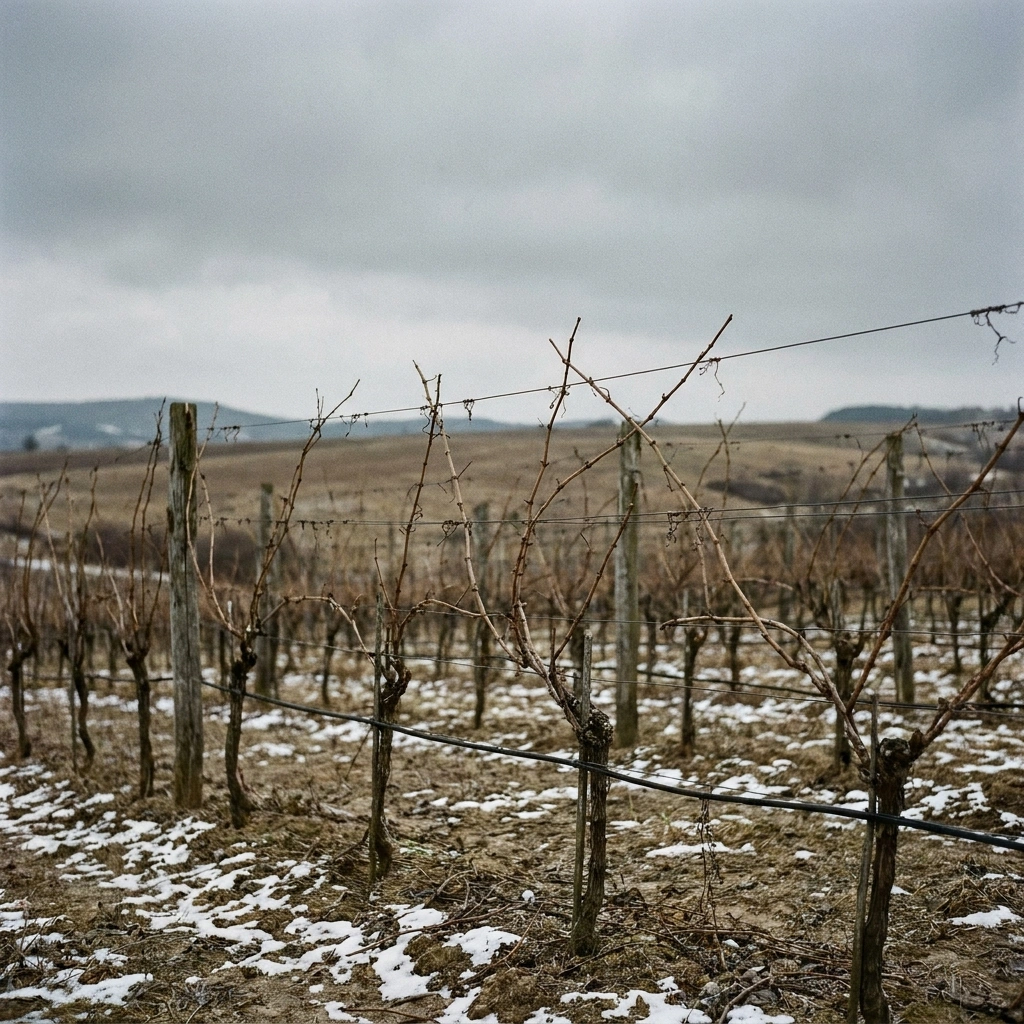
The two most common systems for cold-hardy hybrids in the Upper Midwest are the high bilateral cordon (HBC) and the vertical shoot positioning (VSP) system. Petite Pearl is reported to be moderately vigorous – not as vigorous as, say, St. Croix, but still capable of producing more canopy than it needs for good fruit ripening if left unchecked. VSP works well: train two horizontal cordons at about 36 in (90 cm) height, let shoots grow upward, and tuck them into catch wires. This keeps the canopy open, improves air circulation, and reduces disease pressure.
Pruning
Prune in late winter or very early spring before bud swell – typically late February through mid-March in Zones 4-5. Wait until you can assess winter damage on the canes: live wood is green under the bark; dead wood is brown. Petite Pearl’s cold hardiness means you’ll usually find the majority of primary buds alive even after harsh winters, but always check before deciding how much to leave.
Spur-prune to 2-bud spurs along the cordon, aiming for roughly 30-40 buds per vine once the vine is established (years 3+). Overcropping weakens the vine and delays ripening – cold-climate growers tend to be too conservative with crop reduction, but getting fruit ripe is more important than getting a heavy crop.
Summer Canopy Work
Shoot positioning, hedging, and leaf removal in the fruit zone in early summer are worth the time. Removing basal leaves on the east side of the canopy (north/south rows) or the sun-exposed side (east/west rows) improves air movement and sun exposure on the clusters – both help ripening and reduce the humid microclimate that powdery and downy mildew favor.
Winter Care in Zone 4
At -30°F (-34°C) hardiness, Petite Pearl should get through a typical Zone 4 winter with its canes intact above snow line. In a Zone 3 situation, or during exceptional cold snaps (below -30°F/-34°C), you may see tip damage on the longest exposed canes. The main risk isn’t the coldest night of winter but rather late-spring frosts after bud break – when green tissue is fully exposed and far less hardy than dormant buds.
I don’t bury or heavily mulch my Petite Pearl – at Zone 4 it hasn’t needed it. If you’re at the edge of Zone 3, hilling up soil around the base of the vine to protect the graft union through the winter is a reasonable precaution. The graft union is typically the most vulnerable point; if it survives, the vine can regrow from the roots even after severe winter injury above the snow line.
Harvest and Winemaking
Knowing When to Pick
Petite Pearl ripens mid-to-late season. In Zone 4 Wisconsin, that typically puts harvest in late September to mid-October, depending on the summer’s heat accumulation. The target Brix for dry red wine production is typically 22-24°Bx – though many cold-climate growers push toward the higher end to get the phenolic ripeness (seed and skin tannins going from harsh to smooth) that matches the sugar ripeness. Tasting seeds is as important as reading a refractometer: ripe seeds are brown, crunchy, and taste nutty. Green seeds mean green tannin, no matter what the Brix says. Use our Brix to Alcohol Calculator to translate your reading into expected finished alcohol.
What Makes Petite Pearl Different at the Winery
This is where Petite Pearl really stands out. Most cold-hardy red hybrids need significant acid reduction (cold stabilization, malolactic fermentation, or potassium bitartrate addition) to reach a balanced table wine. Petite Pearl’s naturally lower acidity – titratable acidity around 6-7 g/L, genuinely low for a cold-hardy red – means you often get a better-balanced must right out of the crusher, with less corrective winemaking required.
The tannin structure is the other headline. Cold-hardy reds are often made as lighter-bodied, slightly sweet wines partly because the tannins are thin or astringent – the variety just doesn’t have the structure to support a serious dry red. Petite Pearl has enough tannin to age for a few years and enough flesh to support it. Extended maceration (10-14 days on skins) can deepen the structure further. Winemakers have produced Petite Pearl as both a varietal dry red and as a blending component that adds structure to lighter co-ferments.
Malolactic fermentation is still recommended – it softens the wine and adds complexity – but you’re starting from a better place than with high-acid varieties like Frontenac. For a full overview of the process, see our wine making instructions guide.
Our pick for home winemakers: If you’re getting into making Petite Pearl, a quality wine-making kit takes a lot of guesswork out of the process – especially for first-time red wine production. Browse wine making starter kits on Amazon to compare options suited for small-batch red wine production.
Where to Buy Petite Pearl Vines
Petite Pearl is a relatively newer variety and not yet stocked by most general nurseries. Your best options:
- Tom Plocher’s licensed propagator network – Petite Pearl is propagated through nurseries that have received licensed cuttings from Plocher Vines. Check plochervines.com for current availability information and licensed growers.
- Stark Bro’s Nurseries (starkbros.com) – a large mail-order nursery that sometimes stocks cold-hardy hybrid grape varieties. Check their current catalog, as inventory varies year to year.
- St. Lawrence Nurseries (slngrow.com) – a certified-organic nursery in Potsdam, NY, specializing in cold-hardy fruits for northern growers (Zone 3-4). One of the better sources for cold-climate hybrid grapes.
- Alternatively, search for Petite Pearl grape vines on Amazon – marketplace sellers occasionally list cold-hardy hybrid varieties, though verify the seller’s reputation and that the variety matches before purchasing.
Order early – cold-hardy specialty varieties often sell out by mid-spring. If Petite Pearl is unavailable, Marquette or Frontenac are solid alternatives that are more widely available and equally cold-hardy.
Frequently Asked Questions
Is Petite Pearl a University of Minnesota variety?
No. Petite Pearl was bred by Tom Plocher, an independent grape breeder based in Minnesota – not by the University of Minnesota Grape Breeding and Enology Project. UMN varieties include Marquette, Frontenac, La Crescent, Itasca, and several others. Petite Pearl is Plocher’s own work, with parentage MN1094 × E.S. 4-7-26 (an Elmer Swenson selection). This distinction matters for tracking propagation rights and nursery sources.
How cold-hardy is Petite Pearl?
Petite Pearl is rated to approximately -30°F (-34°C), placing it solidly in USDA Zone 4. That makes it one of the hardier red wine varieties available – comparable to Frontenac and better than Marquette (rated to about -28°F/-33°C). Zone 3 growers can try it with precautions (burying the trunk base), but Zone 4 is where it performs reliably without extra winter protection.
What kind of wine does Petite Pearl make?
Petite Pearl makes a structured dry red wine with relatively low acidity – titratable acidity around 6-7 g/L, genuinely low for a cold-hardy red – and genuine tannin – soft and well-integrated rather than harsh. It can be vinified as a serious varietal dry red or used as a blending component to add structure to other cold-hardy reds. With a few years of bottle aging, it develops complexity that puts it in the same conversation as warmer-climate hybrid reds.
When does Petite Pearl ripen?
Petite Pearl ripens mid-to-late season. In USDA Zone 4 (upper Midwest), expect harvest in late September to mid-October, depending on your specific site and the season’s growing degree day accumulation. Use the Will My Grapes Ripen? tool to check whether your site accumulates enough heat units to ripen a mid-late variety reliably.
Does Petite Pearl need a pollinator?
Petite Pearl has perfect flowers (both male and female parts), so it is self-fertile and does not require a separate pollinator variety – as is standard for cultivated grape hybrids generally. Planting multiple vines will still improve berry set through cross-pollination, but a single vine can set fruit on its own.
🍇 Don’t plant the wrong grape
Vines take years to fruit. Get the free cheat-sheet of varieties that actually survive and ripen in your zone.
By subscribing you agree to our Privacy Policy.