Helpful tools: Grape Variety Finder | Will My Grapes Ripen? | Brix-to-Alcohol Calculator
The Valiant grape is one of the hardiest grapes you can grow, surviving winter lows down to around -45°F (-43°C) and thriving in USDA Hardiness Zones 2 through 3 – zones where most other grapevines have no chance. Released by South Dakota State University (SDSU) in 1982, Valiant produces clusters of small dark blue berries with a rich, “foxy” Concord-like flavor that makes it an outstanding choice for grape juice, jelly, and fresh eating. If you’re gardening in the northern plains, the Canadian prairies, or any brutally cold short-season climate, Valiant is the grape to start with.
Valiant Grape at a Glance
| Characteristic | Detail |
|---|---|
| Type | Blue/dark juice grape (labrusca × riparia hybrid) |
| Breeder / Year | South Dakota State University (SDSU), 1982 |
| Parentage | Fredonia × Vitis riparia ‘S.D. 9-39’ |
| Cold Hardiness | ~-45°F (-43°C); USDA Zones 2-3 |
| Ripening Season | Very early (among the earliest in cultivation) |
| Brix at Harvest | Typically 16-19 °Bx (can reach ~20 °Bx in a warm year; 14 °Bx only in the coldest, shortest-season sites) |
| Primary Uses | Juice, jelly, fresh eating (seeded) |
| Disease Resistance | Good; fairly tough in most northern conditions |
| Vine Spacing | 6-8 ft (1.8-2.4 m) in a row; rows 8-10 ft (2.4-3 m) apart |
Why Valiant Is in a Class of Its Own for Cold Climates
Valiant’s hardiness stands out even among cold-climate grapes. The key is its parentage: the Vitis riparia component (specifically the SDSU selection S.D. 9-39, a wild V. riparia vine collected in northeastern Montana) is a riverbank grape native to the upper Midwest and Canadian prairies – a species that evolved to handle brutal cold and short growing seasons. Cross that with Fredonia, itself a reasonably cold-tolerant labrusca-type, and you get a vine that SDSU’s research has repeatedly placed among the hardiest cultivated grapes in existence.
University of Minnesota and SDSU extension sources cite bud hardiness of approximately -45°F (-43°C). To put that in context: in most of Zone 4, the vines don’t even need mounding or burial to overwinter. Growers in Zone 2 on the Canadian prairies report them coming back year after year with minimal protection. If your climate kills other grapes, Valiant is often the one that still comes back.
Choosing a Site and Preparing the Soil
Even the hardiest grape wants the right site. Here’s what to look for with Valiant specifically:
- Full sun: At least 6-8 hours of direct sun per day. In short-season climates this is non-negotiable – you need every degree-day you can get.
- Good air drainage: Cold air flows downhill and pools at the bottom of slopes. Plant Valiant on a gentle slope or raised spot to reduce the risk of late spring frost damage to new shoots, even though the established canes are iron-tough.
- Well-drained soil: Grapes hate wet feet. A slightly sandy or gravelly loam with good drainage suits them well. Heavy clay is workable if you amend it or plant on a raised berm, but waterlogged roots lead to root rot regardless of variety.
- Soil pH 6.0-6.5: Standard for most grapes. Adjust with lime (raises pH) or sulfur (lowers pH) based on a soil test result.
For a deeper look at soil preparation before planting, see our guide: How to Prepare Your Soil and Plant a Grape Vine.
Planting
Plant Valiant in spring after your last hard frost date – typically late April to mid-May in Zone 3-4. Bare-root vines are the most common and most economical choice.
- Dig a hole roughly 12 inches (30 cm) deep and 12 inches (30 cm) wide.
- Trim any broken roots and spread the remaining roots evenly in the hole.
- Backfill with native soil – avoid adding heavy organic amendments right into the planting hole, which can create a soft pocket that roots don’t want to leave.
- Set the plant so the graft union (if present) sits a couple of inches above soil level. Many Valiant vines are own-rooted, in which case plant so the crown is at or just below soil level.
- Water in well and mulch around the base to retain moisture.
For spacing details, see our grape vine spacing guide. For Valiant, keep vines 6-8 ft (1.8-2.4 m) apart in a row. Tighter spacing works in very cold zones where the vines may stay smaller, but give them room to breathe to reduce disease pressure.
Training and Pruning
Valiant responds well to standard training systems used in cold climates. The most common choice for home gardeners is the 4-arm Kniffin system or a simple bilateral cordon on a two-wire trellis.
In year 1, focus on establishing a strong trunk – let one or two shoots grow and tie them to the wire; cut everything else. In year 2, begin developing the permanent framework. By year 3 you should be getting a real crop.
Annual pruning (done late winter/early dormant season, before the buds swell) is the most important task you’ll do for a grapevine. Valiant is a vigorous variety – it will try to over-crop if you let it. Aim to keep 2-3 buds per shoot, pruning to short spurs on a cordon system, or to canes with roughly 8-12 buds if you use cane pruning. Over-cropped Valiant vines produce poor-quality, under-ripe berries.
What Makes Valiant So Cold-Hardy – The Riparia Connection
Understanding why Valiant survives extreme cold helps you grow it better. Vitis riparia, the wild riverbank grape native to the northern Great Plains and Canadian prairies, evolved in a climate with winters regularly hitting -40°F (-40°C). Unlike Vitis vinifera (the European wine grape), riparia varieties and hybrids acclimate very deeply in autumn – they “know” to go fully dormant early and their bud tissue can supercool to extraordinary low temperatures before ice crystal formation kills the cells.
Valiant inherits this acclimation ability. It also ripens very early – one of the earliest of any cultivated grape – which is directly related to the riparia genetics. A grape that has evolved to complete its fruit production before the prairies freeze had to get fast, and Valiant did. This early ripening is a feature, not a compromise, in short-season northern climates. Use the Will My Grapes Ripen calculator to check how Valiant fits your growing season.
Harvest, Juice, and Jelly – What Valiant Is Really For
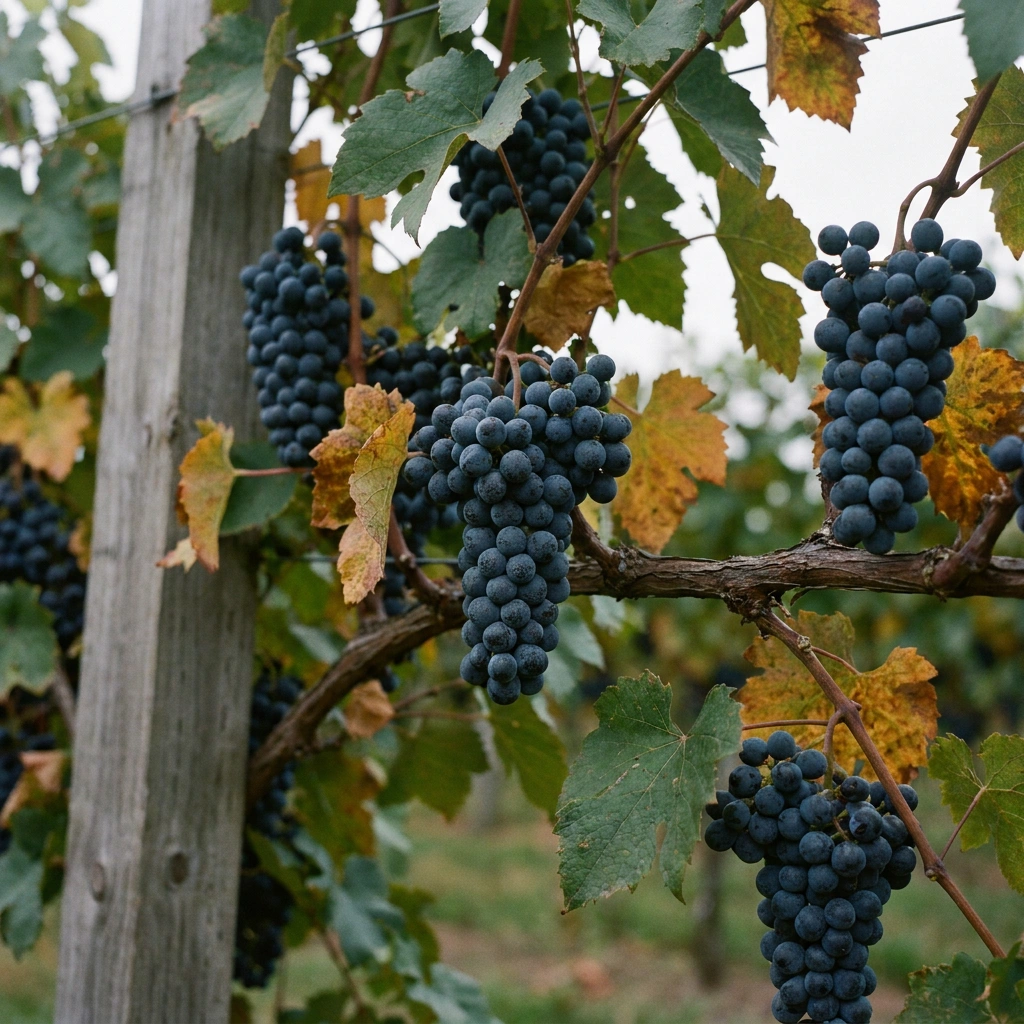
Valiant ripens very early – in most Zone 3-4 locations that means late August to early September. Watch the berries: fully ripe Valiant is very dark (almost black-blue), slightly soft to the touch, and pulls easily from the cluster. Sugar content typically runs 16-19 °Bx at full ripeness (can reach ~20 °Bx in warm years; 14 °Bx only in the coldest short-season sites) – plenty for juice and jelly, and enough to make a harvest-ready call with a basic refractometer. Use the Brix-to-Alcohol Calculator if you’re curious about wine potential.
The flavor is distinctly “foxy” – the same musky, grapey, concord-like aroma you’d recognize from grape juice and grape jelly. That flavor profile is characteristic of labrusca genetics, which Valiant carries on the Fredonia side. It’s a flavor many people love (and it’s what most Americans grew up associating with “grape”), but it’s not a neutral wine-grape flavor.
Juice
Valiant makes outstanding grape juice. Steam-juicing is the easiest method for home production: load the clusters into the steam juicer, run it for 45-60 minutes, and collect deep purple juice that freezes or cans beautifully. A 10-pound (4.5 kg) harvest typically yields about 1-1.5 gallons (3.8-5.7 L) of juice, depending on how ripe and juicy the berries are.
Jelly and Jam
The naturally high acidity and flavor intensity of Valiant make it a premier jelly grape. Processed with standard pectin and canning techniques, Valiant jelly has a deep purple color and a bright, intense flavor. This is probably what most Zone 2-3 growers end up doing with their harvest.
An Honest Word About Wine
You can make wine from Valiant. But to be straight with you: Valiant is not a fine-wine grape. The foxy labrusca flavor that makes it great for juice comes through very prominently in wine, and without the complexity or structure you get from vinifera or more sophisticated hybrid wine grapes. If you’re growing grapes specifically for winemaking in cold climates, look at varieties like Marquette, Frontenac, or La Crescent – these are purpose-bred wine grapes that also handle cold remarkably well. Use Valiant for juice and jelly where it truly shines, and consider a wine-specific variety alongside it if wine is your goal.
Disease and Pest Notes
Valiant is fairly disease-resistant, especially by the standards of labrusca and hybrid grapes. It shows reasonable tolerance to common fungal diseases like black rot and powdery mildew, though no grape is immune. In wet summers, a basic spray program (copper-based or sulfur fungicide per label) will keep the vines clean. Downy mildew can be an issue in unusually wet seasons – same general management applies.
The vine’s vigor can sometimes work against it: very thick canopies trap moisture and reduce air circulation, worsening disease pressure. Annual pruning and summer shoot thinning to open up the canopy is worth the effort.
Our pick for cold-climate grape growing: If you’re sourcing your first Valiant vine, check current availability on Amazon – cold-climate grape vines sell out fast each spring. Browse Valiant grape vines on Amazon. For specialty selections and expert advice on northern varieties, a reputable cold-climate specialty nursery that focuses on Zone 3-5 fruit stock is always worth checking too.
Frequently Asked Questions About Valiant Grapes
How cold-hardy is the Valiant grape?
Valiant is rated to approximately -45°F (-43°C) in USDA Zone 2-3, making it one of the hardiest cultivated grapes available. It was developed by South Dakota State University specifically for extreme cold-climate conditions and carries Vitis riparia genetics that give it exceptional cold acclimation.
When does the Valiant grape ripen?
Valiant is a very early ripening variety, typically reaching harvest in late August to early September in Zone 3-4. This early season is one of its key advantages for short-season northern climates where later-ripening varieties may not fully mature before frost.
What is Valiant grape best used for?
Valiant is primarily a juice and jelly grape. Its foxy, Concord-like flavor and high acidity make it ideal for deep-purple grape juice and intensely flavored grape jelly. It can be eaten fresh (it is seeded) and can be fermented into wine, though it is not considered a fine wine grape due to its strong labrusca flavor character.
Is Valiant grape good for wine?
Valiant can be made into wine, but it is not recommended as a primary wine grape. The strong foxy/labrusca flavor from its Fredonia parentage is very prominent in wine and lacks the balance of purpose-bred cold-hardy wine grapes like Marquette or Frontenac. Use Valiant for juice and jelly where its flavor is an asset, and choose a hybrid wine variety if winemaking is your primary goal.
What is the parentage of the Valiant grape?
Valiant was bred by South Dakota State University and released in 1982. Its parentage is Fredonia crossed with a Vitis riparia selection designated S.D. 9-39. The riparia parent is what gives Valiant its extraordinary cold hardiness.
🍇 Don’t plant the wrong grape
Vines take years to fruit. Get the free cheat-sheet of varieties that actually survive and ripen in your zone.
By subscribing you agree to our Privacy Policy.