Growing Frontenac Grapes: The Zone 3 Cold-Hardy Wine Grape
Frontenac is a red wine interspecific hybrid grape released by the University of Minnesota in 1996 – the first of what became UMN’s celebrated cold-hardy series. It’s winter-hardy to around -35°F (-37°C), meaning it thrives in USDA Hardiness Zone 3, which covers a huge stretch of the upper Midwest, Canadian prairies, and northern New England. The one thing every grower needs to know upfront: Frontenac produces exceptionally high-acid juice. That’s not a flaw – it’s a trait you manage in the winery – but go in knowing that malolactic fermentation or deacidification is usually part of the process.
Frontenac at a Glance
| Characteristic | Detail |
|---|---|
| Type | Red wine interspecific hybrid |
| Breeder / Year | University of Minnesota, released 1996 |
| Parentage | Vitis riparia × Landot 4511 (a French-American hybrid) |
| Cold Hardiness | ~-35°F (-37°C); USDA Zones 3-7 |
| Ripening Season | Late season – late September into October in Zone 4; among the latest-ripening UMN varieties |
| Typical Brix at Harvest | 22-25° Brix (higher in warm years / for dessert-wine styles) |
| Acidity | Very high – titratable acidity commonly 10-15 g/L |
| Disease Resistance | Excellent resistance to downy mildew; moderately susceptible to black rot, botrytis, and powdery mildew – a black-rot spray program is still needed |
| Wine Styles | Dry red, rosé, port-style / dessert wine |
| Vine Spacing | 8-10 ft (2.4-3.0 m) between vines, 10-12 ft (3.0-3.7 m) between rows |
Site Selection and Soil
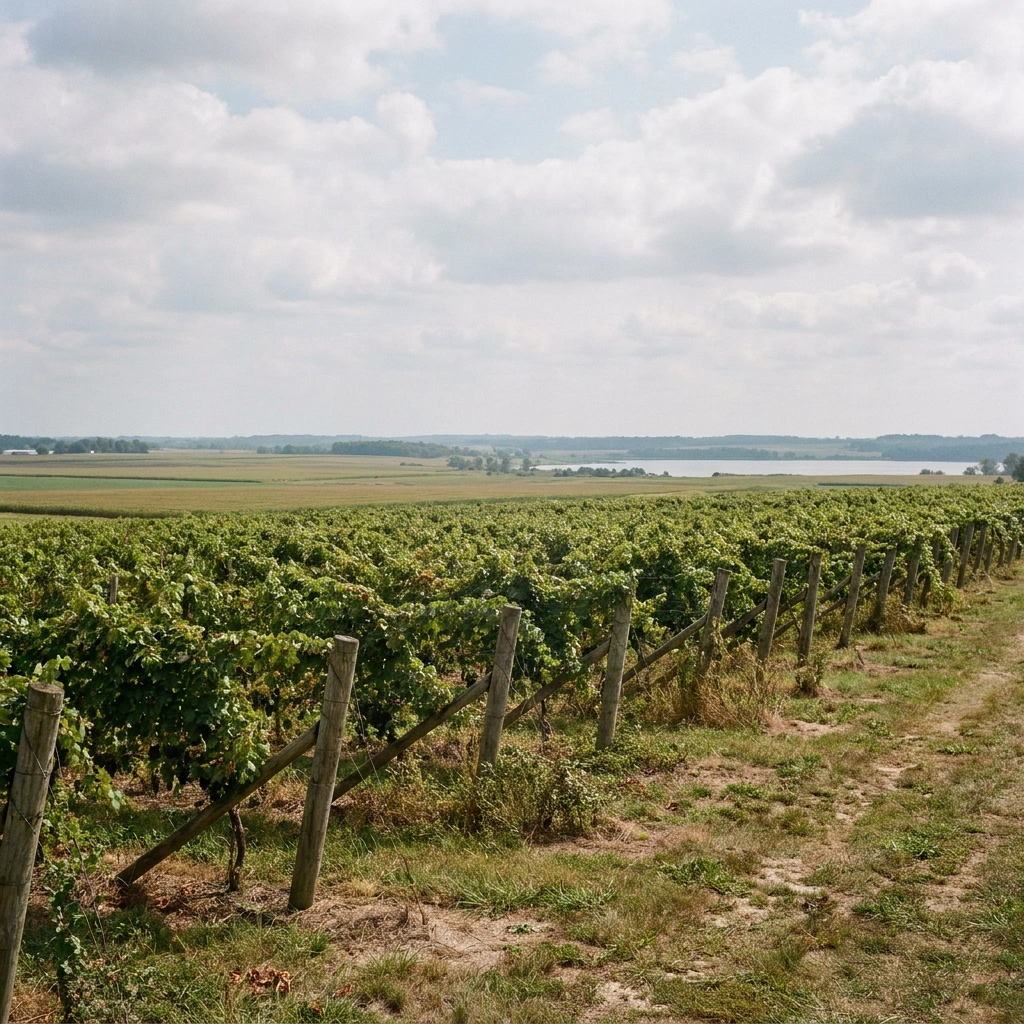
Like most wine grapes, Frontenac wants full sun – at least 6-8 hours of direct sunlight per day. In Zone 3 and 4, every degree of heat accumulation matters for ripening, so pick the warmest spot you can. A south-facing gentle slope is ideal. Cold air drains downhill, so avoid frost pockets at the bottom of hills.
Soil drainage is more important than soil fertility. Frontenac does fine in moderately fertile, well-drained loam. Soggy roots invite crown rot and disease problems. If you have heavy clay, amend it or build raised rows. Target a soil pH of 5.5-6.5; Frontenac isn’t fussy, but outside this range nutrient uptake suffers. A simple soil test before planting saves a lot of guesswork – your local extension office can point you to one.
Because Frontenac is so vigorous, avoid overly rich soils that push excessive shoot growth. You want balanced vigor, not a jungle. See our grape vine spacing guide for row layout recommendations.
Planting Frontenac Vines
Plant bare-root vines in spring after your last hard frost date – usually April to mid-May in Zone 4, later in Zone 3. Potted vines can go in a bit earlier since you’re not stressing bare roots.
- Dig a hole wide enough to spread the roots without cramping them, about 12 inches (30 cm) deep.
- Set the graft union (if grafted) 2-3 inches (5-7 cm) above the soil line in areas with Phylloxera pressure. In most cold northern regions, own-rooted vines are common and acceptable.
- Water in well. Mulch around the base to retain moisture and suppress weeds, but keep mulch away from the trunk to avoid rot.
- Install a stake or small trellis support in the first year to train the trunk straight.
- Space vines 8-10 ft (2.4-3.0 m) apart in the row.
First-year vines need consistent moisture while they establish. Don’t let them dry out, but don’t waterlog them either. Growth the first season may look modest – the vine is building its root system underground.
Training and Pruning: Managing a Vigorous Vine
Frontenac is notoriously vigorous. That’s a feature in Zone 3 (more wood to lose to winter without killing the vine), but it means you need to prune firmly every year or the vine will sprawl, shade itself out, and produce lower-quality fruit.
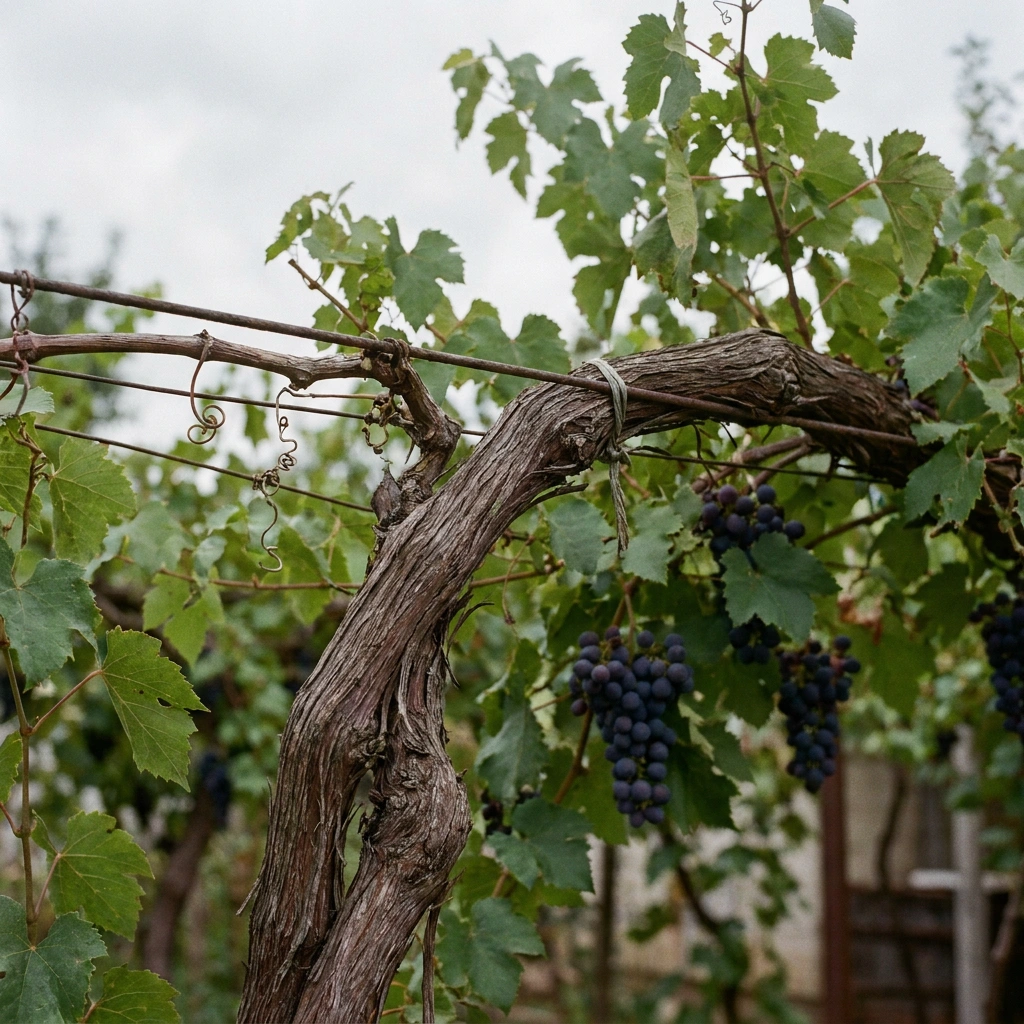
The most common training system for cold-climate grapes in the upper Midwest is the High Cordon or Bilateral Cordon, though some growers use the Geneva Double Curtain (GDC) specifically for high-vigor varieties like Frontenac. A high cordon places the fruiting wire at 5-6 ft (1.5-1.8 m), which also helps keep dormant buds just a little farther from late-spring ground frosts.
Annual pruning steps for a mature vine on bilateral cordon:
- Prune in late winter or early spring while the vine is fully dormant – after the coldest nights have passed but before bud swell.
- Remove about 80-90% of the prior year’s wood. Frontenac is productive on short spurs (2-3 buds).
- Leave 4-6 spurs per side of the cordon, evenly spaced.
- Remove any deadwood from winter injury and renew the cordon arms if needed.
- Total bud load for a mature vine: 30-50 buds is a reasonable starting point; adjust based on vine vigor and crop quality.
During the growing season, keep shoots positioned in the trellis wires (tucking or using foliage wires), and consider leaf removal in the fruit zone after fruit set to improve air circulation and color development.
Winter Care in Cold Climates
This is where Frontenac really shines. With cold hardiness to -35°F (-37°C), most Zone 4 growers don’t need to bury or heavily protect Frontenac vines the way they might with a less-hardy variety. Zone 3 growers may still see some tip dieback in extreme winters, but the vine generally recovers well.
A few sensible precautions even for a hardy vine:
- Stop fertilizing with nitrogen after mid-summer to encourage the canes to harden off properly before freeze-up.
- Leave the leaves on until they drop naturally – don’t rush fall pruning. The vine is still moving carbohydrates into the root and trunk.
- Do your dormant pruning in late winter (February-March), after the worst cold is past, so you can assess any winter damage and prune it out.
- Hill up soil around the graft union of grafted vines in Zone 3 if you’re extra cautious.
In Zone 4, Frontenac typically comes through winter without any wrapping or burial. In Zone 3 Manitoba or Minnesota’s Iron Range, you might see minor tip damage but the vine bounces back.
Pest and Disease Management
One of Frontenac’s big selling points is disease resistance. According to University of Minnesota extension materials, Frontenac has excellent resistance to downy mildew (Plasmopara viticola), which is one of the most destructive vineyard diseases in humid climates. However, UMN rates it as moderately susceptible to black rot, botrytis bunch rot, and powdery mildew – so a black-rot spray program is still needed, even on this hardy variety.
That said, no variety is disease-immune. In wet seasons, keep an eye on powdery mildew and botrytis (bunch rot), especially in tight clusters. A basic spray program with sulfur (for powdery mildew) and copper (for downy/black rot) early in the season is still good practice, even on a resistant variety. Always consult your state’s extension grape production guide for current spray recommendations.
For pests: Japanese beetle, grape berry moth, and spotted wing drosophila are the main insects to watch depending on your region. Your local extension office will have region-specific thresholds and timing.
Harvest and Winemaking: Working with Frontenac’s Acidity
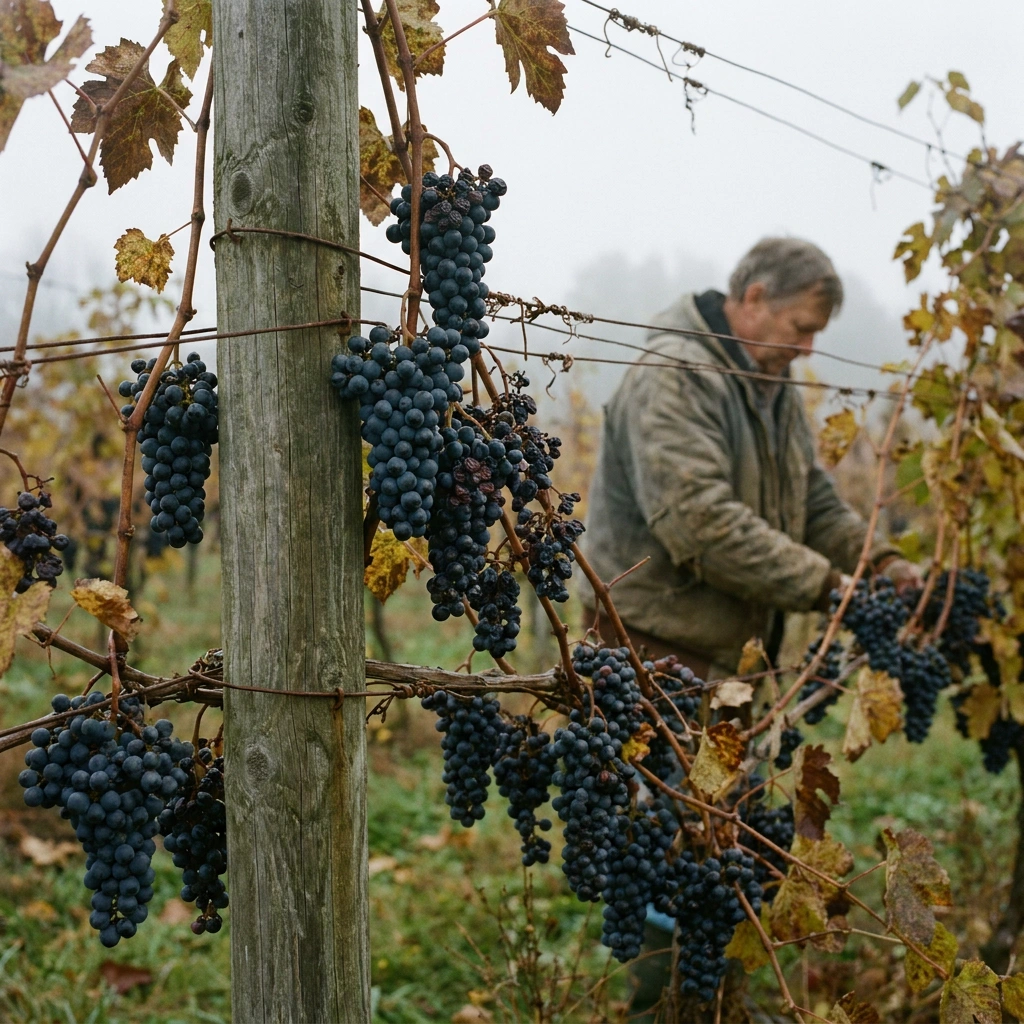
Frontenac ripens late season – typically late September into October in Zone 4, and is among the latest-ripening of UMN’s cold-hardy varieties. Don’t rush harvest by calendar date: the clusters turn deep blue-black well before the grapes are fully ripe. Use a refractometer to measure sugar levels and wait until acidity drops to a manageable level. See the Brix to Alcohol Calculator to plan your fermentation.
Frontenac typically reaches 22-25° Brix at full ripeness – well within range for a dry red wine or even a port-style dessert wine without chaptalization (warmer seasons can push higher). The challenge is acidity. Titratable acidity (TA) commonly runs 10-15 g/L (as tartaric acid equivalent) at harvest – roughly double or more what you’d see in a warm-climate Cabernet. That’s very sour, and patience at harvest is the first tool for managing it.
Managing the Acidity
Cold-climate winemakers have a few tools for this:
- Malolactic fermentation (MLF): A secondary bacterial fermentation that converts sharp malic acid to softer lactic acid. For Frontenac, MLF is almost always recommended for dry red production. It can drop perceived acidity noticeably and add complexity.
- Deacidification: Chemical reduction of acidity using potassium bicarbonate or calcium carbonate. Use cautiously – over-deacidification makes flat wine. Taste and test as you go.
- Blending: Frontenac blends well with lower-acid varieties like Marquette or Maréchal Foch to balance the finished wine.
- Port style: Arresting fermentation early with grape spirits (fortification) preserves residual sugar, which balances the acid beautifully. Frontenac port-styles can be genuinely excellent.
- Rosé: Short skin contact (4-24 hours) then pressing off – the rosé style often shows Frontenac’s best fruit character (cherry, cranberry, plum) with acidity that reads as freshness rather than sharpness.
For a step-by-step guide to small-batch winemaking, see the wine making instructions page. Also use the ripening calculator to check whether your site accumulates enough heat units to ripen Frontenac in your specific location.
Frontenac Gris and Frontenac Blanc
Frontenac has two color mutations worth knowing about: Frontenac Gris (pinkish-gray berries, white wine with apricot and peach notes) and Frontenac Blanc (green-yellow berries, lighter-bodied white wine). Both are also cold-hardy to Zone 3 and share Frontenac’s vigorous growth habits. Each will get its own dedicated page on this site. For an overview of all three alongside other UMN releases, see the cold-hardy grape varieties hub.
Where to Buy Frontenac Grape Vines
Frontenac is widely available from cold-climate nurseries. For convenience, you can search for Frontenac grape vines on Amazon to see what’s available and shipping to your area.
Frequently Asked Questions
How cold-hardy is Frontenac grape?
Frontenac is rated cold-hardy to approximately -35°F (-37°C), placing it in USDA Hardiness Zone 3. It was the first variety released in the University of Minnesota’s cold-hardy grape breeding program and was specifically selected for upper-Midwest winters. Most Zone 4 growers can grow it without winter protection.
Why is Frontenac so acidic, and what can I do about it?
Frontenac’s high acidity comes from its parentage – it carries genetics from Vitis riparia, a wild grape species known for high acid levels. Cold northern climates also tend to preserve acidity in grapes. The best solutions are malolactic fermentation (for dry reds), deacidification with potassium bicarbonate, or making rosé and port-style wines where sweetness or technique balances the acid.
When does Frontenac ripen?
Frontenac is a late-season grape – among the latest-ripening of UMN’s cold-hardy varieties, typically harvested in late September into October in Zone 4 (Wisconsin, Minnesota, Michigan). Harvesting too early is the most common Frontenac mistake: high acidity only drops meaningfully in the final weeks of hang time. Target 22-25° Brix and taste the berries – seeds should be brown and the juice should taste fully ripe, not green or sharp.
What wines does Frontenac make best?
Frontenac makes excellent rosé (its most approachable style), port-style dessert wines (where residual sugar balances the acidity), and satisfying dry reds when full malolactic fermentation is completed. It’s often blended with Marquette for dry red table wine. Expect flavors of dark cherry, cranberry, plum, and sometimes a slight spice character.
Is Frontenac disease resistant?
Frontenac has excellent resistance to downy mildew (Plasmopara viticola), which is a significant advantage over European wine grapes. However, UMN rates it as moderately susceptible to black rot, botrytis bunch rot, and powdery mildew. A preventive spray program targeting black rot is still recommended, especially in humid climates. It requires fewer fungicide inputs than Vitis vinifera, but it is not spray-free.
🍇 Don’t plant the wrong grape
Vines take years to fruit. Get the free cheat-sheet of varieties that actually survive and ripen in your zone.
By subscribing you agree to our Privacy Policy.