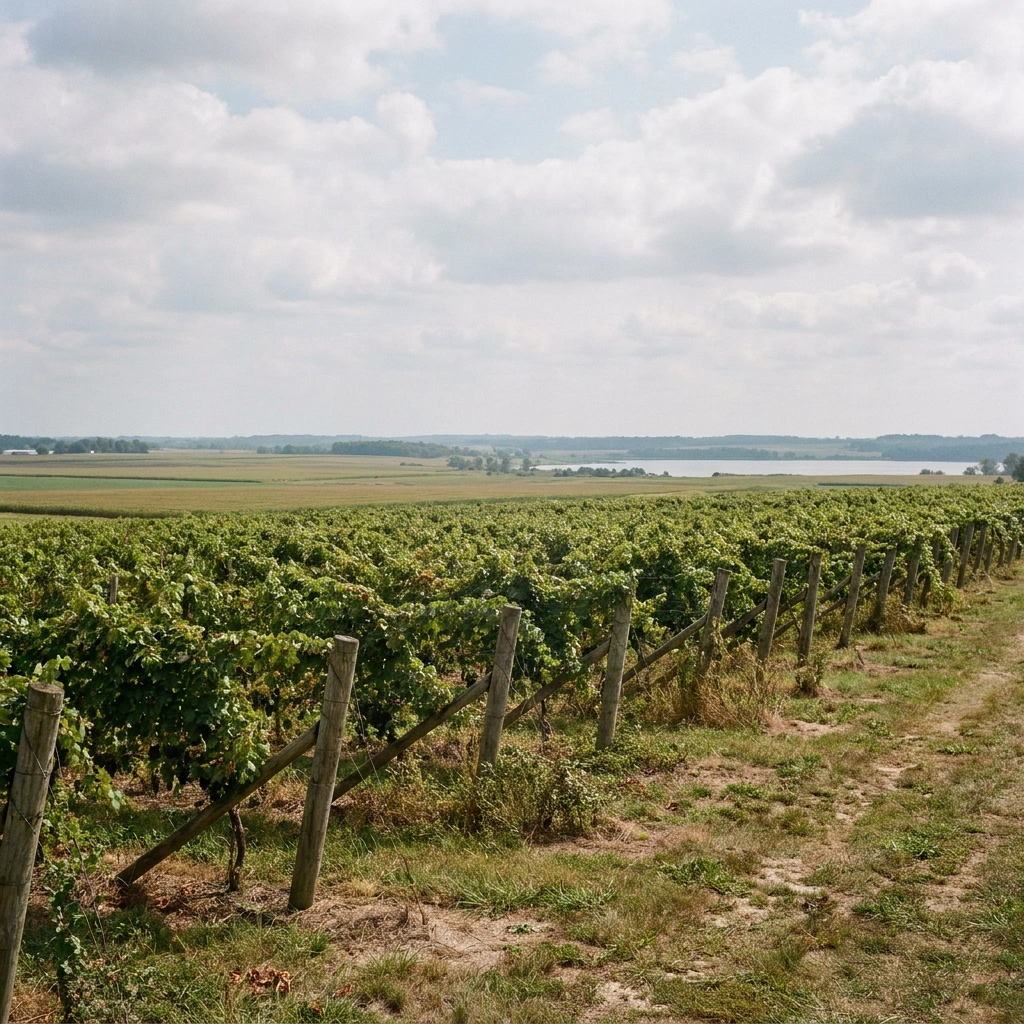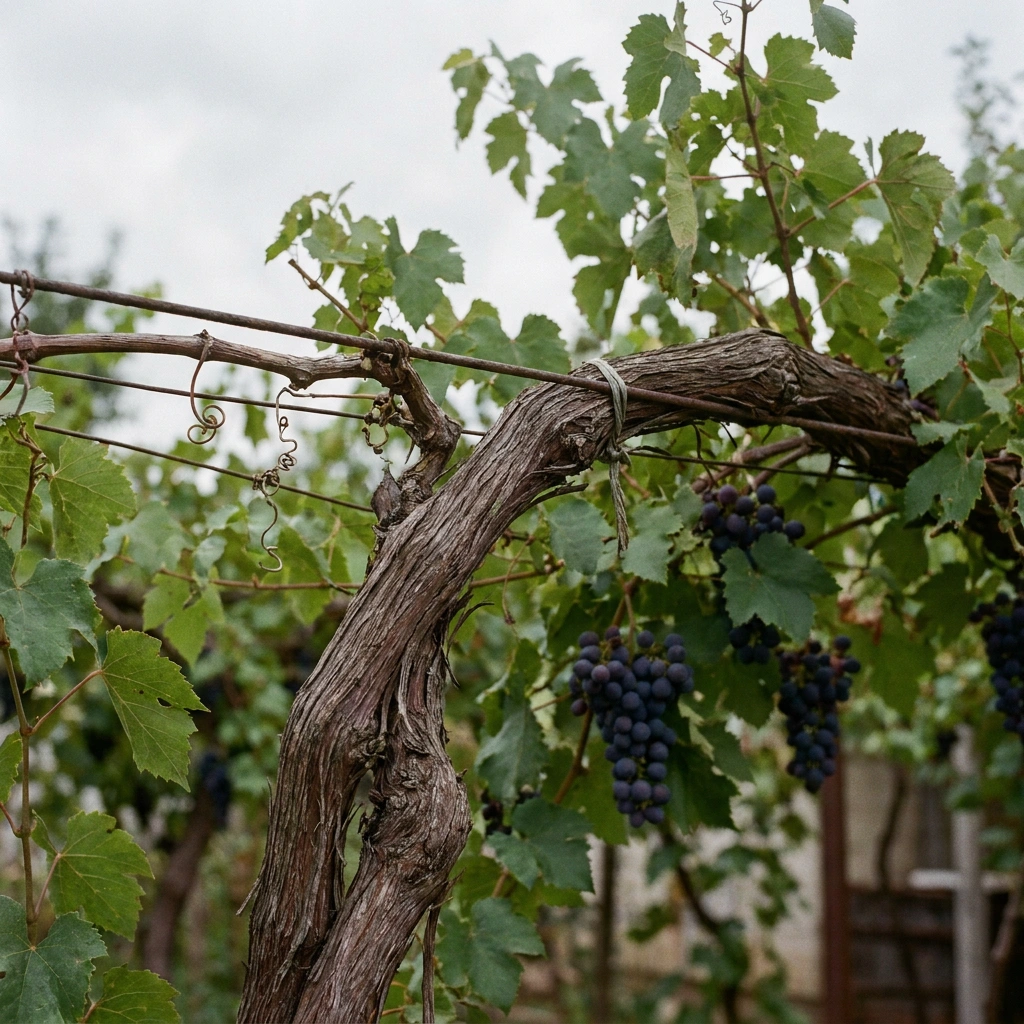
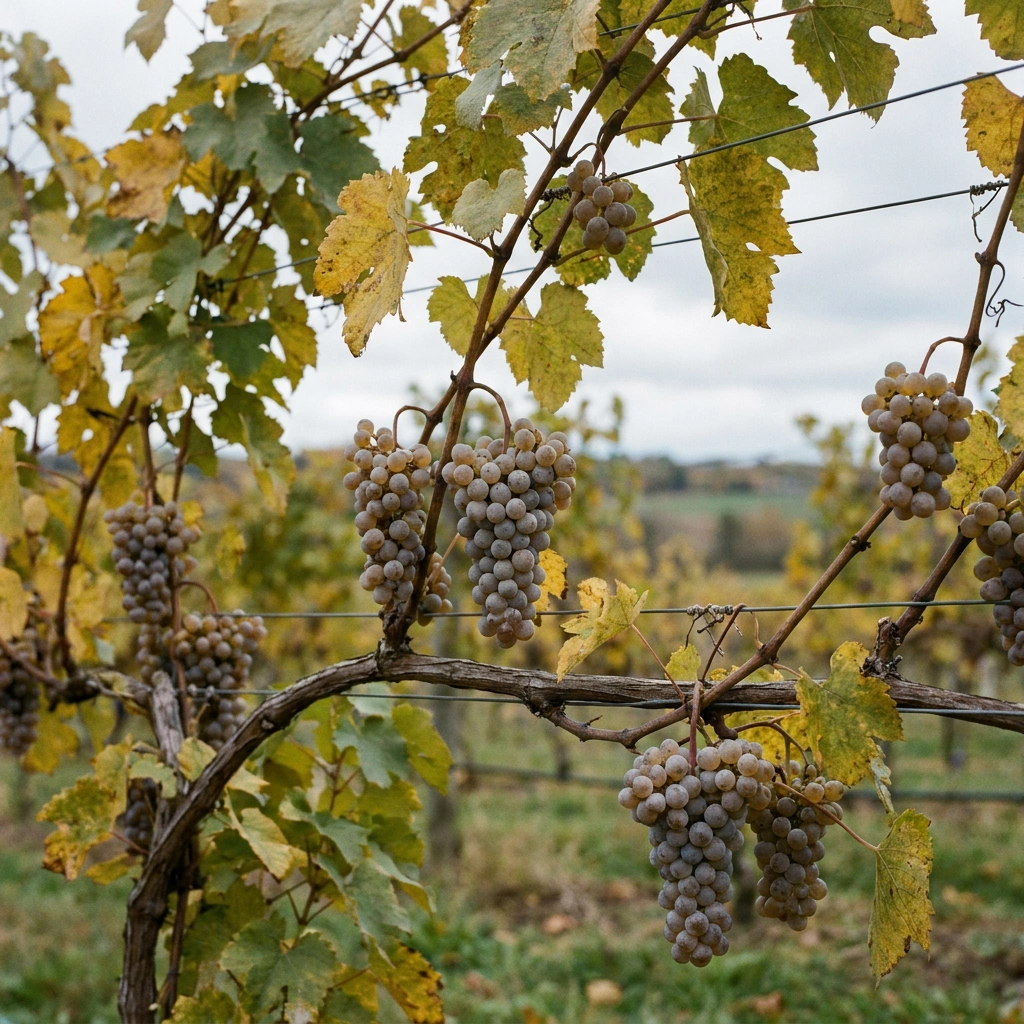
Frontenac Gris is an interspecific hybrid grape that produces aromatic white and off-dry wines from cold-climate vines that survive winters down to -35°F (-37°C). It is a bud-sport color mutation of Frontenac, meaning it shares identical genetics with the red Frontenac but produces gray-amber fruit with white juice. Released by the University of Minnesota in 2003, it is one of the most cold-hardy white-wine grapes you can grow in USDA Zones 3 through 6. The catch: high acidity demands careful winemaking, but that same bright snap is what gives Frontenac Gris its signature peach-apricot-citrus character.
I grow Frontenac Gris alongside Frontenac and Marquette here in south-central Wisconsin (Zone 4), and every winter I’m grateful for its bulletproof hardiness. If you’ve already had success with growing Frontenac, you’ll find Frontenac Gris almost identical to manage on the vine – the main difference shows up in the glass.
Frontenac Gris at a Glance
| Characteristic | Detail |
|---|---|
| Type | White / gris wine interspecific hybrid |
| Origin | University of Minnesota, released 2003; bud-sport color mutation of Frontenac |
| Cold Hardiness | ~−35°F (−37°C); USDA Zone 3 minimum |
| Ripening | Mid-to-late season; averages late September in east-central Minnesota |
| Brix at Harvest | Typically 23–26° Brix (higher in warm years) |
| Acidity | High; TA often 9–14 g/L (can reach 14+ g/L in the juice) – acid management is required |
| Aromatics | Peach, apricot, citrus, tropical notes |
| Wine Styles | Off-dry white, dessert wine, rosé-style white, ice wine |
| Disease Resistance | Moderately susceptible to black rot and powdery mildew; very low susceptibility to botrytis (bunch rot) and downy mildew |
| Vine Spacing | 6–8 ft (1.8–2.4 m) in-row; 8–10 ft (2.4–3 m) between rows |
Want to know if your site has the heat units to ripen Frontenac Gris? Check our grape ripening calculator for your specific location.
Growing Frontenac Gris: Site, Soil, and Setup
Site Selection
Because Frontenac Gris shares genetics with Frontenac, it thrives under the same site conditions. Choose a south- or southwest-facing slope if you can – the extra heat units from afternoon sun push sugar accumulation and help temper some of that characteristic acidity. Good air drainage matters more than perfect aspect, though: cold air pools in low spots and frost pockets, and even this zone-hardy vine benefits from avoiding late-spring frost traps at bud break.
Full sun – at least 6 hours of direct sun daily – is the baseline. In my Wisconsin yard I have Frontenac Gris on a gentle east-facing slope that catches morning sun. Not ideal, but the vine still ripens by late September in most years.
Soil Preparation
Well-drained, slightly acidic to neutral soil (pH 6.0-6.5) is ideal. Frontenac Gris is not picky about fertility; in fact, high-nitrogen soils push excessive shoot growth that shades the fruit cluster zone and increases disease pressure. If you have heavy clay, amend with compost and plant on a slight mound to improve drainage. Sandy or loamy soils with moderate organic matter produce the best fruit quality.
Planting
Plant in spring after the danger of hard frost has passed – typically early to mid-May in Zones 4-5, and late April in Zone 6. Bare-root vines are the most common form available from cold-climate specialty nurseries. Set the plant at the same depth as the nursery soil line, keeping any graft union a couple of inches above the soil surface. Water in well and mulch 2-3 inches (5-8 cm) deep around the base, keeping mulch back from the trunk itself.
Space vines 6-8 ft (1.8-2.4 m) apart in-row. Row spacing of 8-10 ft (2.4-3 m) gives enough clearance for equipment and good air circulation between canopies.
Training and Pruning
Frontenac Gris is most commonly trained to a bilateral cordon system, identical to Frontenac. A two-wire trellis with a permanent cordon wire at 30-36 inches (76-91 cm) and a catch wire at 5 ft (1.5 m) works well for most home vineyards. The vine is a vigorous grower, so annual spur pruning is critical – leave 2-bud spurs every 4-6 inches (10-15 cm) along the cordon, and remove anything that crosses, shades, or crowds the canopy.
If you’re new to hybrid grape training, our hub on cold-hardy grape varieties covers canopy management principles that apply across this class of vines.
Winter Care in Cold Climates
One of the best things about Frontenac Gris is what you don’t have to do in winter. Vinifera varieties need burial, hilling, or elaborate wrapping in Zones 4 and colder. Frontenac Gris, rated to approximately -35°F (-37°C), survives exposed on the trellis in most Zone 4 and Zone 3 sites without protection. In my own vineyard I’ve never buried these canes and have come through winters with lows of -25°F (-32°C) without losing a cordon.
Young vines in their first two winters are more vulnerable. If you’re in Zone 3 or have a site with severe wind chill, loosely wrapping the trunk and lower cordon with breathable frost cloth after the vine has gone fully dormant – usually late November or December – adds cheap insurance.
Pest and Disease Management
The disease package for Frontenac Gris mirrors its parent Frontenac. According to University of Minnesota Extension research, Frontenac Gris has excellent resistance to downy mildew, one of the most destructive diseases in humid northern climates. This means fewer spray applications compared to more susceptible varieties.
However, it is moderately susceptible to black rot and powdery mildew. Botrytis (bunch rot) susceptibility is actually very low – similar to its excellent downy mildew resistance. Good canopy management reduces powdery mildew pressure further. Don’t let the excellent downy mildew rating lead you to skip a spray program entirely. A minimal program of 2-3 applications of a copper-sulfate product at key timing windows – just before bloom, at petal fall, and at fruit set – keeps the susceptible diseases in check in most home vineyard situations. Canopy management is equally important: leaf removal in the fruit zone after fruit set improves air circulation and significantly reduces botrytis and powdery mildew pressure without any chemicals at all.
Harvest and Winemaking with Frontenac Gris
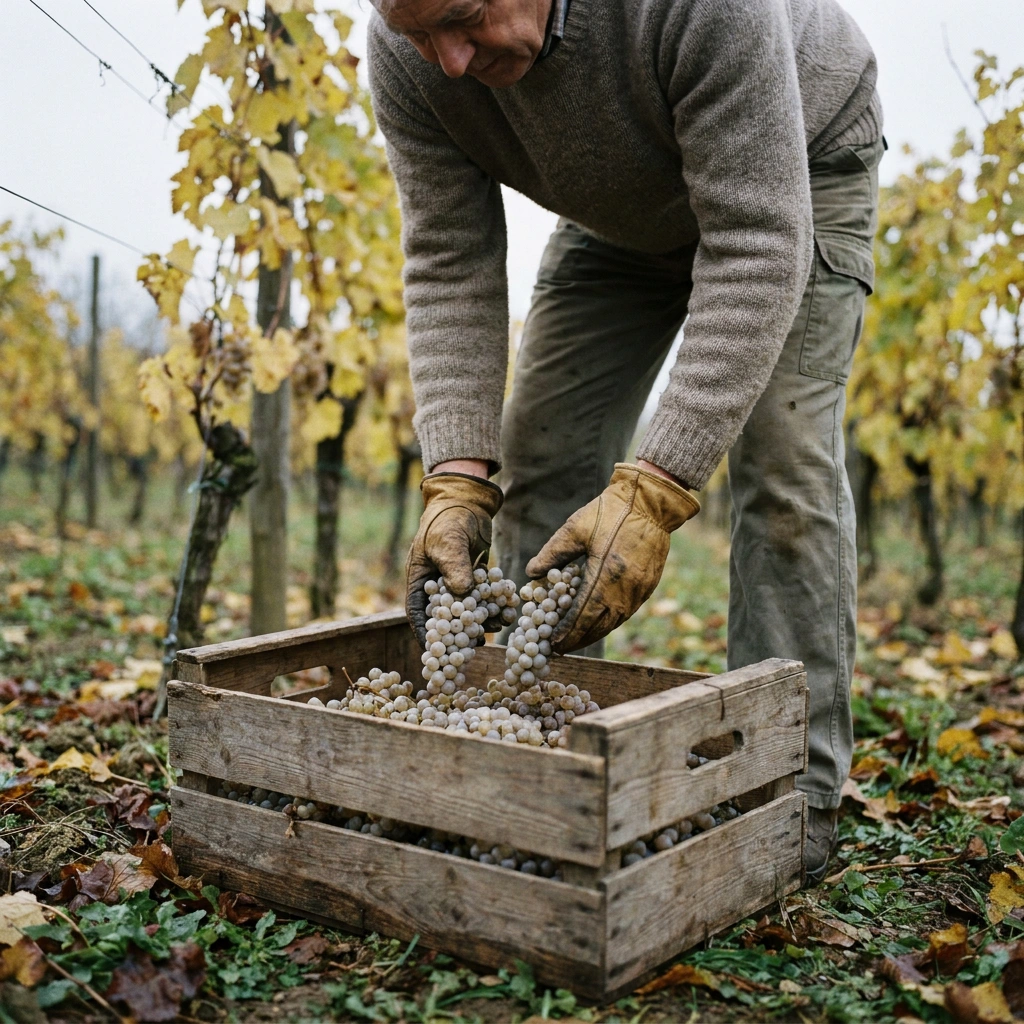
When to Pick
Frontenac Gris ripens mid-to-late season in most northern sites, typically hitting target Brix in the second half of September. University of Minnesota trial data places average harvest in east-central Minnesota in late September – and that lines up with my Wisconsin experience. I usually pick my Frontenac Gris a week or so before my Frontenac noir.
Target harvest Brix depends on your intended wine style:
- Off-dry/semi-sweet white: harvest at 22-24° Brix (roughly 12-13% potential alcohol). Leave some residual sugar to balance the high acid.
- Dessert or late-harvest style: leave clusters on the vine until 25-28° Brix or until early frosts concentrate sugars further. Net the vines if birds are a problem.
- Rosé-style: pick at 21-23° Brix for a lighter, crisper profile; the gray skins give a lovely copper-pink hue with minimal skin contact.
Use our Brix-to-alcohol calculator to find the exact potential ABV for your sample before pulling the trigger on harvest.
Managing High Acidity in the Winery
High acidity is the defining winemaking challenge with Frontenac Gris. Titratable acidity (TA) commonly ranges from 9 to 14 g/L at normal harvest (and can reach 14+ g/L in the juice). The classic approaches:
- Residual sugar: the simplest fix for most home winemakers. Stop fermentation early by cold crashing and adding sulfite to leave 1.5-3% residual sugar. The sweetness rounds out the acid without masking the peach and apricot aromatics.
- Cold stabilization: chill the finished wine to near-freezing for 2-3 weeks. Tartrate crystals precipitate out, naturally reducing TA by 1-2 g/L.
- Malolactic fermentation (MLF): converts sharp malic acid to softer lactic acid. Use it carefully – MLF can strip some of the variety’s bright fruit character. Many winemakers do partial MLF or skip it and rely on residual sugar instead.
- Blending: Frontenac Gris blends well with lower-acid varieties. La Crescent is a popular partner in northern vineyards.
For more detail on the winemaking side, our home winemaking instructions page walks through the full process from crush to bottle.
Where to Buy Frontenac Gris Vines
Because Frontenac Gris is a University of Minnesota release, licensed propagators are the most reliable source for true-to-name vines. The UMN maintains a list of licensed nurseries at license.umn.edu. Two well-known cold-climate specialty nurseries that have carried Frontenac Gris are Stark Bro’s Nurseries and St. Lawrence Nurseries (slngrow.com) – availability varies by season, so check early in the year (January-February) when spring catalogs open.
Our pick: If you’re just starting out and want to browse options, Amazon can surface smaller specialty sellers that ship bare-root vines in spring. Browse Frontenac Gris vines on Amazon – read seller reviews carefully and confirm variety labeling before ordering. For guaranteed licensed stock with proven provenance, the UMN propagator list at license.umn.edu is the gold standard.
Frontenac Gris vs. Frontenac: Key Differences
Because Frontenac Gris is a mutation of Frontenac, the vine behavior is almost identical: same vigor, same trellis system, same pruning method, same disease package, same cold hardiness. The differences are in the fruit:
- Skin color: gray-amber vs. deep red-purple.
- Juice color: white/clear vs. deep red-purple.
- Wine style: aromatic off-dry whites, dessert wines, rosé-style vs. dry or semi-dry reds and rosés.
- Ripening: Frontenac Gris tends to ripen slightly earlier than Frontenac noir in most northern sites.
If you want to grow both a red and a white from the same management program, planting Frontenac and Frontenac Gris side by side is a very practical choice. They follow the same spray schedule and pruning calendar.
Frequently Asked Questions
How cold-hardy is Frontenac Gris?
Frontenac Gris is rated to approximately -35°F (-37°C), the same as its parent Frontenac. It is suitable for USDA Plant Hardiness Zones 3 and warmer. Most established vines survive Zone 4 winters without any protection on the trellis.
What does Frontenac Gris wine taste like?
Frontenac Gris wines are known for pronounced peach, apricot, pineapple, citrus, and honey aromatics with a bright, lively acidity. When balanced with a little residual sweetness, the result is a fragrant off-dry white or dessert-style wine that can genuinely surprise vinifera wine drinkers. Dry versions are possible but require careful acid reduction.
Is Frontenac Gris the same variety as Frontenac?
They share the same genetic makeup. Frontenac Gris arose as a bud-sport – a spontaneous color mutation – from Frontenac, and was selected and released by the University of Minnesota in 2003. The vine grows identically, but the fruit color, juice color, and resulting wine style are entirely different: gray-amber fruit and white wine versus Frontenac’s deep purple fruit and red wine.
When does Frontenac Gris ripen?
Frontenac Gris ripens mid-to-late season, typically averaging late September in east-central Minnesota per University of Minnesota trial data. In warmer sites or favorable microclimates in Zones 5-6, harvest can arrive in mid-September. Use a refractometer to track Brix in the final 2-3 weeks before picking.
Does Frontenac Gris need a spray program?
Yes, a minimal spray program is recommended despite its excellent downy mildew resistance. Frontenac Gris is moderately susceptible to black rot and powdery mildew, but has very low susceptibility to botrytis (bunch rot) – the same as its excellent downy mildew resistance. Two to three targeted copper applications at bloom and fruit set, combined with good canopy management, are usually enough to prevent serious losses in home vineyard settings.
🍇 Don’t plant the wrong grape
Vines take years to fruit. Get the free cheat-sheet of varieties that actually survive and ripen in your zone.
By subscribing you agree to our Privacy Policy.