Chaptalization is the practice of adding sugar to grape must before or during fermentation to raise the wine’s potential alcohol – not to make the finished wine sweeter. The yeast ferments the added sugar into alcohol, just like it does with the natural grape sugars. The term comes from Jean-Antoine Chaptal, the French chemist who popularized the technique in the early 19th century.
If your must measures 18 °Brix and you want a dry table wine around 12% ABV, chaptalization is the straightforward fix. For those of us growing grapes in cold climates – Zone 4 and 5, short summers, frost risks – this comes up nearly every harvest.
Why Cold-Climate Growers Need It
Here in Wisconsin I grow Marquette, Frontenac, and La Crescent – cold-hardy hybrids bred for Zones 3-6. Even in a decent year, they might come in at 18-20 °Brix at harvest. A warm-climate Cabernet might naturally reach 24-26 °Brix. That gap matters.
When grapes ripen below about 20-22 °Brix, the resulting wine tends to be thin-bodied, tart, and low in alcohol. Without enough alcohol to provide structure and stability, the wine can taste unbalanced and won’t age well. Chaptalization closes that gap. Grapes in Zones 3-6 that hit 18-20 °Brix at harvest are perfectly good fruit – they just need a boost to make a wine worth drinking.
This is also why good timing your harvest correctly matters so much. The goal is to pick as late as you safely can (after a light frost in many northern climates, which concentrates sugars) and only chaptalize the remaining deficit. Chaptalization is a correction tool, not a substitute for letting grapes ripen.
The Math – How Much Sugar to Add
The core rule confirmed by WineMaker Magazine and home winemaking extension resources: adding 10 grams of sugar per liter of must raises the must sugar level by approximately 1 °Brix. (In US units, that’s roughly 1.3 oz per gallon per degree Brix.)
For the Brix-to-alcohol conversion, the standard practitioner rule is: 1 °Brix ≈ 0.55% potential alcohol. So if you add enough sugar to raise your must by 4 °Brix, you’re adding roughly 2.2% potential ABV.
A useful combined rule of thumb: adding about 17-18 g of sugar per liter (approximately 2.2 oz per gallon) raises potential alcohol by roughly 1%. This is derived from the two conversions above (10 g/L per Brix ÷ 0.55 ABV per Brix = ~18 g/L per 1% ABV) and is widely used as a quick-calculation starting point.
Important caveat: these are approximate rules, and every batch is different. Always confirm your actual sugar level with a hydrometer or refractometer before and after adding sugar. Our Brix-to-alcohol calculator can help you work through the numbers for your batch – don’t rely on the formula alone.
Worked Example
Say you have 20 liters (5.3 gallons) of Frontenac must at 19 °Brix and you want to reach 23 °Brix (which will give you roughly 12.6% potential ABV at the 0.55 conversion).
- Brix deficit: 23 – 19 = 4 °Brix
- Sugar needed: 4 × 10 g/L × 20 L = 800 g (1.76 lb)
- In US units: 4 Brix × 1.3 oz/gal × 5.3 gal = 27.6 oz (~1.73 lb)
Add half, stir well, take a hydrometer reading, then add the rest if needed. Never trust the formula alone – verify with the instrument.
For a more detailed look at what Brix means and how to measure it, see our guide to how many pounds of grapes go into a bottle of wine.
Step-by-Step: How to Chaptalize Your Must
- Measure your starting Brix. Use a refractometer on the juice (before you add yeast) or a hydrometer on the must. Take the reading at room temperature (68°F / 20°C) for accuracy.
- Decide your target. For a dry table wine from cold-climate hybrids, 22-24 °Brix is a reasonable target – this gives you roughly 12-13% ABV after fermentation. Going above 25 °Brix risks stressing the yeast and causing a stuck fermentation.
- Calculate your addition. Use the formula above or our Brix calculator. Work in g/L for precision.
- Use the right sugar. Plain granulated cane or beet sucrose is the standard choice. Corn sugar (dextrose) also works. Avoid brown sugar or honey unless you’re intentionally making a country wine – both add flavor compounds that will carry through into the finished wine.
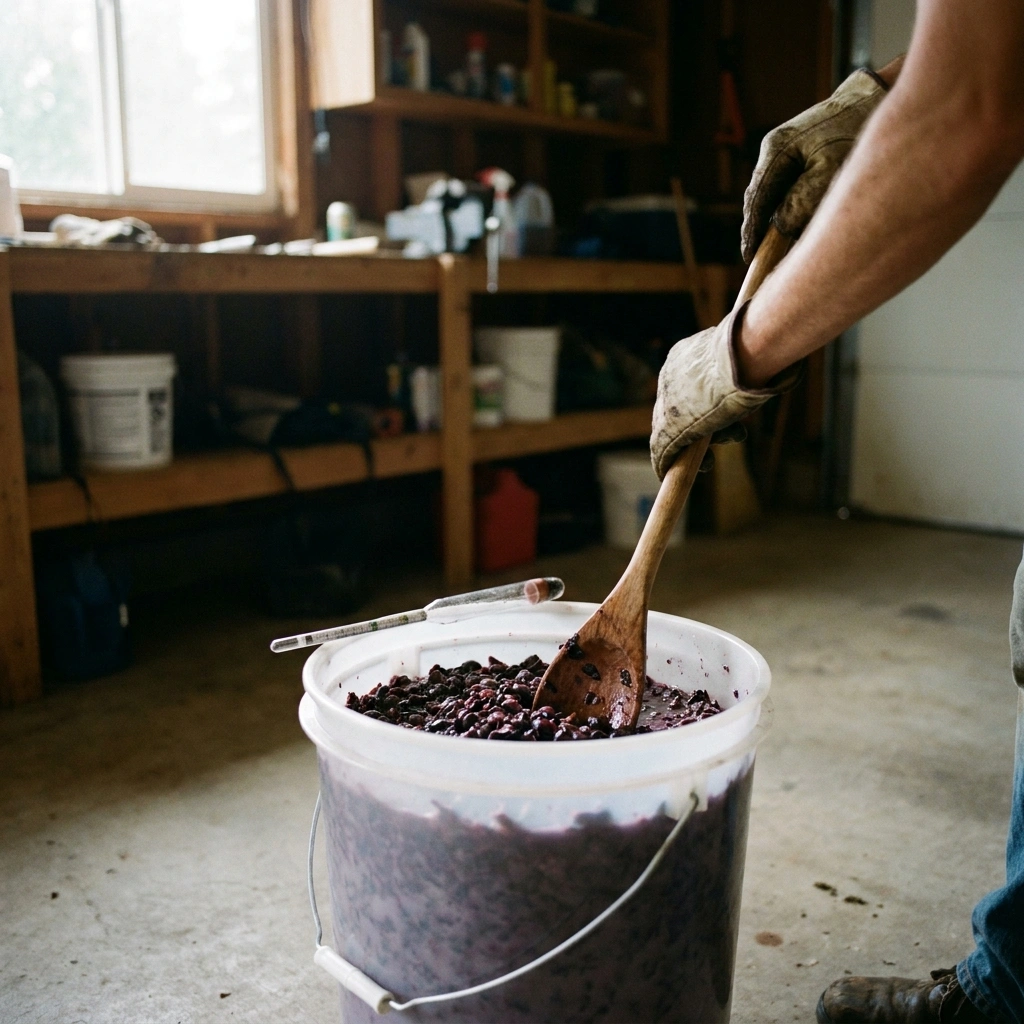
- Dissolve before adding. Don’t dump dry sugar directly into the must. Add a small amount of must (or warm water, no more than 1 cup) to the sugar in a separate container, stir until fully dissolved, then pour it into the main must. This prevents localized high-sugar pockets that can stress yeast.
- Add in stages. Split your calculated addition in half. Add the first half, stir well, wait 30 minutes, take a hydrometer reading, then decide whether to add the second half. This gives you a checkpoint in case your math or your Brix reading was slightly off.
- Stir and proceed. Once you’ve hit your target Brix, pitch your yeast as normal. Chaptalization happens before or very early in fermentation – not mid-fermentation once things are already active (that can cause yeast stress).
For the full winemaking process from harvest through bottling, our step-by-step winemaking instructions cover everything in order.
How Much Is Too Much – and the Legal Note
Don’t over-chaptalize. The goal is balance, not maximum alcohol. A wine pushed above 13.5-14% ABV from a cold-climate hybrid variety often tastes “hot” – the alcohol becomes the dominant sensation rather than the fruit. Most growers I know target a finished wine around 11-12.5% ABV, which suits the natural acidity of varieties like Marquette and Frontenac beautifully.
Practically speaking: if your harvest Brix is 19, adding sugar to reach 22-23 is sensible. Adding enough sugar to reach 26 or 27 °Brix is asking for trouble – you risk a stuck fermentation partway through, and if it does finish, the wine may taste unbalanced.
Legal note: For home winemakers in the US, chaptalization is generally unrestricted – US federal law allows adults to make up to 200 gallons per household per year for personal use, and there are no federal restrictions on adding sugar to home wine must. Commercial chaptalization rules vary significantly: it’s common in France and Germany for certain regions and grape types, but outright banned in California, Italy, and several other wine-producing areas. If you’re operating commercially or in a regulated region, check local regulations. This post covers home winemaking only.
What I Use for Measuring Sugar
Accurate Brix measurement is the foundation of good chaptalization. I keep both a refractometer (fast, works on a few drops of juice pre-fermentation) and a triple-scale hydrometer (more accurate during and after fermentation, when alcohol affects refractometer readings) on my workbench every harvest. If you don’t have one yet, a basic wine hydrometer and refractometer combo is the single most useful tool for any home winemaker.
Browse wine hydrometers and refractometers on Amazon →
Frequently Asked Questions
Does chaptalization make the wine sweeter?
No. The added sugar is fermented by the yeast into alcohol and CO2 – exactly the same as the natural grape sugars. Chaptalization raises the potential alcohol of the finished wine, not its sweetness. If your wine tastes sweet, it means fermentation stopped early (a stuck fermentation) or you back-sweetened intentionally, not because of chaptalization itself.
Can I use brown sugar or honey instead of white sugar?
Technically yes, but generally not recommended for chaptalization. Brown sugar contains molasses, which adds flavor compounds that carry through into the finished wine. Honey introduces additional flavors and can add complexity – which is intentional in mead or country wines, but may not be what you want in a straight grape wine. Plain cane or beet sucrose is neutral and won’t alter the wine’s character beyond raising the alcohol.
When should I add the sugar – before or after pitching yeast?
Before pitching, or very early in fermentation before activity is vigorous. Adding a large amount of sugar to actively fermenting must can stress or even kill the yeast. The standard approach is to calculate your target Brix, adjust the must before pitching, verify with a hydrometer, then pitch. If you need to add more sugar during fermentation, do it incrementally and early – in the first 12-24 hours after pitching at the latest.
What Brix should I target for a dry table wine from cold-climate hybrids?
For varieties like Marquette, Frontenac, La Crescent, or Itasca, a post-chaptalization Brix of 22-24 is a good target. This yields roughly 12-13% potential ABV, which suits the natural acidity of these varieties. Much above 24-25 °Brix and you risk a stuck fermentation; below 21 and the wine may taste thin or lack structure. Check out our grape ripeness tool if you’re not sure whether your harvest can get there without chaptalization.
Is chaptalization cheating?
It’s a question home winemakers debate, but in cold climates it’s simply a practical reality. The alternative is making thin, low-alcohol wine every year or abandoning cold-hardy varieties entirely. Winemakers in Burgundy, Alsace, Germany, and across northern Europe have chapitalized for centuries when conditions call for it. The goal is to make the best wine possible from the fruit you grew – and sometimes that means a measured sugar addition to compensate for a short season.
🍇 Don’t plant the wrong grape
Vines take years to fruit. Get the free cheat-sheet of varieties that actually survive and ripen in your zone.
By subscribing you agree to our Privacy Policy.