Grape must is the freshly crushed mixture of grape juice, skins, seeds, and sometimes stems – everything you get right after you crush the grapes and before fermentation is finished. It is the raw material that yeast turns into wine. If you are reading this at the start of your first home-wine season, understanding what must is and how to work with it will make every step that follows easier to follow.
What Is Grape Must, Exactly?
The word must comes from the Latin vinum mustum, meaning “young wine.” In practical terms, must is the whole-fruit slurry you have after crushing: juice (which winemakers sometimes call “free-run”), pulp, skins, seeds, and any stems you did not remove during destemming. All of those solids matter because they carry color, tannin, and aroma compounds that end up in your wine.
University of Minnesota Extension, which has guided cold-climate home winemakers through Marquette, Frontenac, and La Crescent harvests for years, describes must simply as “the whole crushed fruit” prior to or during fermentation. That definition covers both the liquid and the solids together – not just the juice.
How Must Is Made: Harvest to Crush
The sequence is straightforward:
- Harvest. Pick the clusters at the right ripeness – more on that below.
- Destem (optional but recommended). A hand-crank or motorized crusher-destemmer removes the woody stems, which add harsh green tannins if left in. Most home winemakers destem for red wines; white wines usually skip this and go straight to pressing.
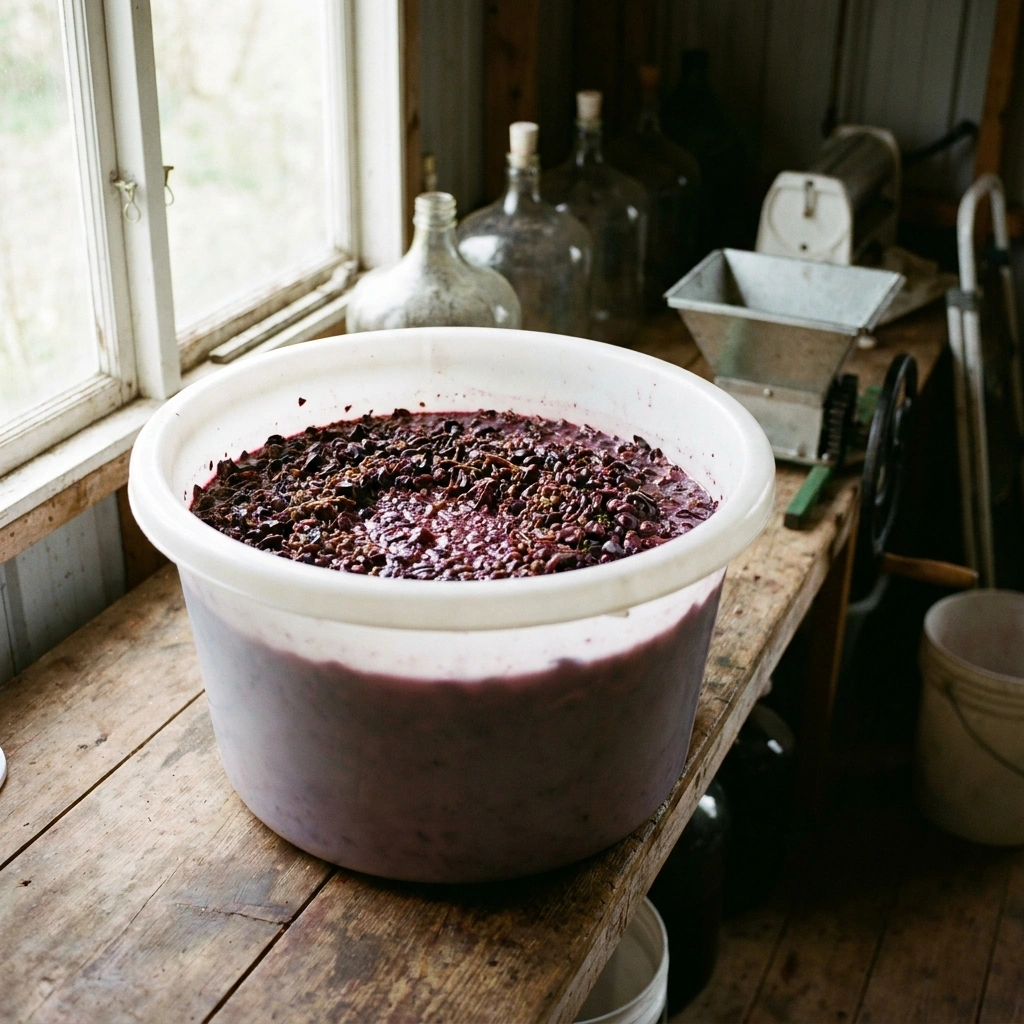
- Crush. The berries are broken open so the juice and pulp are released. The result – that wet purple-red mass – is your must.
In cold-climate regions like Wisconsin (USDA Zone 4) or Lithuania (Zone 5b), the window between “perfectly ripe” and “frost-damaged” can be narrow, so timing your harvest matters. A good rule is to pick when your Brix readings are stable for two or three days in a row rather than chasing a single number.
For a practical step-by-step on the full process from vine to bottle, see our home winemaking instructions.
Red Wine vs. White Wine: How Must Differs
This is the single most important process difference between red and white winemaking, and it all comes down to what stays in contact with the juice during fermentation.
Red Wine: Ferment on the Must
For reds, the crushed must – juice, skins, seeds, and all – goes directly into the fermentation vessel. As yeast works through the sugars, it also extracts color (anthocyanins) and tannin from the skins. That skin contact during fermentation is exactly what makes red wine red and gives it structure. Cornell University’s viticulture program notes that the depth of color and the tannin level in red wine are directly related to how long the must stays in contact with the skins and at what temperature.
Cold-climate reds like Marquette and Frontenac tend to have thicker skins with good color and tannin potential, which makes extended skin contact workable even for home winemakers without a fancy press. You can read more about what grape skins contribute in our post on grape skin properties.
White Wine: Press First, Then Ferment
For white wines, the grapes are pressed immediately after crushing. The skins are removed before fermentation begins, so only clear or lightly golden juice ferments. This is why white wines are pale and typically lower in tannin – the tannin and color never get a chance to leach into the liquid.
Orange Wine: White Grapes, Red Wine Method
There is a growing style called orange wine (or skin-contact wine) where white grapes are fermented on their skins just like a red wine. The result is an amber-colored, more tannic white wine with a distinctive oxidative character. If that interests you, see our explainer on what orange wine is and how it is made.
Measuring and Adjusting Must Before Fermentation
Before you pitch your yeast, take a few minutes to measure and, if needed, adjust the must. These steps are where home winemakers most often make or break a batch.
Sugar (Brix)
A refractometer or hydrometer measures the sugar concentration of the must in degrees Brix. One degree Brix equals roughly 1 gram of sugar per 100 grams of solution. In practical terms, the Brix reading tells you how much alcohol the finished wine will have: every 1° Brix fermented out produces approximately 0.55-0.57% alcohol by volume.
A must at 21° Brix will ferment to roughly 12% ABV – a normal table-wine level. Cold-climate varieties often come in lower (Marquette typically hits 22-26° Brix at harvest, though 18-20° is possible in a cool or overcropped year; La Crescent typically comes in at 22-25° Brix). You can check our Brix-to-alcohol calculator to run those numbers for your own readings.
If Brix is too low (a common cold-climate problem after a cool summer), you can add cane sugar to raise it – a practice called chaptalization. WineMaker Magazine’s guidelines suggest adding no more than 2-3 lb (0.9-1.4 kg) of sugar per 5 US gallons (19 L) of must to avoid an overly thin wine. Dissolve the sugar in a small amount of warm juice first, then stir it in.
To know whether your grapes are ripe enough to harvest in the first place, see our guide on will my grapes ripen and our how many pounds of grapes you need per bottle.
Acid
Cold-climate grapes are often high in acid, which is great for the wine’s longevity but can make a must taste harsh if it is extreme. A target total acidity (TA) of 0.6-0.8% (as tartaric acid) is the range most home winemakers aim for in red musts. For whites and hybrids, 0.65-0.85% is common. Test with an acid titration kit (inexpensive, available at any homebrew shop) and adjust: add tartaric acid to raise TA, or add potassium bicarbonate to lower it. Do not adjust blindly – taste the must first.
Sulfite (SO2 / Campden Tablets)
Add potassium metabisulfite (Campden tablets) at crush to protect the must from wild yeast and oxidation. A standard 0.44 g Campden tablet dissolved per US gallon (3.8 L) delivers approximately 65 ppm SO2. A typical crush target of ~50 ppm means using roughly 3/4 of a tablet per gallon – always dissolve the crushed tablet in a small amount of water first, then stir in. This is enough to knock back wild yeast without killing a strong commercial yeast pitch 24 hours later.
Yeast Nutrient
Grape must sometimes lacks the nutrients (especially nitrogen) that yeast needs to ferment cleanly. Adding a yeast nutrient blend (diammonium phosphate, or a packaged blend like Fermaid-O) at the start of fermentation reduces the risk of a “stuck fermentation” – where the yeast runs out of steam before all the sugar is converted.
From Must to Wine: The Basic Arc
Once the must is adjusted and you have pitched your yeast, fermentation begins – usually within 24-48 hours. The yeast consumes the sugars and releases alcohol and CO2. For red wines, you push the cap (the floating mat of skins) down twice a day to keep it wet and extracting. This process takes 5-10 days for most reds.
After fermentation, the must is pressed: for reds, the wine is drained off the skins and the skins are pressed to extract the remaining liquid. For whites, you already pressed before fermentation. The pressed wine then goes through racking, stabilization, and aging before bottling.
Sanitation matters at every stage. Clean and sanitize all equipment – fermentation buckets, airlocks, spoons, hoses – with a no-rinse sanitizer (Star San is the standard). Dirty equipment introduces bacteria and wild yeast that can turn your must into vinegar.
Our pick: Star San is sold mainly through homebrew supply shops. If you would rather order online, potassium metabisulfite powder mixed into a sanitizing rinse is the traditional alternative – the K-meta guide has the mixing ratio and how to use it safely.
A Tool That Helps
For a new home winemaker, the piece of equipment that makes the biggest difference is a decent crusher-destemmer. Hand-crushing small batches is fine for 5 gallons (19 L), but anything larger wears out your hands and bruises the seeds (releasing bitter oils). A simple hand-crank unit is enough for most home-scale batches.
Browse grape crushers and fermentation buckets on Amazon →
Frequently Asked Questions About Grape Must
Is grape must the same as grape juice?
Not quite. Commercial grape juice has been filtered and pasteurized. Grape must includes the skins, seeds, and pulp along with the juice, and it is alive with natural yeast (and bacteria) unless sulfite has been added. Must is the starting material for wine; store-bought juice has had everything interesting removed.
Can you drink grape must?
Yes, freshly made must is essentially a thick, sweet, unfiltered grape juice and is perfectly fine to drink. In Italy, partially fermented must drunk before it has fully converted to wine is called mosto and is a seasonal treat. Once fermentation is underway it will taste increasingly yeasty and alcoholic – most people prefer it before or after, not during.
How much must do I need to make a bottle of wine?
A standard 750 mL bottle of wine requires roughly 1.25-1.5 lb (560-680 g) of grapes, which produces a similar volume of must. Pressing losses mean you get slightly less wine than must. Our post on how many pounds of grapes per bottle goes into more detail.
What is the difference between must and wort?
Wort is the same concept but in beer brewing: the liquid extracted from malted grain before yeast is added. Must is the grape equivalent. Both are the raw sugar-rich liquid that yeast ferments into an alcoholic drink.
Does cold-climate must need more adjustment than warm-climate must?
Often yes, in two ways. Cold summers can leave Brix lower than you would like, requiring chaptalization. And cold-climate hybrid varieties (Marquette, Frontenac, La Crescent) tend toward high natural acidity, which may need partial deacidification. The upside is that cool nights during ripening preserve aromatics, so hybrid musts often have intense fruit character that more than compensates.
🍇 Don’t plant the wrong grape
Vines take years to fruit. Get the free cheat-sheet of varieties that actually survive and ripen in your zone.
By subscribing you agree to our Privacy Policy.