The short answer: if you’re growing cold-hardy hybrid varieties like Frontenac, Marquette, or La Crescent in Zone 3-6, a high cordon (top-wire cordon) is almost always the right system – it matches how those varieties naturally grow. If you’re working with upright vinifera wine grapes, VSP (Vertical Shoot Positioning) is the industry standard. For extremely vigorous vines with plenty of space, GDC (Geneva Double Curtain) can boost yields. And if you just want shade and a few clusters for the patio, an arbor/pergola works great. The system you pick now shapes every pruning session, every harvest, and your vine’s long-term health – so it’s worth thinking through before you pound that first post.
What follows draws on research from the University of Minnesota Extension and Cornell Cooperative Extension – the two go-to sources for cold-climate viticulture in North America. Before we dive in, if you haven’t decided which varieties to grow yet, read our guide to cold-hardy grape varieties first – variety choice and trellis system are linked decisions.
A Quick Comparison
| System | Shoot direction | Best for | Pruning style | Labor |
|---|---|---|---|---|
| VSP | Upward | Vinifera, upright hybrids | Cane or spur | High (tucking) |
| High Cordon | Downward | Cold-hardy hybrids | Spur | Low |
| GDC | Downward (two curtains) | Very vigorous vines | Spur | Medium |
| Arbor/Pergola | Overhead | Table grapes, patio shade | Variable | Low-medium |
VSP – Vertical Shoot Positioning
VSP is the workhorse system for quality wine-grape production worldwide. The vine has a low fruiting wire – usually at about 2.5-3 ft (75-90 cm) above the ground – where the fruiting canes or spurs sit. Above that, you install two or more pairs of “catch wires” (also called foliage wires) that hold the shoots as they grow upward each season. The grower tucks new shoots between the wires as they elongate – this is the “positioning” part of the name.
Why it works well for vinifera: Grapes like Pinot Noir, Riesling, and Chardonnay have an upright, vigorous growth habit that benefits from being held vertical. The fruit hangs below the leaf canopy in a well-defined fruiting zone, getting good air circulation and sun exposure. That reduces disease pressure and improves color development and flavor. Cornell University Extension’s Grapevine Training Systems publication notes that VSP is particularly well-suited for varieties where basal bud fertility is high – meaning the clusters develop close to where the cane meets the cordon, not further out.
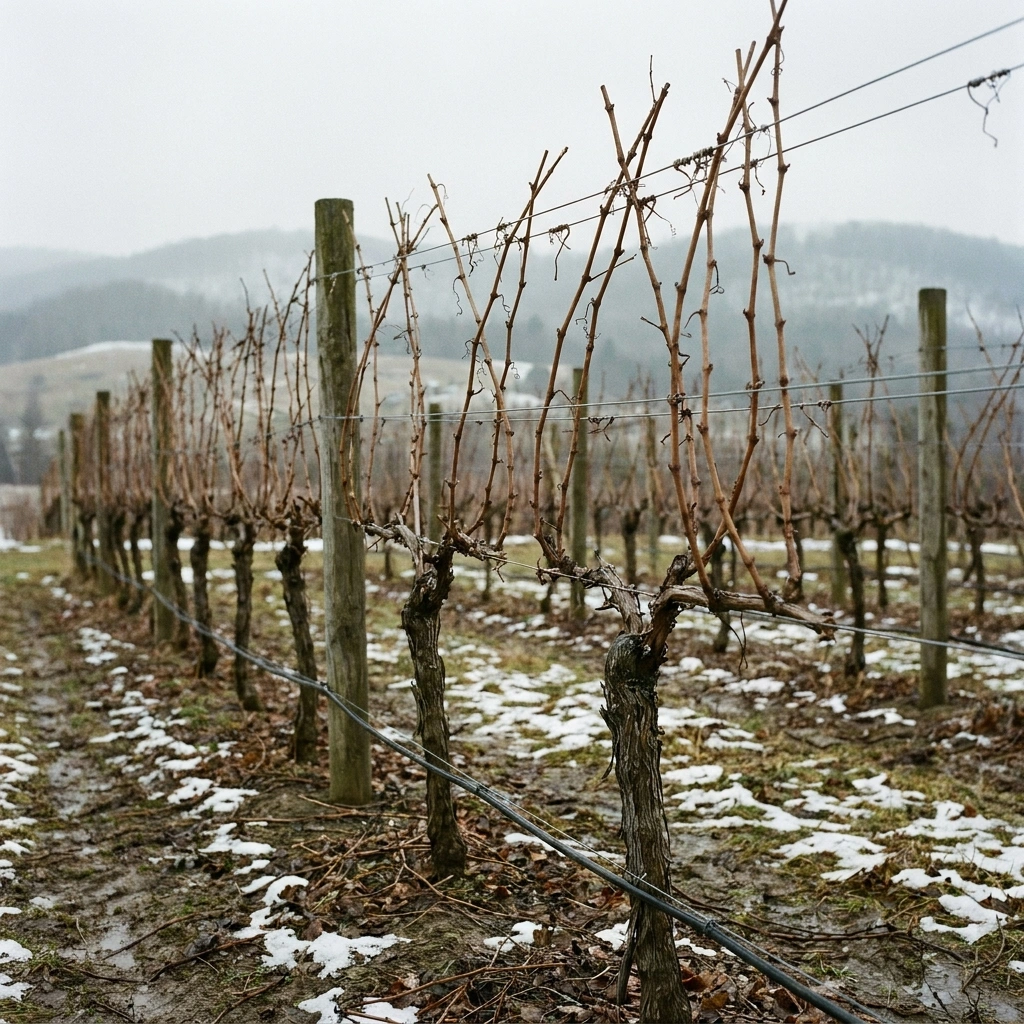
Drawbacks: Tucking is time-consuming. On a commercial scale, you might need to walk the rows three to four times during the growing season. Hedging (cutting back shoot tips) is also common. Taller trellises with multiple wire pairs cost more to build. And in cold climates, if you’re cane pruning (which VSP often requires), you have to bury or wrap canes for winter protection – that’s a significant extra task every fall.
Cold-climate note: Some cold-hardy upright varieties – like Frontenac Gris or certain Itasca selections – can be trained on VSP successfully. But for most trailing/procumbent cold-hardy hybrids, VSP fights the vine’s natural growth habit, which means more labor and worse results. See the next section.
For more on how VSP interacts with pruning decisions, including the cane vs. spur choice, our pruning guide walks through both methods.
High Cordon (Top-Wire Cordon) – The Cold-Hardy Hybrid Standard
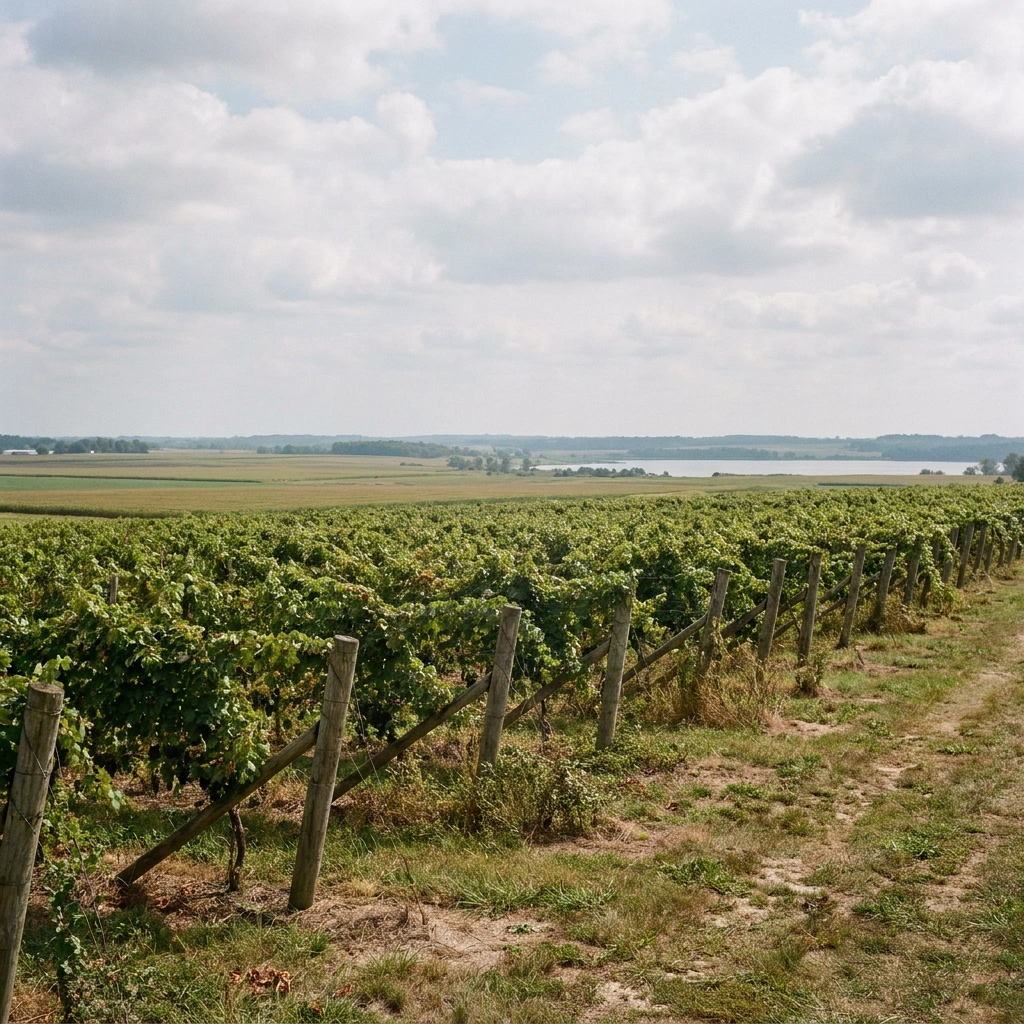
If you’re growing Frontenac, Marquette, Petite Pearl, La Crescent, or other UMN-bred cold-hardy hybrids, high cordon is a popular, well-suited choice – many cold-climate growers use it (often spur-pruned) because it works with the vine’s biology. That said, these same varieties are also commonly cane-pruned by cold-climate growers who want the flexibility of selecting fresh winter-surviving wood each spring. Neither is wrong; both match the biology in different ways.
Here’s how it works: the permanent cordon (the horizontal arm of the vine) is established on a high wire – typically 5-6 ft (1.5-1.8 m) above the ground. Shoots grow from spur-pruned positions along that cordon and hang downward naturally. There’s no tucking, no foliage wires, no positioning work. The vine does what it wants to do.
Why it suits cold-hardy hybrids so well: Many cold-hardy hybrids have a trailing or procumbent growth habit – their shoots don’t want to grow straight up, they want to drape and hang. Forcing them upward with VSP produces a congested canopy and requires constant management. The high cordon works with that trailing habit: shoots cascade downward in a natural curtain, spacing themselves as they go. The basal buds (buds nearest the cordon) on most cold-hardy hybrids are generally fruitful – which is why spur pruning works for them. It’s also why cane pruning works: those same fruitful buds sit close to the head, so renewal canes selected each spring still carry good bud fruitfulness further out the cane.
Winter hardiness advantage: With the cordon established high on the wire, it’s actually more exposed to cold. But in practice, these varieties are selected for hardiness, and having the trunk tall means it’s less likely to be buried in mulch every fall. Many cold-climate growers leave Marquette and Frontenac uncovered entirely below Zone 4.
The structure: You need end posts (often 4×4 wooden posts or heavy steel T-posts anchored with deadmen), line posts every 16-20 ft (5-6 m) along the row, and a single high wire at 5-6 ft (1.5-1.8 m). A lower “catch” wire at about 3 ft (90 cm) can optionally support the hanging shoots partway, but many growers skip it. Total per-row cost is lower than VSP because you need fewer wires.
Pruning is easier too: Spur pruning on a high cordon is fast – you’re leaving 2-bud spurs at fixed positions along the cordon, and you can work quickly down the row. Read more about the mechanics in our cane vs. spur pruning comparison, and see the seasonal timing in the vineyard pruning calendar.
GDC – Geneva Double Curtain
GDC was developed at the Geneva Experiment Station in New York in the 1960s by Nelson Shaulis, originally for Concord grapes – high-vigor American varieties that would overwhelm a standard trellis. The key innovation: instead of one cordon, you have two, set on a wide cross-arm (usually about 4 ft / 1.2 m wide) at the top of the trellis. Each cordon produces a downward curtain of shoots, essentially doubling the fruit-bearing surface of the vine without planting more vines.
When GDC makes sense:
- Very vigorous varieties (Concord, Niagara, some older French-American hybrids like Baco Noir, Seyval Blanc)
- When you have a wide row spacing – GDC needs at least 10-12 ft (3-3.7 m) between rows to work well
- When you want to increase yield per vine on large, established plantings
- Older vineyards where vines are already oversized and hard to rein in
The trade-off: GDC is structurally more complex and more expensive to build. The cross-arm and two-cordon system requires more material per post, and the initial training period takes longer. Cornell’s viticulture extension notes that the system’s yield advantage is most pronounced in high-vigor situations – if your vines are moderate vigor, a simpler system gives you comparable results at lower cost.
For cold-hardy hybrids in home vineyards, GDC is rarely necessary. Most backyard plantings don’t have enough space, and varieties like Marquette and Frontenac don’t typically reach the runaway vigor that makes GDC worthwhile. It’s worth considering only if you already have established Concord or Niagara vines that are out of control.
Arbor and Pergola Systems
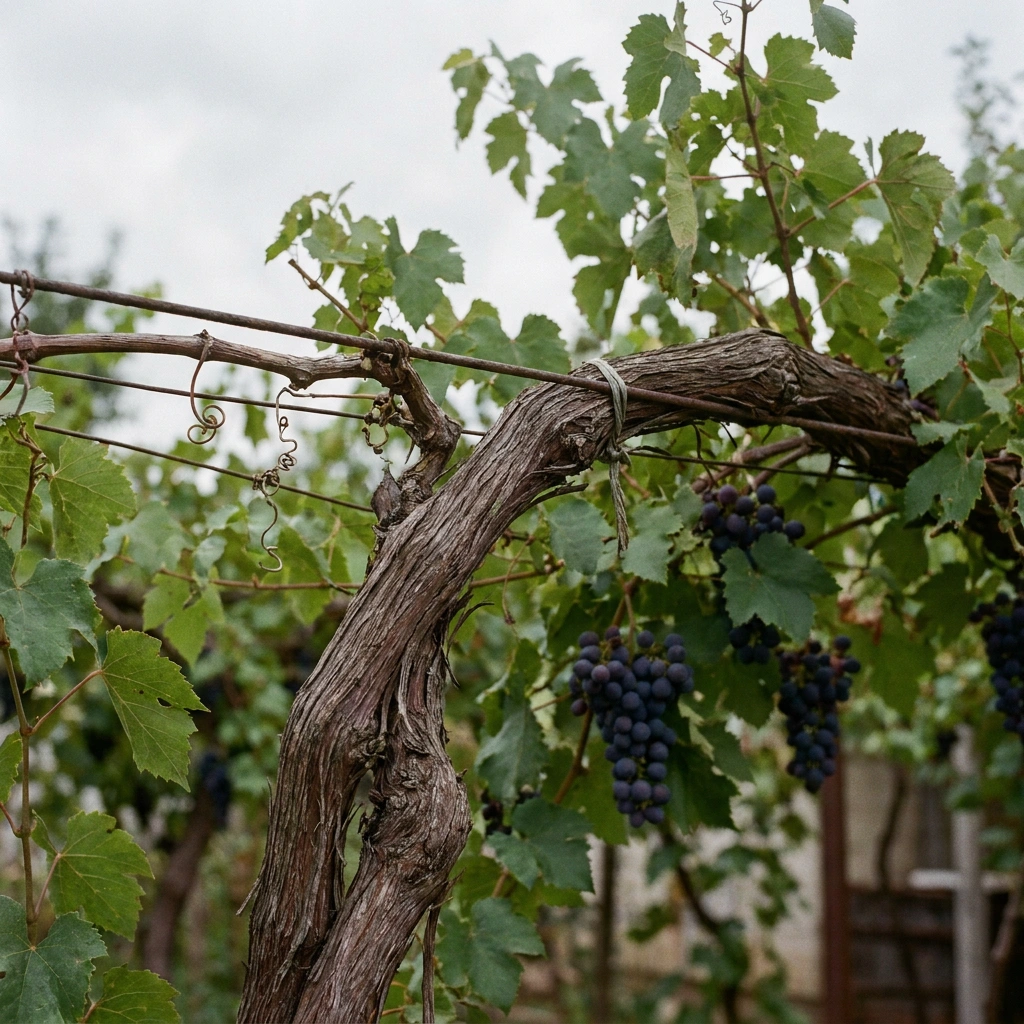
The classic backyard arbor – a wooden or metal overhead structure where the vine runs along the top and hangs down on all sides – is more of a landscaping choice than a viticulture system. You get shade, you get the “vineyard feeling,” and you get some fruit. What you don’t get is optimal wine quality or easy management.
Where arbors make sense: table grapes (Concord, Niagara, seedless varieties), ornamental vines, covering a pergola or patio entrance, or when aesthetics matter more than maximizing fruit production. If you’re planting for wine quality or growing cold-hardy wine grapes, the high cordon or VSP will serve you much better.
Management is harder than it looks: grapes on an arbor tend to push all their vigor into the canopy top, leaving the fruit below shaded and poorly ripened. Disease pressure increases significantly. Pruning an overgrown arbor vine is a real project.
That said – if you’ve got a sunny pergola and you just want some Concord grapes for juice or jelly, go for it. Just don’t expect it to produce great wine grapes. Pair it with the right spacing from our grape vine spacing guide and Vineyard Planner tool.
Which System Should You Build?
Here’s the decision in plain terms:
- Cold-hardy hybrids (Frontenac, Marquette, La Crescent, Petite Pearl, Itasca, etc.) in Zone 3-6: Build a high cordon. Single high wire at 5-6 ft (1.5-1.8 m), often spur-pruned. It’s lower labor and matches how these vines grow naturally. Alternatively, cane-prune on VSP if winter injury is a real concern in your zone – both approaches work with these varieties.
- Vinifera (Riesling, Pinot Gris, Chardonnay) or upright hybrids: Use VSP. Budget for extra wire and extra tucking time during the season.
- Very vigorous American-type vines (Concord, Niagara) with wide rows: Consider GDC if your row spacing allows it and you want to maximize yield.
- Backyard patio or table grapes, aesthetics first: An arbor or pergola is fine – just manage expectations on wine quality.
Whatever you build, get the post spacing and row orientation right before you spend money on wire. Our complete grape trellis guide covers the construction basics – heights, post spacing, wire gauges, and end-post anchoring – that apply regardless of which system you choose. And for step-by-step vine training in year one through three, the pruning guide has the details.
Frequently Asked Questions
What is the best trellis system for Marquette or Frontenac grapes?
High cordon is a popular, well-suited choice for Marquette, Frontenac, and similar cold-hardy hybrids – their trailing growth habit means shoots hang down naturally, and their generally fruitful basal buds make spur pruning practical. Many cold-climate growers use high cordon with spur pruning for exactly these reasons, and it’s lower labor once established. However, many cold-climate growers also cane-prune these varieties (often on VSP), because replacing fruiting wood each spring lets you select healthy winter-surviving canes – a real advantage in Zone 3-5 where cold injury can strike a permanent cordon. Both systems work; match the choice to your zone severity and management style.
How high should a high cordon wire be?
Typically 5-6 ft (1.5-1.8 m) above the ground. High enough that the hanging shoots clear the ground by a comfortable margin as they grow during summer. Oregon State University Extension recommends at least 5 ft (1.5 m) for most high-cordon plantings to allow good shoot development and mechanical equipment access in commercial settings. For backyard vineyards, you can go closer to 5 ft and prune by hand.
What is VSP in grape growing?
VSP stands for Vertical Shoot Positioning. It’s a training system where fruiting canes or spurs sit on a low wire (around 2.5-3 ft / 75-90 cm) and the season’s new shoots are trained upward between pairs of catch wires above them. The result is a flat, vertical canopy with good sun exposure on the fruit cluster zone. It’s the most common system for vinifera wine grapes worldwide. The “positioning” refers to the grower manually tucking shoots between the wires as they grow each summer.
What is GDC and when should I use it?
GDC stands for Geneva Double Curtain. It uses two cordons mounted on a wide cross-arm, each producing a downward curtain of shoots. It was designed for very high-vigor American-type grapes (like Concord) that can overwhelm a single-cordon system. GDC essentially doubles the fruit-bearing surface per vine. You need wide row spacing (at least 10 ft / 3 m) and it’s more complex to build. For most home vineyards with cold-hardy hybrids, a simpler high cordon is a better fit.
Can I change my trellis system after the vine is planted?
Yes, but it takes time and means retraining the vine from scratch. The trellis wires and posts can be reconfigured, but the vine’s permanent wood (trunk and cordons) has to be rebuilt to fit the new system – which typically takes two to three growing seasons. It’s much easier to choose the right system before you plant. If you’re converting an established VSP planting to high cordon, plan to sacrifice one or two seasons of full production during the transition.
🍇 Don’t plant the wrong grape
Vines take years to fruit. Get the free cheat-sheet of varieties that actually survive and ripen in your zone.
By subscribing you agree to our Privacy Policy.