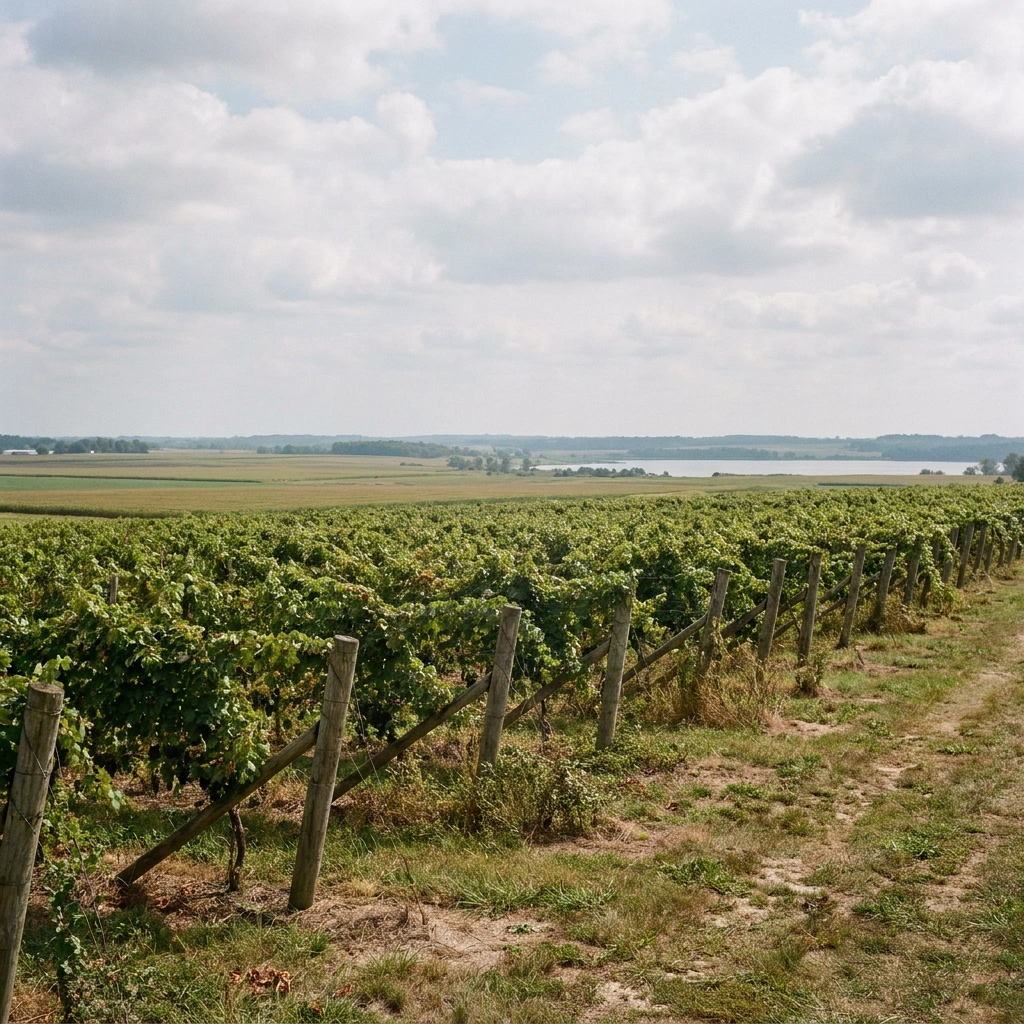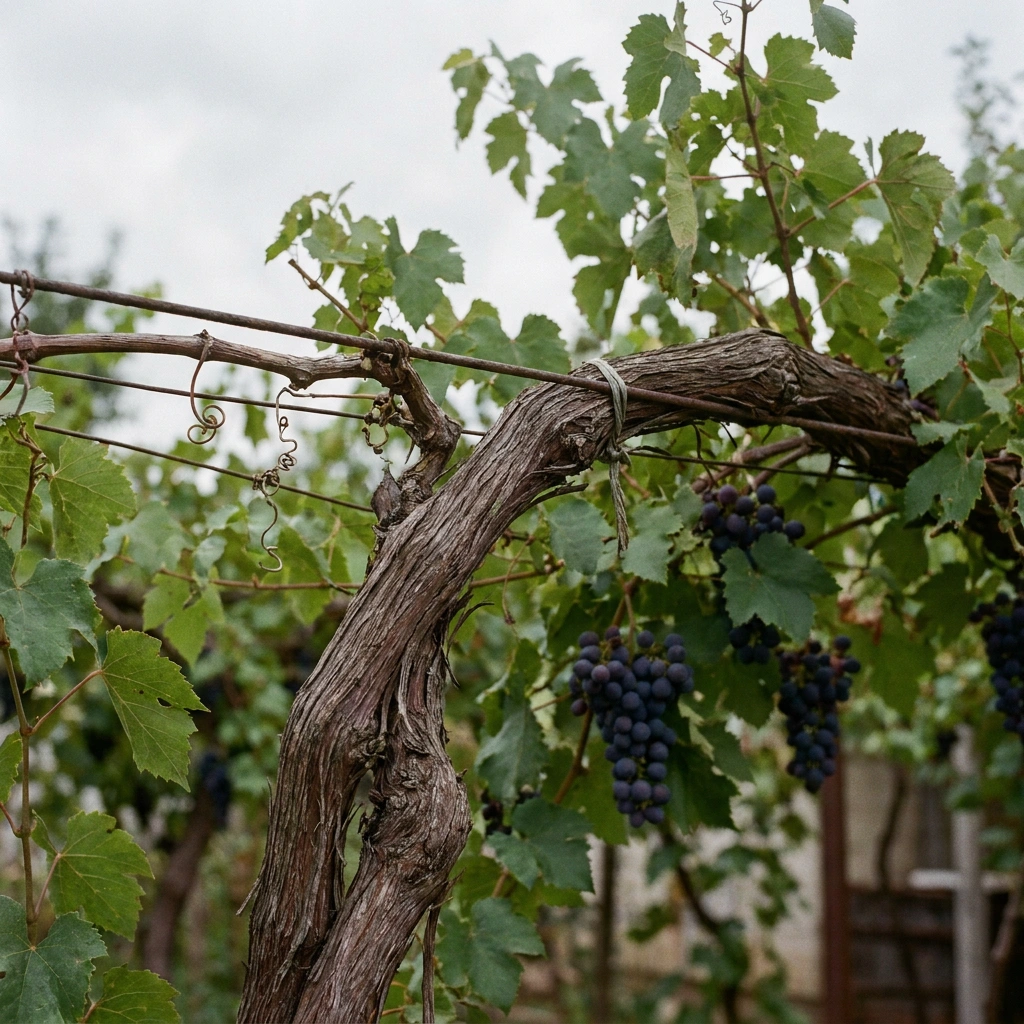
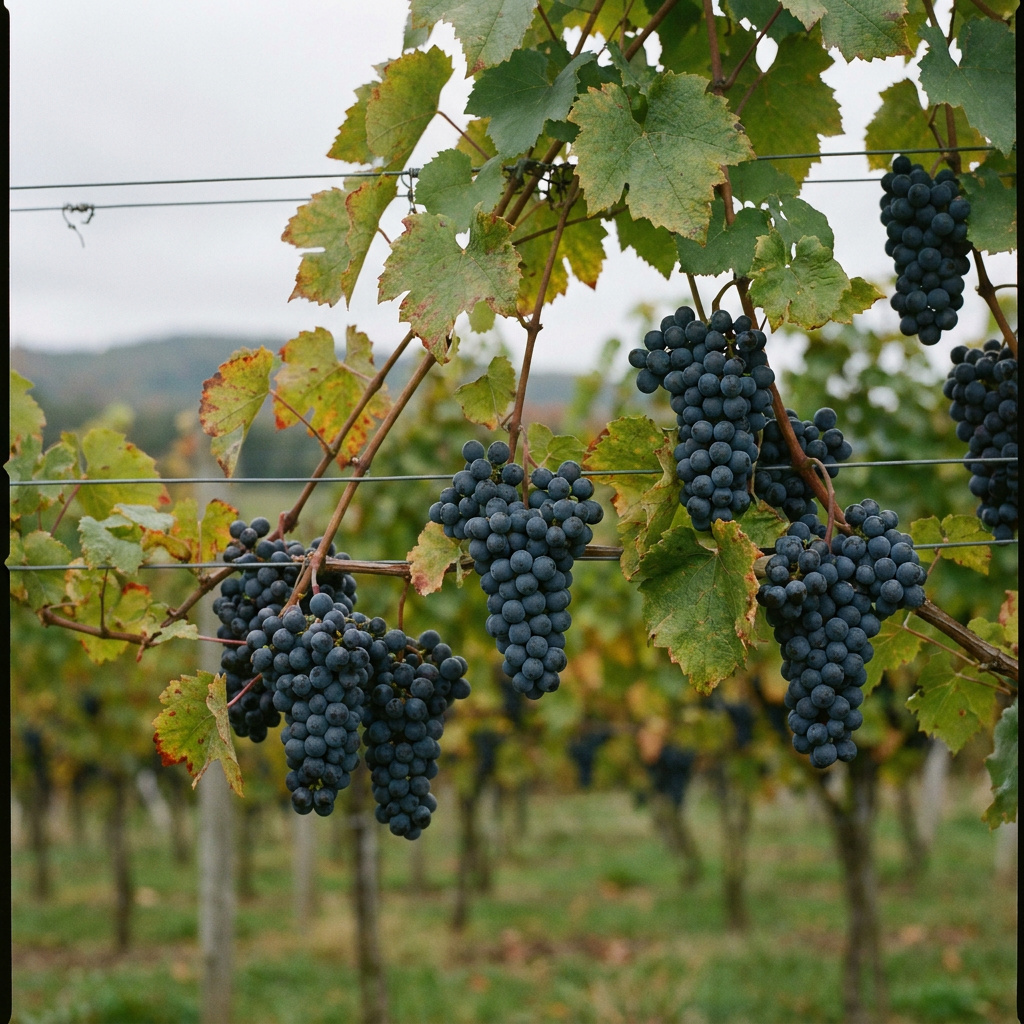
Marquette is a cold-hardy red wine hybrid released by the University of Minnesota in 2006 – one of the finest dry red wines you can produce from a Zone 4 or Zone 5 vineyard. It is hardy to roughly -36°F (-38°C) when fully dormant (UMN plant patent), grows reliably in USDA Zone 4, ripens in late September in Minnesota (a warm season may allow mid-September), and delivers a medium-bodied red with cherry, black pepper, and earthy complexity. If you’re in the upper Midwest or a similar northern climate and you want to make a serious red wine, Marquette is the variety we’d put at the top of your list.
Marquette at a Glance
| Type | Red wine interspecific hybrid (Vitis complex) |
|---|---|
| Breeder / Year | University of Minnesota, released 2006 |
| Cold Hardiness | Hardy to roughly -36°F (-38°C) when fully dormant (UMN plant patent); grown reliably in USDA Zone 4 |
| Ripening | Late September in Minnesota (typically just before Frontenac); a warm season may allow mid-September; bud break is relatively early |
| Brix at Harvest | 22-26 °Brix typical (UMN); high sugar potential |
| Acidity (TA) | High – typically 11-12 g/L (UMN); acid management often needed |
| Disease Resistance | Moderate resistance to black rot, botrytis, downy mildew, and powdery mildew (UMN) – spray program still required |
| Best Use | Dry red wine; also rosé |
| Vine Spacing | 6-7 ft (1.8-2.1 m) in-row; 9-10 ft (2.7-3 m) between rows |
| Vigor | High – requires consistent canopy management |
What Makes Marquette Special
Marquette’s parentage is a complex interspecific cross – a hybrid of two other hybrids, MN 1094 and Ravat 262, developed over decades of breeding work at the University of Minnesota. Ravat 262 carries the Vitis vinifera / Pinot Noir ancestry (per the UMN plant patent), making Marquette a “grandson” of Pinot Noir through that parent, and that heritage shows up in the wine: deep ruby color, cherry and berry fruit, good tannin structure, and an earthy complexity that gives you something to work with in the cellar. UMN released Marquette in 2006 specifically because it combined that wine quality with proven cold hardiness for northern growers. For the full UMN variety profile, see the Minnesota Hardy Plants: Marquette page.
The hardiness figure documented in the UMN plant patent – roughly -36°F (-38°C) – refers to dormant cane hardiness under normal winter conditions. That’s meaningfully different from cold tolerance after a mid-winter warm spell. If you’re in Zone 4, Marquette has been tested through extreme cold and comes back reliably. Zone 3 growers with reliably extreme winters may want to monitor carefully or consider mounding the graft union with soil before freeze-up, just as a hedge. Check our Will My Grapes Ripen? tool to confirm your season length matches Marquette’s ripening window.
Site Selection and Soil
Marquette is a vigorous grower – it will exploit every advantage your site offers. That’s mostly a good thing, but it means site selection really matters, because a bad site just amplifies problems.
- Slope and air drainage. Cold air drains downhill and pools in low spots. Even a gentle 3-5% slope can drop your frost risk dramatically. A southeast-facing slope is ideal for sun exposure and air movement.
- Sun exposure. Full sun – at least 6-8 hours of direct sunlight per day. Marquette needs that sun to push Brix up and ripen properly. Shaded blocks will give you underripe fruit with high acid and green flavors.
- Soil drainage. Well-draining loam or sandy loam is ideal. Marquette tolerates a range of pH (6.0-7.0 is the target), but it will not tolerate waterlogged roots. Clay soils that sit wet in spring are a problem – either amend with organic matter to improve drainage or raise the rows.
- Wind protection. A windbreak on the north/northwest side protects young shoots from spring wind damage without blocking summer airflow through the canopy.
For vine spacing, follow the standard cold-climate recommendation: 6-7 ft (1.8-2.1 m) between vines in the row, 9-10 ft (2.7-3 m) between rows. This gives you room for a tractor or riding mower between rows. See our Grape Vine Spacing Guide for the tradeoffs between tight and wide spacing in cold climates.
Planting Marquette Grapevines
Plant bare-root vines in spring after your last hard frost – typically April to early May in Zone 4. Potted vines can go in a little later. Here’s a basic planting routine:
- Prepare the row. Till or subsoil the planting row to loosen compaction. Work in compost (about 2-3 lb / 0.9-1.4 kg per hole) to improve water retention without sacrificing drainage.
- Set post anchors. Get your end posts and at least the first set of trellis wires up before or immediately after planting. Marquette grows fast in its first full season and will need support quickly.
- Plant at the right depth. For own-rooted vines (most cold-hardy hybrids are own-rooted), set the crown (top of the root system) at or just below soil level. For grafted vines, keep the graft union 2-4 inches (5-10 cm) above grade so it doesn’t re-root above the graft.
- First-year cane management. Let one strong cane grow straight up toward the trunk wire (usually set at 30-36 inches / 76-91 cm). Pinch off all other shoots early. This single-cane focus in year one is what gets you a strong trunk by year two.
- Mulch and water. A 3-4 inch (7-10 cm) layer of wood chip mulch around the base suppresses weeds and moderates soil temperature. Water in dry spells the first season – established vines are drought-tolerant, but young vines are not.
Training and Pruning
Marquette is vigorous enough that canopy management is where most home growers either win or lose. Too much leaf canopy = poor air circulation = disease pressure. The good news is that once you’re in a good annual pruning rhythm, it’s not complicated.
Training System: High Cordon
Most cold-climate viticulture guides favor a high bilateral cordon for Marquette – the main trunk runs straight up to a top wire at about 5-6 ft (1.5-1.8 m), then two arms extend horizontally in opposite directions along that wire. Fruiting spurs hang down from the cordon arms. The high cordon keeps fruit off the ground (better air circulation, less disease) and positions the grape clusters where they get good sun exposure.
The alternative is a low bilateral cordon at 30-36 inches (76-91 cm), which is more common with machine harvesting but still works well for home vineyards. Some growers use a simple Geneva Double Curtain (GDC) to manage Marquette’s vigor – the GDC splits the canopy into two hanging curtains, improving light penetration. Any of these systems will work; the key is consistency and staying on top of summer shoot positioning.
Annual Pruning (Dormant, Late Winter)
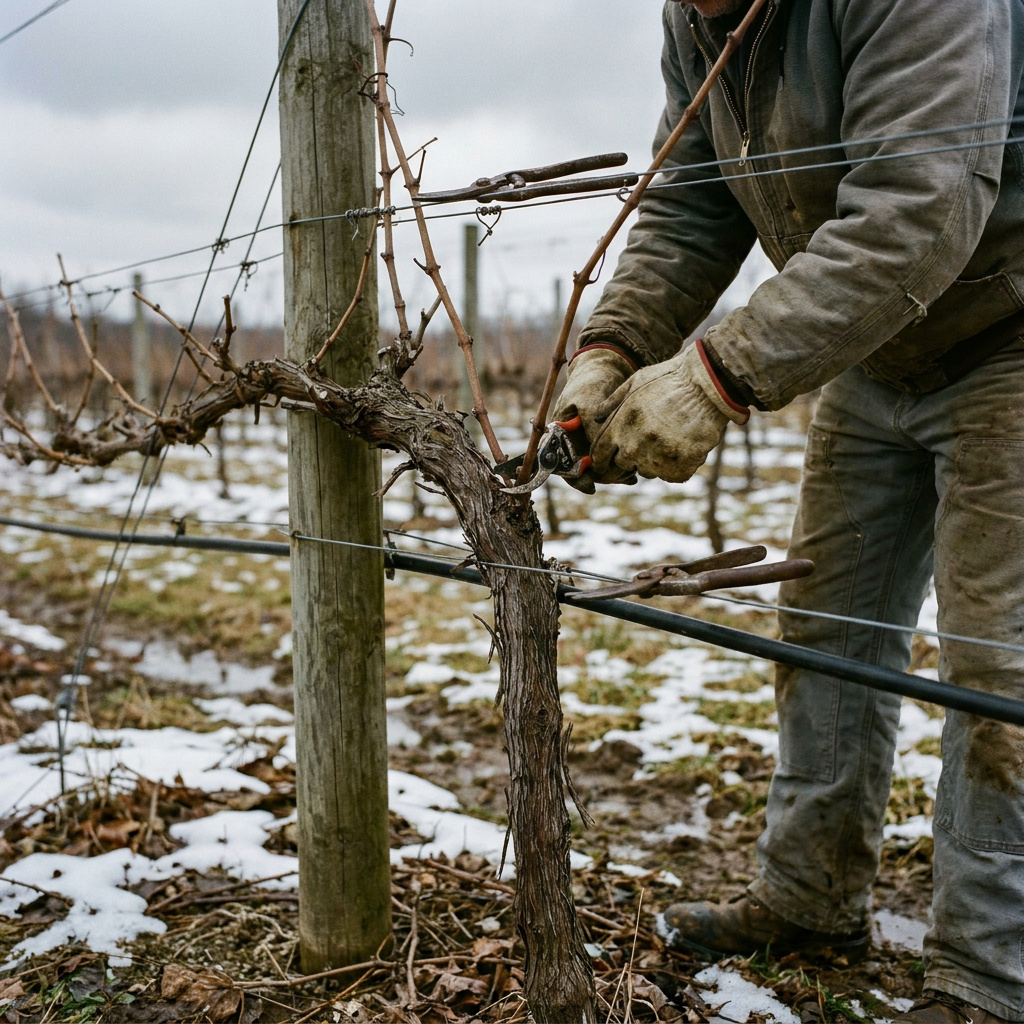
Prune Marquette in late winter – after the risk of -20°F (-29°C) temperatures has passed but before bud swell. In Wisconsin, that window is typically mid-February through March. Here’s the basic approach for an established spur-pruned cordon:
- Retain 2-bud spurs spaced roughly every 4-6 inches (10-15 cm) along the cordon.
- Remove anything growing downward, crossing, or rubbing.
- Aim for the shoots that grew from the lower buds of last year’s spurs – these tend to be more fruitful.
- Remove any winter-damaged canes (brown or shriveled pith when you cut cross-section).
- Target roughly 30-40 buds per vine once established, adjusted up or down based on how well the vine carried its crop the previous year.
During the growing season, do summer shoot positioning every 2-3 weeks: tuck shoots upward between foliage wires, remove suckers from the base, and consider shoot thinning if the canopy gets too dense. Marquette’s high vigor means you’ll earn your wine with a few hours of canopy work each summer.
Cold-Climate Winter Care
Marquette’s cane hardiness to roughly -36°F (-38°C) when fully dormant means that in most Zone 4 and Zone 5 locations you can leave the vines on the trellis over winter without burying them. That’s a significant labor advantage over more tender varieties. But “hardy” doesn’t mean invincible:
- Watch for January thaws followed by hard freezes. A warm spell in January that wakes the buds partway, followed by a sudden drop to -20°F (-29°C), can cause more bud damage than a steady cold winter. Marquette handles consistent cold well; the fluctuations are the real risk.
- First-year vines are more vulnerable. Mound soil 6-8 inches (15-20 cm) around the base of first-year plants in November to protect the graft union or crown. Remove the mound carefully in spring after frost risk drops.
- Snow is your friend. Vines buried under 18+ inches of snow are well-insulated. Don’t go out of your way to knock snow off the trellis.
- Assess winter damage before pruning. Make a few scratch tests on the canes in late January. If the cambium shows green, the cane is alive. Shriveled, brown = dead. If you lost significant buds, delay pruning until you can assess damage more clearly and retain more buds to compensate.
Zone 3 growers who regularly see -35°F to -40°F (-37°C to -40°C) should treat Marquette as moderately risky rather than fully proven. At those temperatures, partial cane loss is possible in severe winters.
Disease Management
To be direct: Marquette has moderate disease resistance, not excellent. According to the UMN variety profile, it shows moderate resistance to black rot, botrytis bunch rot, downy mildew, and powdery mildew – that’s moderate across the board, better than most vinifera but not good enough to skip a spray program. In humid climates east of the Rockies especially, a spray schedule is necessary.
A practical home-vineyard fungicide program for Marquette in the upper Midwest:
- Pre-bloom (tight cluster): sulfur (for powdery mildew) + copper (for downy mildew and black rot). These are organic-approved and are the backbone of a home-vineyard program.
- Bloom through fruit set: Continue sulfur sprays every 10-14 days (or after rain events over 0.5 in / 13 mm). This is the highest-risk window for black rot.
- Post-fruit set through veraison: Reduce frequency as the season dries. Keep air moving through the canopy via shoot positioning.
- Canopy management is a disease tool. Leaf pulling around the fruit zone after fruit set dramatically reduces powdery mildew risk by improving airflow and sunlight penetration.
The good news: Marquette needs far fewer sprays than Chardonnay or Pinot Noir. Most home growers manage with 4-6 applications per season. Organic growers can often manage Marquette adequately with sulfur and copper alone in a Zone 4-5 continental climate.
Harvest and Winemaking
Marquette is one of the most rewarding cold-hardy grapes to make wine from. It genuinely delivers a dry red with structure – not just a serviceable “table wine” but something with real character when handled well.
Harvest Timing
Marquette ripens in late September in Minnesota (UMN), typically just before Frontenac. A warm season may allow mid-September; a cool year can push harvest toward early October. Target 22-26 °Brix for a balanced dry red wine; the UMN variety profile gives 22-26 as the typical harvest range. Total acidity (TA) runs high – typically 11-12 g/L per UMN data – which is markedly higher than most vinifera reds and means acid management is a real winemaking consideration, not a footnote.
Use our Brix-to-Alcohol Calculator to estimate your potential alcohol before harvest. At 24 °Brix you’re looking at roughly 13-14% ABV after full fermentation – a solid dry red range. Don’t wait for 28+ Brix unless you want a higher-alcohol wine; flavor development at 24-26 Brix is excellent.
Taste the berries. When seeds turn from green to brown and stems start to lignify (turn woody/tan at the cluster stem), the fruit is physiologically ripe regardless of what the refractometer says.
Winemaking Notes
Marquette is genuinely one of the best cold-hardy grapes for making a serious dry red. A few notes for home winemakers:
- Acidity management: Marquette’s TA typically runs 11-12 g/L (per UMN data) – significantly higher than most red wines. Plan for acid management: cold settling, water addition before fermentation if needed, and almost certainly malolactic fermentation (MLF) to convert some malic acid to softer lactic acid. MLF also adds complexity – it’s essentially standard practice for Marquette dry reds.
- Tannin: Marquette has notable tannin for a hybrid. Extended maceration (10-14 days) extracts good structure. You don’t need to add commercial tannins.
- Oak: Responds well to light oak (French oak cubes or spirals for home winemakers, or barrel-aged at commercial scale). Over-oaking kills the fruit character – use a light hand.
- Aging: A year of aging in neutral oak or glass mellows the tannins significantly. Marquette made in autumn 2025 will drink noticeably better in autumn 2026 than straight out of the tank.
If you’re new to home winemaking, see our Wine Making Instructions guide for the full process from crush to bottling.
Where to Buy Marquette Grapevines
Marquette is widely available from cold-climate nurseries. For online shopping, you can search Amazon for Marquette grape vines – availability varies by season. For the most reliable supply, We’d recommend ordering from a verified cold-climate source. Stark Bro’s Nursery has stocked UMN varieties including Marquette. For the definitive list of nurseries licensed to propagate UMN varieties, check the UMN licensed-propagators directory (license.umn.edu) – those nurseries are officially authorized to sell Marquette vines. We have no affiliate relationship with any of the nurseries listed here. Order bare-root vines in late winter / early spring for best selection – they sell out.
Frequently Asked Questions
How cold-hardy is Marquette?
Marquette is hardy to roughly -36°F (-38°C) when fully dormant, per the UMN plant patent (USPP19579P3), and is grown reliably in USDA Zone 4. The University of Minnesota developed it specifically for northern growers who can’t grow vinifera (European wine grapes) reliably. Zone 3 growers can try it, but should monitor carefully in extreme winters and may want to mound or protect the crown.
Does Marquette need a spray program?
Yes. Marquette has moderate resistance to black rot, botrytis, downy mildew, and powdery mildew – that’s the rating UMN gives it across all four diseases. It performs better than most vinifera varieties, but a spray program is still required. Most home growers manage with 4-6 sulfur and copper applications per season, especially in humid climates east of the Rockies.
What wine style does Marquette produce?
Marquette makes a medium-bodied dry red wine with good color, moderate-to-firm tannins, and flavors of cherry, berry, black pepper, and spice – with earthy notes that reward oak aging. Those are the flavor descriptors UMN uses in its own variety profile. With malolactic fermentation to soften the high natural acidity and some time in oak, it produces one of the most serious red wines possible from a cold-hardy hybrid. It also works well as a rosé.
How long before Marquette produces grapes?
Expect a small crop in year 2 or 3, and a full crop by year 3-4. Plant in spring, focus on building a strong trunk and cordon in years 1-2, and resist the temptation to let the vine overcrop too early. A vine pushed to produce a large crop in year 2 builds a weaker root system. Patience pays off with a stronger, longer-lived vine.
Can I grow Marquette in Zone 5 or Zone 6?
Absolutely – Zone 5 and Zone 6 are comfortable territory for Marquette. The main consideration in warmer zones is that the vine may be even more vigorous than in Zone 4, so canopy management becomes even more important. In Zone 6, you may also face longer, more humid summers that increase disease pressure – adjust your spray program accordingly. The good news is that in Zone 5-6, you’ll have a longer ripening window and more flexibility in harvest timing.
🍇 Don’t plant the wrong grape
Vines take years to fruit. Get the free cheat-sheet of varieties that actually survive and ripen in your zone.
By subscribing you agree to our Privacy Policy.