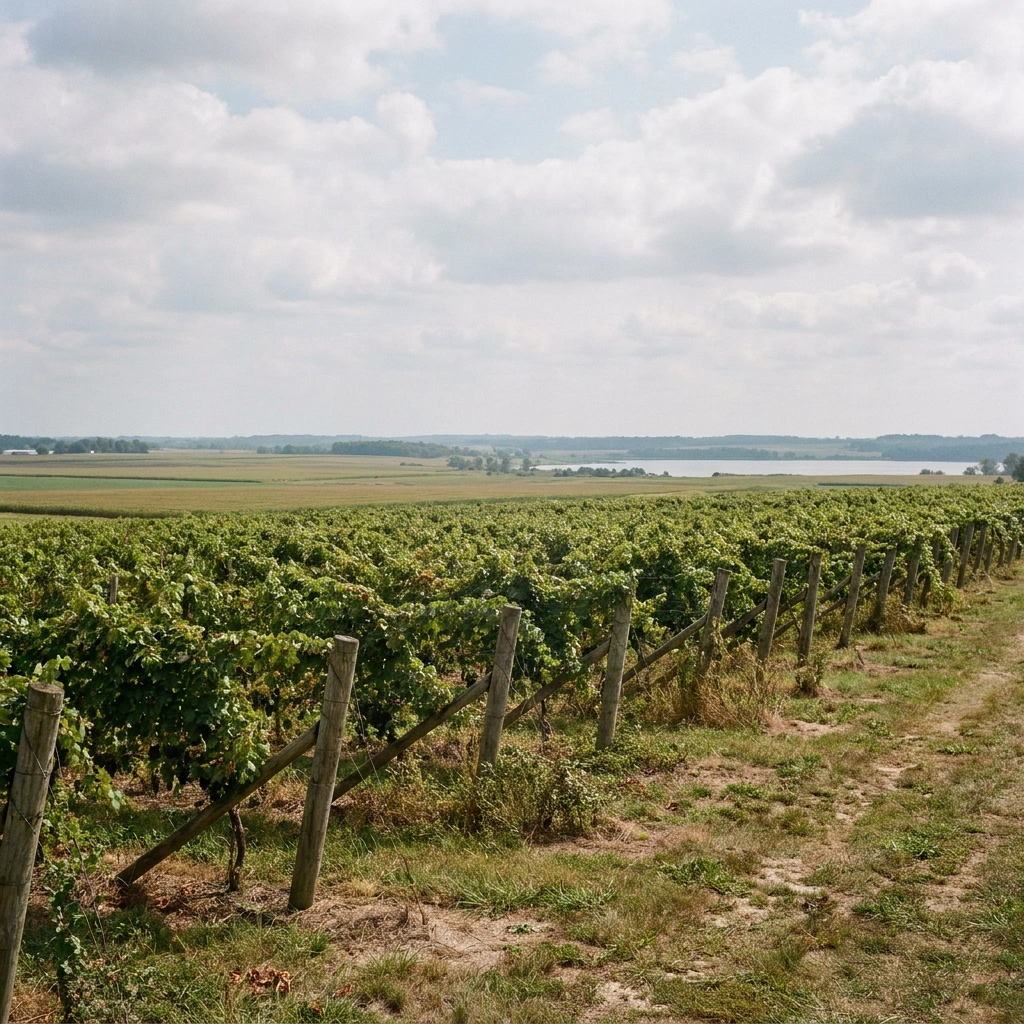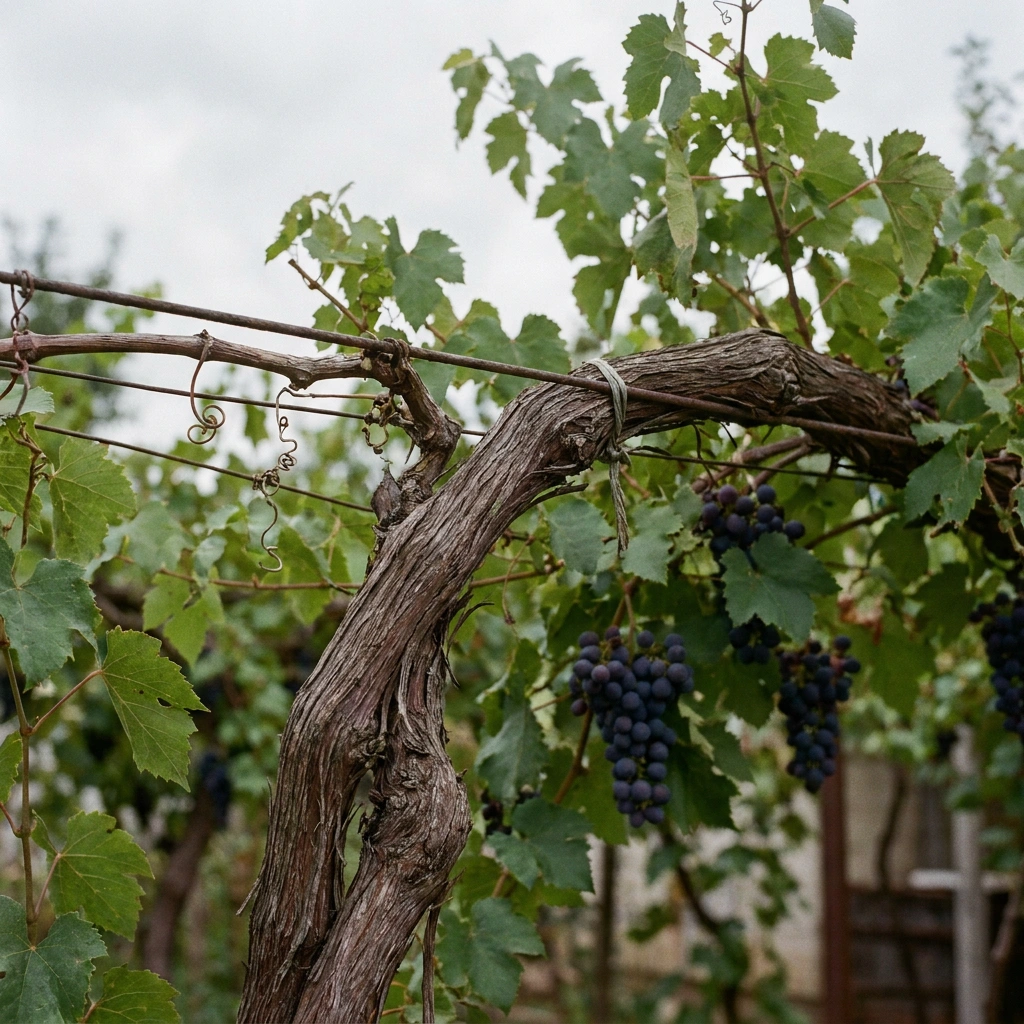
Two summer pests tend to catch backyard grape growers off guard: Japanese beetles, which skeletonize your leaves from midsummer onward, and spotted wing drosophila (SWD), a tiny invasive fly that lays eggs inside ripening berries before you ever see a problem. Knowing how each one works – and what to do before it gets out of hand – can save your harvest.
For a broader look at pests and diseases that hit grapevines, start with our complete guide to vineyard pest and disease control – this page goes deep on just these two insects.
Japanese Beetles on Grapes
How to Identify Them
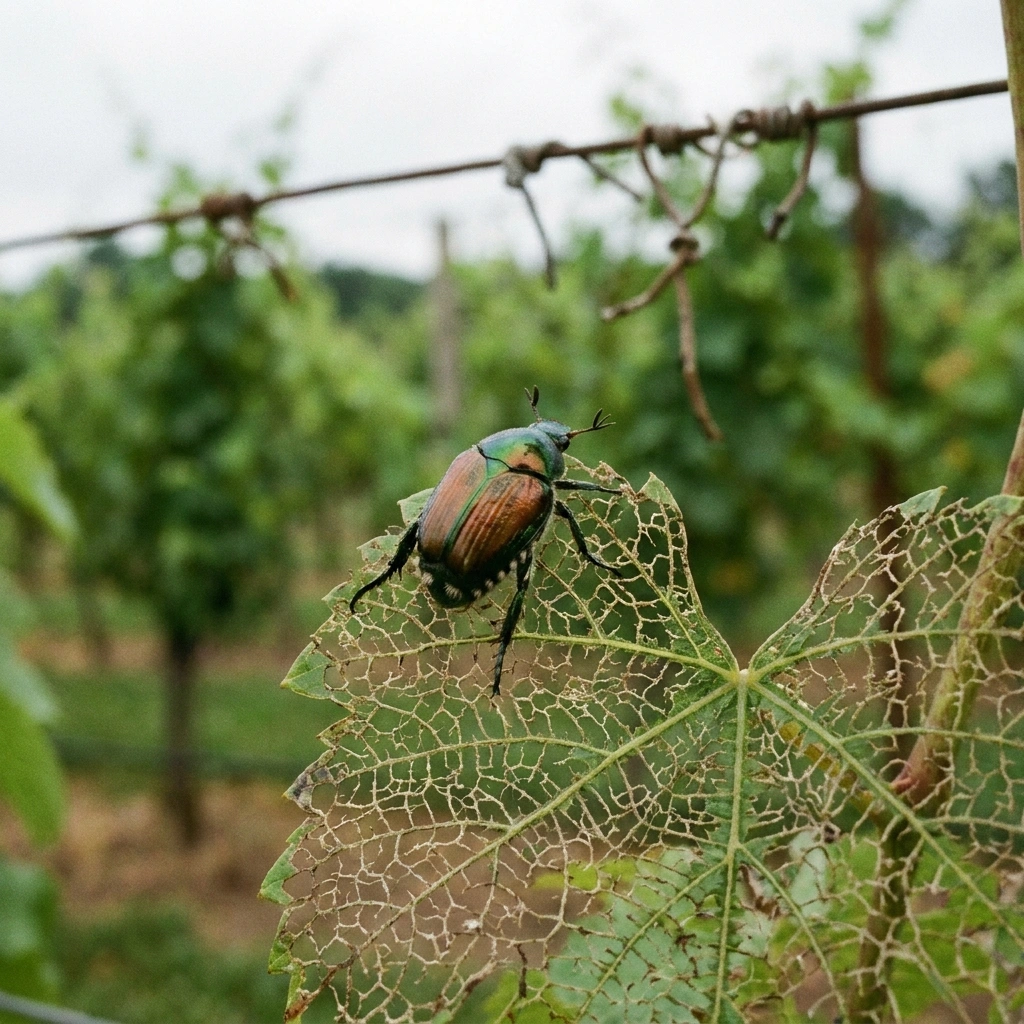
Japanese beetles (Popillia japonica) are hard to miss. Adults are roughly 3/8 inch (about 10 mm) long with a distinctive metallic green head and copper-brown wing covers. Look for small white hair tufts along the sides of the abdomen – a reliable ID mark. They tend to cluster, so where you find one you’ll often find twenty.
Adults emerge from the soil in late June to early July across most of the northern U.S. and southern Canada, feeding through August. In cold-climate zones (Zones 4-6) they’re often most active for about six weeks in the height of summer.
The Damage They Do
Japanese beetles skeletonize grape leaves: they eat the soft tissue between the veins but leave the vein network behind, turning leaves into a brown lace. Severe infestations on a single vine can strip most of the canopy. According to Cornell Cooperative Extension, established, healthy vines can tolerate moderate defoliation without long-term harm – the vine rebounds the following season. Young vines in their first or second year are the real concern; losing the canopy early in summer stresses them hard and sets back establishment. Heavy feeding near clusters can also damage fruit directly.
What Actually Works for Control
- Hand-pick in the early morning. Beetles are sluggish when cool. Drop them into a bucket of soapy water. On a small backyard planting with a few vines, this is genuinely effective.
- Row cover / exclusion fabric on young vines. For vines in years 1-3, draping lightweight fabric over the whole plant during the 6-week adult flight period blocks feeding entirely. Remove it once adult beetle season is over.
- Insecticides when pressure is severe. Carbaryl (Sevin) and pyrethrins are commonly labeled for Japanese beetles on grapes. Follow label directions and observe pre-harvest intervals. Michigan State University Extension notes that insecticide applications can be warranted when beetle numbers are high enough to cause economic damage, but for a backyard planting it makes sense to exhaust hand-picking first.
- Neem oil as a deterrent. Neem-based products (azadirachtin) have some repellent effect but limited knockdown. University extension sources classify it as a supplemental tool rather than a primary control.
The Pheromone Trap Problem – Read This Before You Buy One
Japanese beetle pheromone traps are sold everywhere and seem logical. They are not recommended for use near your vines. Research from the University of Kentucky and others has consistently shown that pheromone traps attract significantly more beetles to your yard than they capture, creating a net increase in beetles near the bait. If you use them at all, place them as far from your vines as possible – at the far edge of your property, not next to the grapes. Better yet, skip the traps entirely; the evidence that they help more than they hurt just isn’t there.
Spotted Wing Drosophila (SWD) on Grapes
Why SWD Is Different from Ordinary Fruit Flies
Spotted wing drosophila (Drosophila suzukii) looks like any other small vinegar fly, but there’s one critical difference: the female has a serrated, saw-like ovipositor – an egg-laying appendage that can pierce intact, ripening fruit. Common fruit flies can only infest fruit that’s already damaged or decomposing. SWD targets your berries while they still look perfect on the vine.
The result is larvae (maggots) developing inside berries near harvest. You often don’t see the damage until you’re squeezing fruit for juice – or until secondary rot sets in around the entry wound. SWD was first detected in the continental U.S. in 2008 and has since spread across most grape-growing regions, including the upper Midwest and Great Lakes areas where cold-climate varieties are grown.
Which Fruit Is Most at Risk
Penn State Extension identifies thin-skinned, early-ripening, soft fruits as the highest-risk category. Among grapes, that profile fits many of the hybrid cold-climate varieties – Marquette, La Crescent, Petite Pearl – which tend to have thinner skins than commercial vinifera. The window of vulnerability starts as berries begin softening and coloring up (veraison) and extends through harvest. The sooner you get ripe fruit off the vine, the shorter your exposure window.
Monitoring: Bait Traps That Actually Help
Unlike Japanese beetle traps (which cause problems), SWD bait traps are genuinely useful for monitoring – not necessarily for mass capture, but to tell you when adults are present so you can time your response. A simple homemade trap: a plastic cup with small holes drilled near the top, filled 1-2 inches (2-5 cm) with apple cider vinegar plus a few drops of dish soap, hung at canopy height. Check it weekly starting at veraison. Michigan State University Extension offers detailed trap designs and monitoring protocols that are worth bookmarking.
Commercial SWD traps and lures are also available.
Control Strategies
- Sanitation – remove dropped and overripe fruit immediately. Every soft berry on the ground or left hanging past peak ripeness is a potential breeding site. This is the single most impactful free action you can take.
- Harvest promptly. The moment your grapes hit target Brix and flavor, pick them. Leaving ripe fruit on the vine even a few extra days compounds your exposure. See our notes on knowing when grapes are ready to harvest – that timing matters even more when SWD is present.
- Exclusion netting. Fine-mesh insect netting (1 mm or finer) draped over clusters or whole vines starting at veraison creates a physical barrier. It’s labor-intensive on a large planting but very effective for a backyard-scale vineyard. This is the same general approach used for birds – we cover netting options for grapes if you want to look at hardware that doubles for both threats.
- Insecticides near harvest – with caution. Spinosad-based products (organic-approved) and kaolin clay are used by growers when SWD pressure is high. Pre-harvest intervals must be observed strictly. Cornell Cooperative Extension’s SWD management guides list approved materials with timing windows. This is a last resort for backyard growers, not a first response.
Our Pick for Exclusion Netting
For both birds and SWD, fine insect mesh over clusters or whole vines is our go-to recommendation for young plants. Look for 1 mm mesh garden netting – lightweight enough to drape over a trellis without bending canes. Browse fine-mesh garden insect netting on Amazon and look for anything rated 1 mm or smaller aperture.
A Combined “What to Do When” Summary
Both pests operate on different timelines, which makes managing them easier once you see the calendar view:
| Timing | Pest | Priority Action |
|---|---|---|
| Late June – August | Japanese Beetles | Hand-pick mornings; row cover on young vines; skip pheromone traps near vines |
| Veraison (color change) through harvest | Spotted Wing Drosophila | Deploy monitoring traps; drape fine netting over clusters; harvest promptly; remove dropped fruit daily |
| Any time | Both | Keep vineyard floor clean; remove debris where grubs/flies overwinter; record what you see year to year |
Cold-climate growers have one genuine advantage with SWD: a shorter growing season means a shorter SWD exposure window. If your Marquette or Frontenac ripens in September, you’re racing SWD pressure against a finish line – and prompt harvest wins most of the time.
Tools and Resources
Variety selection affects your pest exposure timeline – earlier-ripening, tougher-skinned varieties reduce SWD risk. Check the cold-hardy grape variety guide for options suited to Zones 3-6. And if you’re trying to plan out your whole season’s care, the vineyard pruning calendar and ripening estimator can help you map the timeline.
FAQ: Japanese Beetles and SWD on Grapes
Will Japanese beetles kill my grapevine?
Established vines rarely die from Japanese beetle defoliation alone. According to Cornell Cooperative Extension, healthy mature vines can tolerate moderate leaf loss and bounce back the following year. Young vines (years 1-3) are more vulnerable – heavy defoliation during their first summers can seriously set back establishment, so prioritize protection on new plantings.
Should I use Japanese beetle pheromone traps near my vineyard?
No. Research (University of Kentucky Cooperative Extension and others) has consistently shown that pheromone traps attract more beetles to your yard than they catch, increasing the overall pest load near your vines. If you use them at all, place them as far from your vines as possible – at the far edge of your property, not next to the grapes (better yet, skip the traps entirely). For most backyard vineyards, hand-picking and row cover are more effective and don’t create a beacon.
What makes spotted wing drosophila different from regular fruit flies?
The key difference is the female’s serrated ovipositor (egg-laying organ), which can pierce intact ripening fruit. Common fruit flies (Drosophila melanogaster) can only infest fruit that’s already broken, damaged, or rotting. SWD targets your grapes while they look perfect on the vine, which is why you often don’t discover larvae until harvest – or after.
Do cold-climate grape varieties get SWD?
Yes, and some hybrids are more vulnerable than vinifera. Penn State Extension notes that thin-skinned, early-softening, and early-coloring fruits face the highest risk. Many cold-climate hybrids (Marquette, La Crescent, Frontenac Gris) fit that profile. The good news: a shorter northern growing season means a shorter SWD exposure window, and prompt harvesting at peak ripeness is one of the best defenses.
What’s the single most effective thing I can do against SWD?
Harvest promptly and remove dropped or overripe fruit immediately. Every soft berry left on the vine or ground past peak ripeness is a potential breeding site. Combine that with monitoring traps (to know when SWD arrives) and fine-mesh netting over clusters starting at veraison, and you’ll manage SWD well on a backyard scale without reaching for insecticides.
🍇 Don’t plant the wrong grape
Vines take years to fruit. Get the free cheat-sheet of varieties that actually survive and ripen in your zone.
By subscribing you agree to our Privacy Policy.