If your grape vine looks perfectly healthy — thick canes, lush leaves, plenty of new growth — but has not produced a single cluster in years, you are not alone. This is one of the most common questions home growers ask, and the good news is that in almost every case the cause is fixable. The short answer: vines younger than three years are not ready to fruit, heavy pruning that removes last year’s canes eliminates the wood grapes actually fruit on, and too much shade or nitrogen tells the vine to grow rather than reproduce.
Let’s walk through all seven causes from most common to least, with a concrete fix for each one.
- Grape Variety Finder — find a cold-hardy cultivar that suits your zone
- Vineyard Pruning Calendar — know exactly when to prune in your region
- Will My Grapes Ripen? — check GDD heat units for your variety
1. The Vine Is Still Too Young
This is by far the most common reason, and the fix is simply patience. A newly planted grape vine needs to spend its first two to three years building a root system and establishing a strong trunk and permanent framework of arms (called cordons). Most vines do not produce a real harvest until their third year in the ground, and even then only a modest one — full production typically comes in years four and five.
If flower clusters do appear in year one or two, remove them. It feels wrong, but letting the vine ripen fruit too early stresses it and delays the long-term framework you need. The University of Minnesota Extension recommends removing all fruit for the first two growing seasons in cold climates where building winter hardiness is critical.
Fix: If your vine is under three years old, keep pruning, training, and watering — and wait. If it is in year four or beyond with no fruit, read on.
2. You Pruned Off All the Fruiting Wood
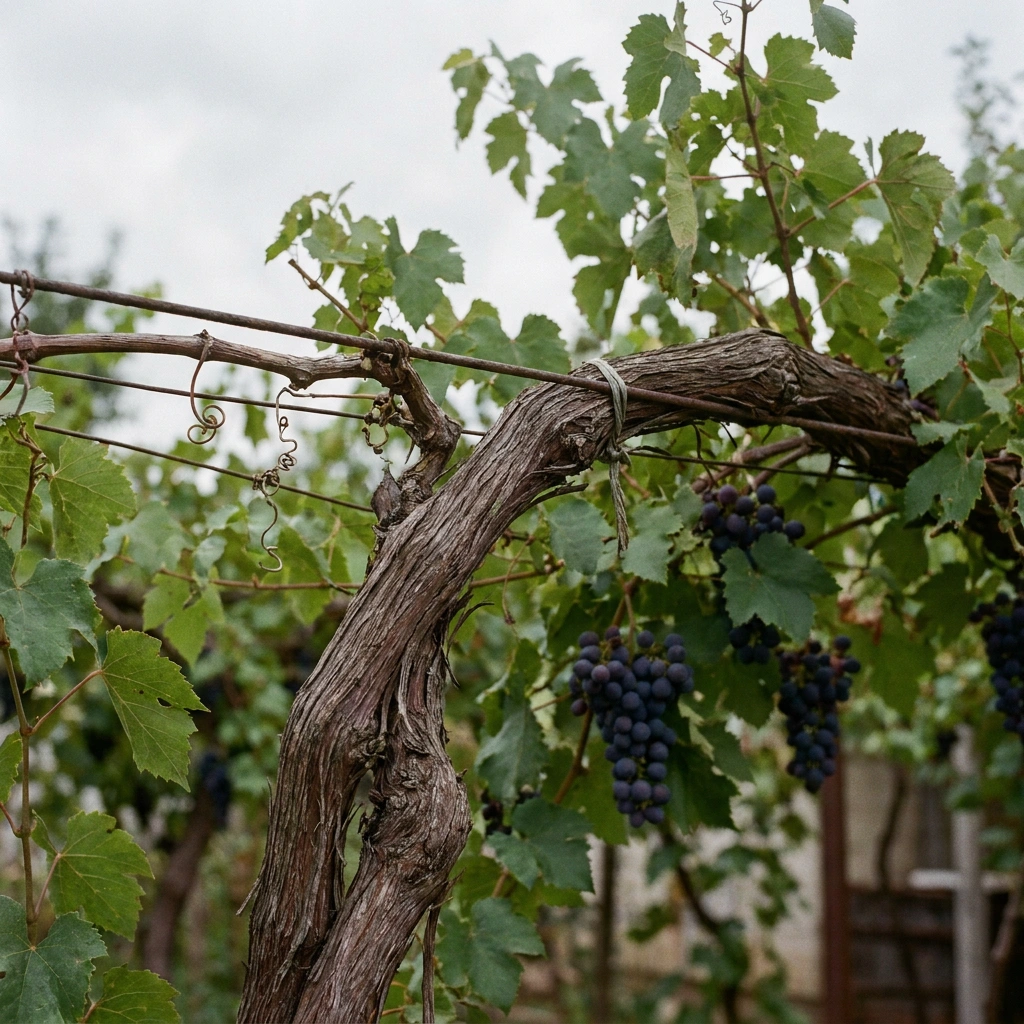
This is the second most common cause, and it catches people who think they are doing the right thing. Grapes are fundamentally different from most shrubs and trees: fruit only forms on shoots that emerge from 1-year-old wood — specifically, from the canes (flexible woody stems) that grew during last summer. Old trunk and arm wood does not fruit directly.
If you sheared the vine back hard to an old woody framework in spring — or cut every cane flush to the arms — you removed every potential fruiting node. The vine will push vigorous new growth from dormant basal buds, but those shoots, being first-year growth, will not carry fruit that season.
Fix: Learn the difference between spur pruning and cane pruning, and apply whichever your variety calls for. For spur-pruned varieties (most vinifera, many hybrids), retain short 2-3 bud spurs on the permanent cordon. For cane-pruned varieties (many labrusca types like Concord), retain 2-4 long canes of last year’s growth, each 8-12 buds long, tied down horizontally. See our in-depth grape pruning guide for step-by-step guidance.
Tool pick: A good pair of bypass pruning shears makes clean cuts that heal faster and reduce disease entry. A rotating handle can save your wrist during long pruning sessions. Browse bypass pruning shears on Amazon — look for forged steel blades and a sap groove.
3. Too Much Nitrogen — the Vigor Trap
Walk out to your vine. Is it growing enormous shoots — 8, 10, 12 feet (2.5–3.5 m) long — with deep green, almost glossy leaves but not a flower in sight? That is a vine in vegetative overdrive, and high nitrogen is the likely culprit.
Grapes evolved in relatively poor, well-drained soils. When nitrogen is abundant — from lawn fertilizer drift, heavy manure applications, or rich compost — the vine prioritizes shoot and leaf production over reproduction. The buds that should differentiate into fruit buds during the previous summer instead stay vegetative.
Fix: Stop all fertilization for a full growing season. A soil test (your local cooperative extension office can often run one for $15–$25) will tell you whether nitrogen is genuinely elevated. Mowing a grass cover crop in the row middles rather than tilling it in also reduces available nitrogen. Our guide to soil preparation for grape vines covers the right fertility baseline.
4. Not Enough Sun
Grape vines need full sun — at minimum 6–8 hours of direct light per day, and more is better. But here is the timing nuance that surprises people: the fruit buds that will produce next year’s clusters form during the current summer, in the axils of leaves receiving good sunlight. A vine in shade this summer will have few fruitful buds next spring even if you prune correctly.
In cold climates like Zone 4–5, sun exposure also directly affects bud hardiness — shaded buds on shaded canes tend to be less winter-hardy, which compounds the problem.
Fix: If a tree has grown up nearby since you planted, remove lower limbs or the tree. Orient new rows north-south so vines get sun from both sides. Keep the canopy open through summer shoot positioning — this is exactly the point of the trellis system. See how to get more clusters per vine for canopy management specifics.
5. Winter Cold or Spring Frost Killed the Primary Buds
In Zone 5 and colder, this is the silent fruit-killer that many growers miss. Each node on a cane contains three buds: a primary, a secondary, and a tertiary. The primary bud carries most of the fruit potential — and it is also the most cold-sensitive.
In most vinifera and moderately-hardy hybrids, temperatures dropping below about -15°F (-26°C) can kill primary buds outright. The cold-hardy hybrids this site recommends — Marquette, Frontenac, La Crescent — are bred to tolerate roughly -25 to -30°F (-32 to -34°C), so a normal Zone 4–5 winter usually won’t kill their primary buds. But even these varieties lose primaries in severe polar-vortex events, and any variety loses its secondary and tertiary bud fruit potential below that range. When primaries are killed, secondary buds survive and push shoots in spring, so the vine leafs out normally. But those shoots carry little or no fruit. The vine looks fine. There are no clusters. Growers are baffled.
A late spring frost — even just 28°F (-2°C) — can also kill tender young shoots that have already emerged from the buds, wiping out the fruit for that season even if the winter was mild.
Fix: In Zone 4–5, grow varieties bred for cold hardiness: Marquette, Frontenac, La Crescent, Itasca, Petite Pearl. These have primary buds that tolerate -25 to -30°F (-32 to -34°C). After a cold winter, do a cross-section bud check before pruning — slice a few buds with a razor blade; green inside = alive, brown = dead. Adjust how many canes or spurs you retain based on what survived. Our cold-hardy grape variety guide lists bud hardiness ratings for the top northern cultivars.
6. No Permanent Trellis Structure (Improper Training)
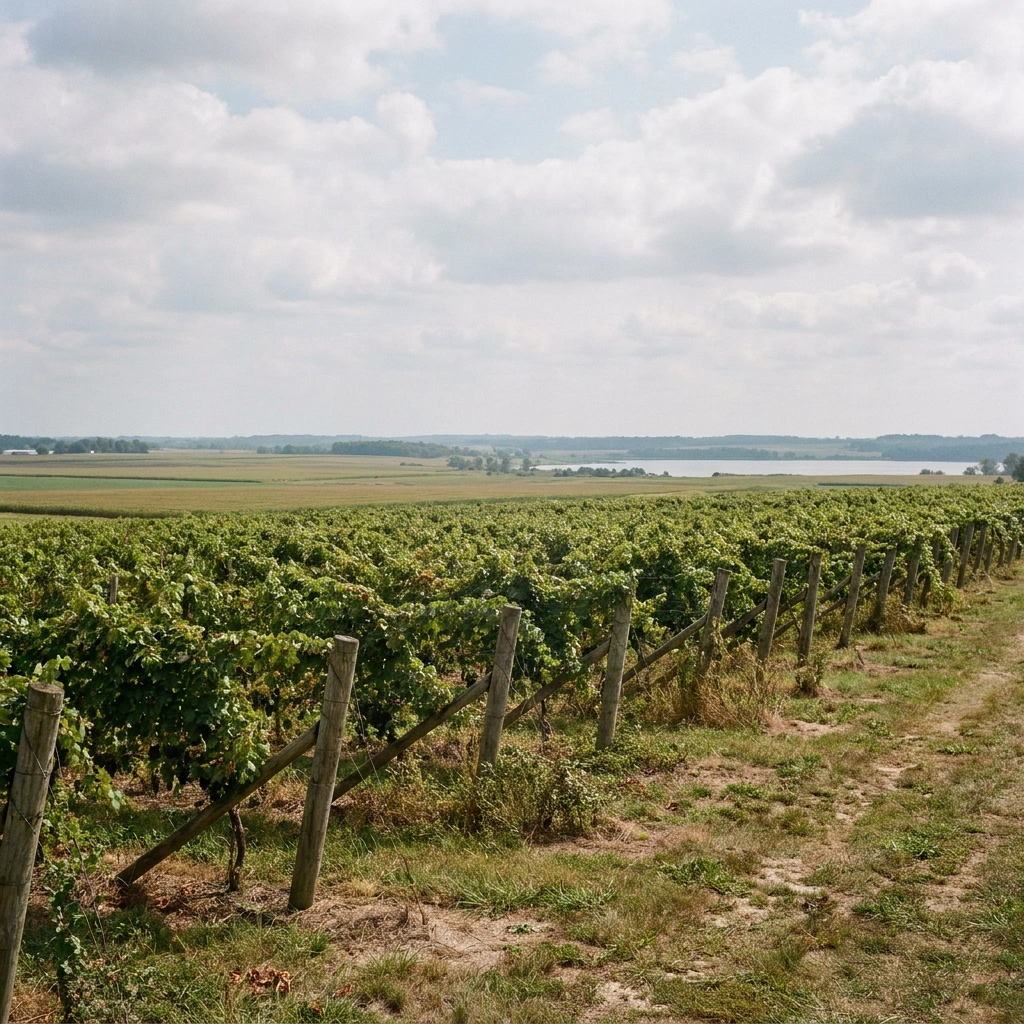
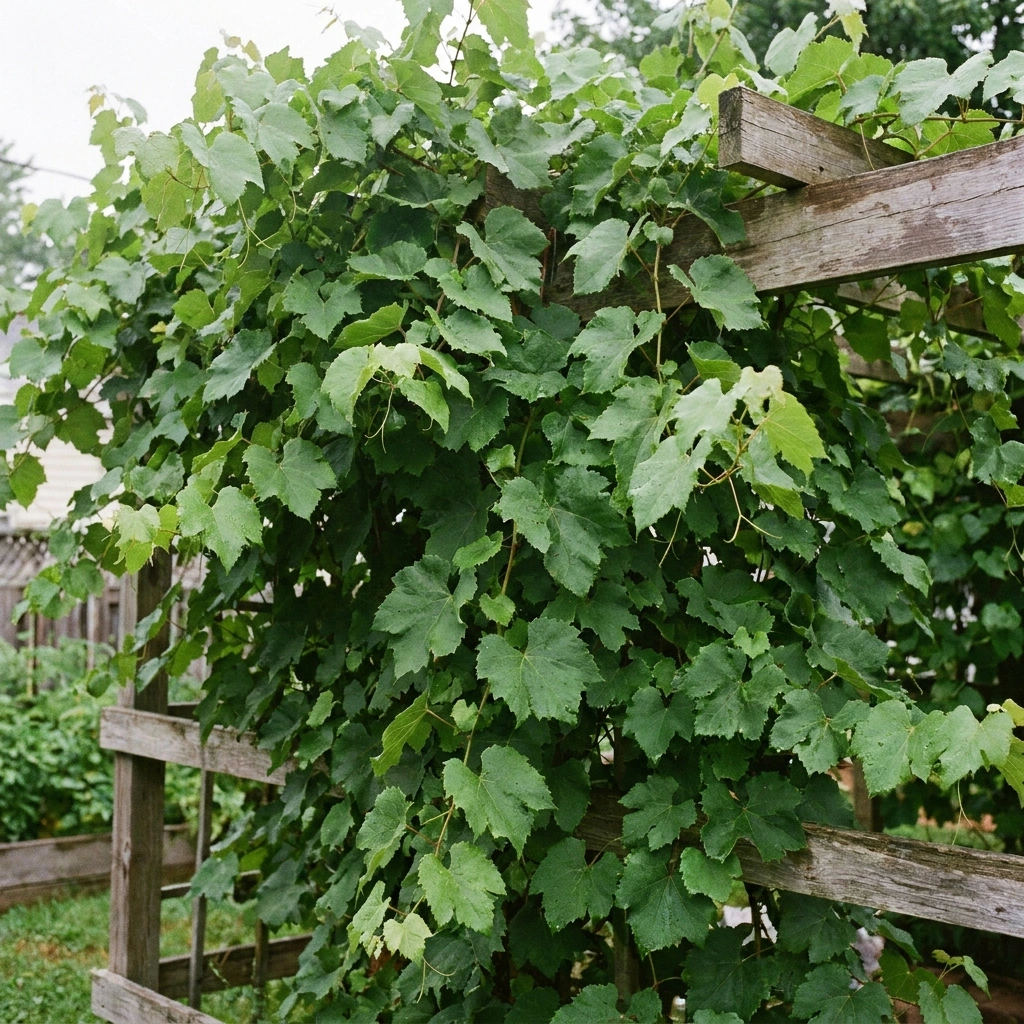
A vine that has never been trained onto a trellis tends to sprawl, shade itself, and struggle to ripen fruit even when it technically sets clusters. Without a defined trunk, cordon, and fruiting zone, the vine’s energy is scattered. Buds are shaded, shoots tangle and block airflow, and the whole system is harder to prune correctly year after year.
Fix: Install a proper trellis with at least one or two horizontal fruiting wires at 36–42 inches (90–110 cm) and 54–60 inches (135–150 cm) above ground. Train a single trunk up to the first wire, then establish bilateral cordons. Even an existing untrained vine can be restructured over 2–3 seasons. It is worth the effort — a properly trained vine is easier to prune, spray, and harvest for the next 20+ years.
7. The Vine Is Functionally Male or a Non-Fruiting Seedling
This one is rare but worth knowing. Nearly every named grape cultivar — Concord, Marquette, Cabernet Sauvignon, Frontenac, Niagara — has perfect flowers containing both male and female structures. They are self-fruitful; no second plant is needed for pollination.
However, wild native grapes (Vitis riparia, Vitis labrusca) and seedlings grown from grape seeds often produce only male flowers — lots of pollen, no fruit set. If you dug up a wild vine from the woods or grew yours from a seed, it may simply be male.
Fix: Observe the flowers under a magnifying glass in late spring. Male flowers have reflexed (bent-back) petals and prominent stamens but no developed ovary at the center. If that is what you see, the vine will never fruit — replace it with a named self-fruitful cultivar.
Quick-Diagnose Checklist
If the answer is not on this list, the symptom-to-cause diagnostic guide covers the rest of what shows up on a vine, from leaf color to shriveled fruit.
- ☐ Vine age: Is this year 1 or 2 after planting? → Wait, remove flowers.
- ☐ What you pruned: Did you leave any 1-year-old canes or spurs? → If no, that is the cause.
- ☐ Shoot vigor: Are shoots growing 8+ feet (2.5 m) and very dark green? → Cut nitrogen.
- ☐ Sun hours: Does the vine get 6+ hours of direct sun? → If not, open the canopy or remove shade.
- ☐ Winter temps: Did your area hit -15°F (-26°C) or colder? → Bud-check canes before pruning next spring.
- ☐ Trellis: Is the vine trained onto a structured wire system? → If not, add one this season.
- ☐ Source: Wild-dug or seed-grown? → Inspect flowers in late spring for male-only structure.
In cold climates, causes 1, 2, and 5 are the usual suspects behind “healthy vine, no fruit” situations. Fix the pruning, pick a cold-hardy variety, and protect those buds through the worst of winter — and the clusters will follow.
Frequently Asked Questions
- How long does it take for a grape vine to produce fruit?
- Most vines need 3 years after planting before they can support a real harvest. In years 1 and 2, remove any flower clusters so the vine builds roots and structure first.
- Why does my grape vine grow lots of leaves but no grapes?
- Excessive leafy growth with no fruit usually signals too much nitrogen. High nitrogen pushes vegetative growth at the expense of fruit bud formation. Stop all fertilizing for a full season and consider a soil test.
- What wood do grapes fruit on?
- Grapes fruit on shoots that grow from 1-year-old wood — the canes or spurs left from last season’s growth. Old trunk and arm wood does not fruit directly.
- Can a cold winter kill grape buds and prevent fruiting?
- Yes. Primary (fruitful) buds are the most cold-sensitive part of the vine. In most vinifera and moderately-hardy hybrids, temperatures below about -15°F (-26°C) can kill them outright. The cold-hardy hybrids this site recommends — Marquette, Frontenac, La Crescent — are bred to tolerate roughly -25 to -30°F (-32 to -34°C), so a typical Zone 4–5 winter usually won’t kill their buds. When primaries are lost, secondary buds push leafy shoots and the vine looks fine — but no fruit appears.
- Do grape vines need a pollinator to fruit?
- Almost all named cultivars are self-fruitful — no second plant needed. Wild vines or seedlings may be functionally male and will never set fruit.
🍇 Don’t plant the wrong grape
Vines take years to fruit. Get the free cheat-sheet of varieties that actually survive and ripen in your zone.
By subscribing you agree to our Privacy Policy.